Northern Kyusyu Trip with Mate(1) (Nanzo-in-temple・Nakatsu castle・Rakan-ji temple・Yabakei)
In late October, I got a message on WhatsApp from my friend that he was planning a visit to Kyushu, arriving at Fukuoka Airport on November 15 and heading to Tokyo on the 19th.
Seven years ago, we enjoyed grilled oysters in Itoshima and spent two nights at an old hot spring inn in Beppu's Kan-nawa Onsen, known for its hot spring treatments.
This time, we're planning to hit the hot springs again.
I've picked up some spots that might suit the season and booked our accommodation.
On November 15, at 1:00 PM, he arrived on time at Fukuoka Airport.
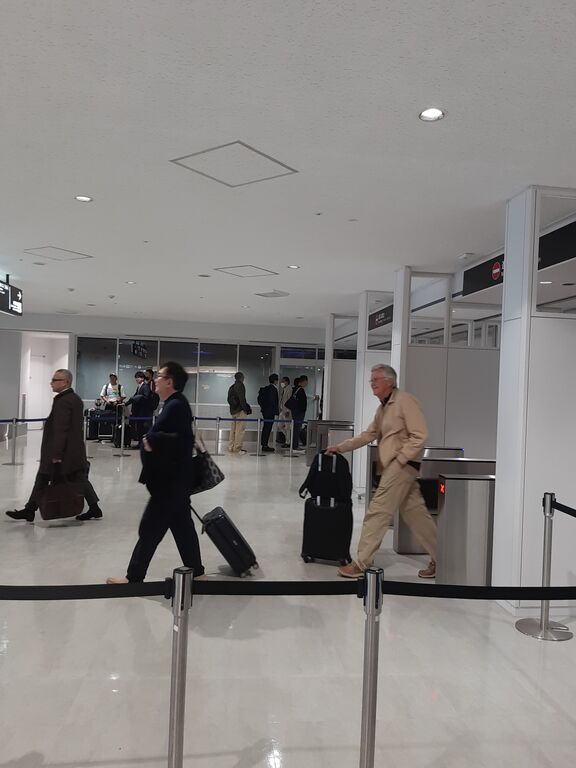
We decided to keep it low-key, grabbing a meal without any fuss along the way.
Our first choice for lunch was the representative Fukuoka meal, tempura at the main branch of "Hirao" near the airport, but it was jam-packed.
So, we aimed for "Nanzoin" in Sasaguri.
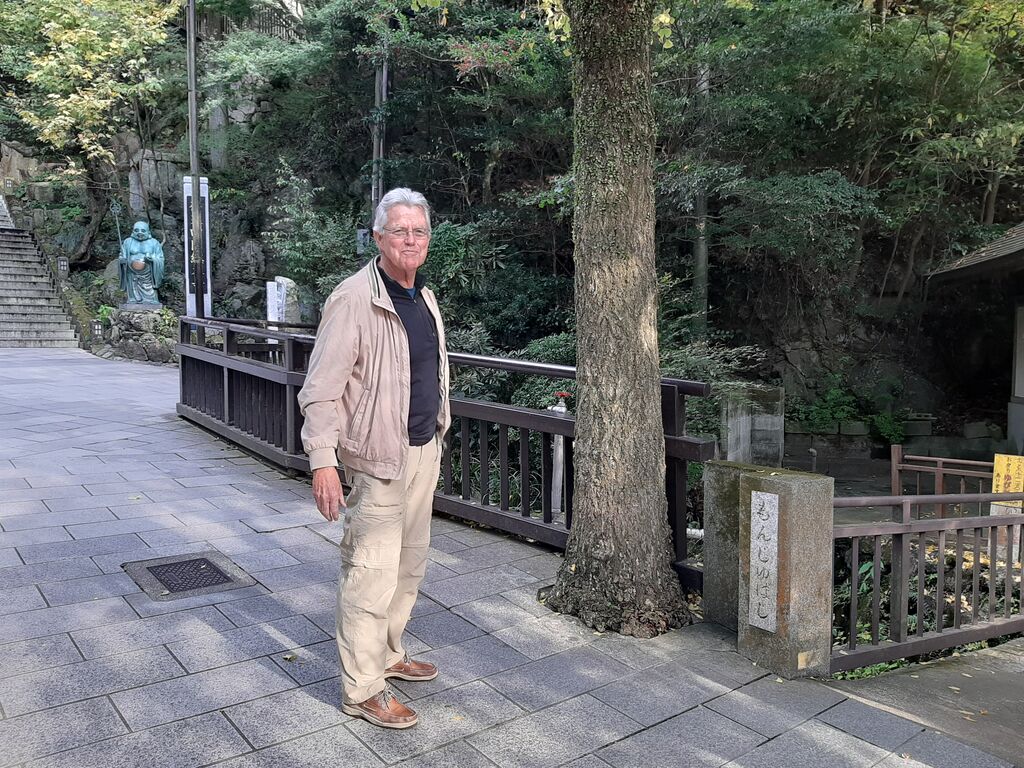
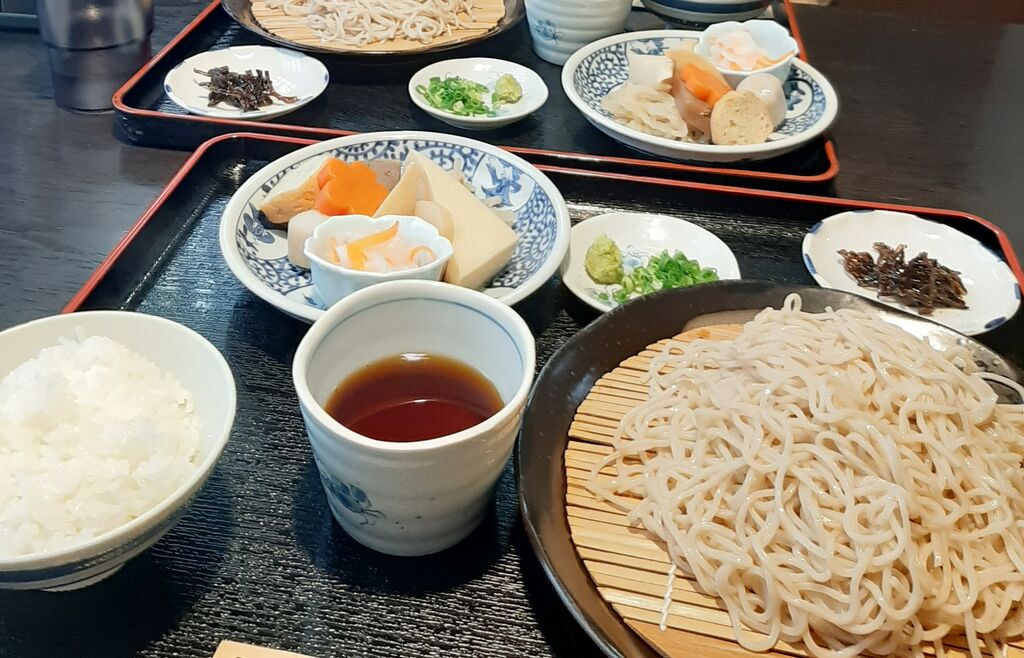
By chance, we found parking at a roadside temple and had soba set at "Tamaya" on the approach to Nanzoin.
The autumn foliage happened to be at its peak.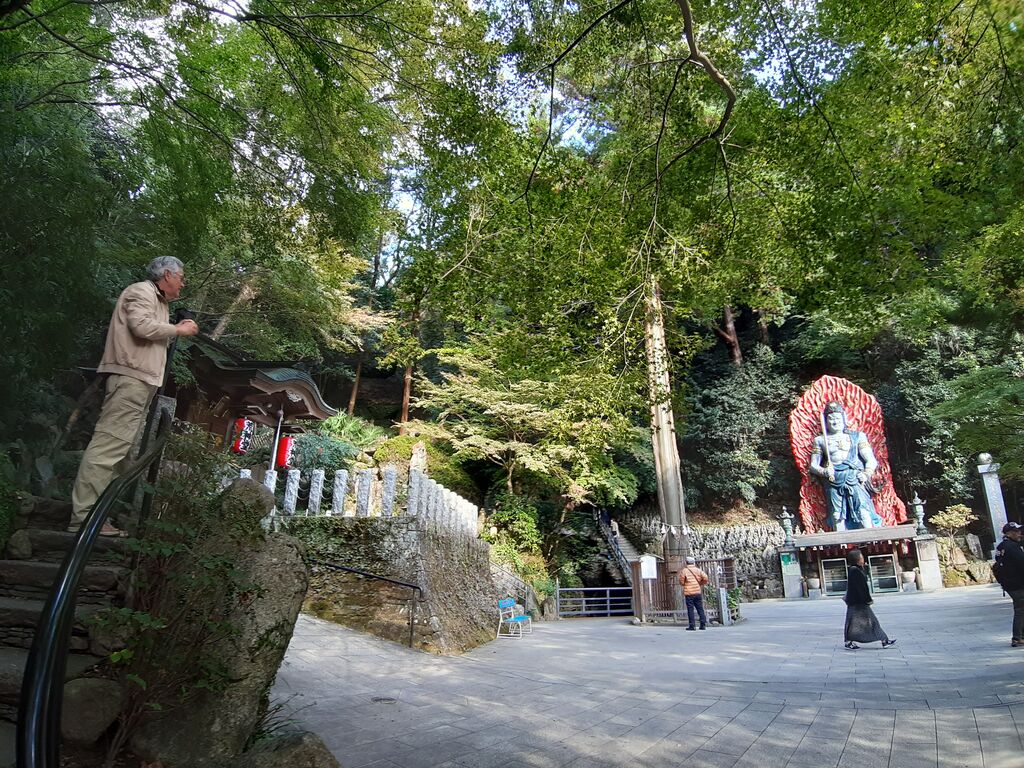
After the meal, we explored a large courtyard with a statue of Fudo Myo-o and walked along a path with waterfalls.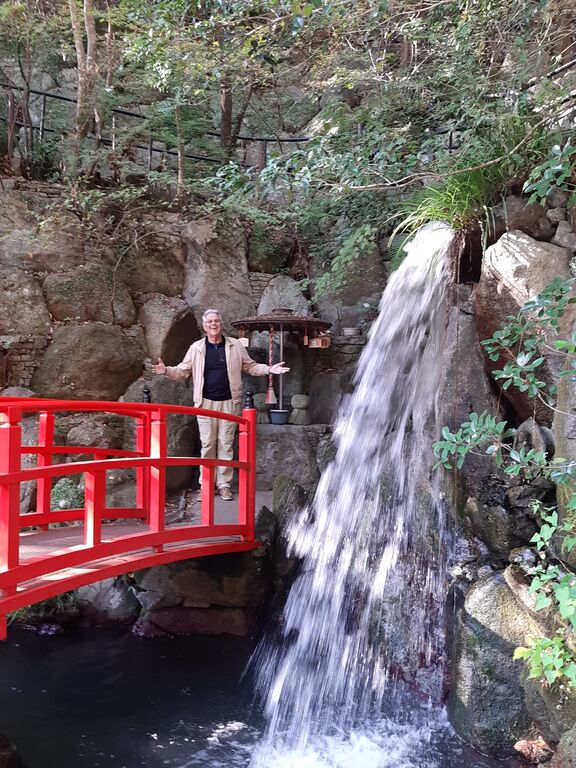
After a leisurely stroll, we finally faced the Nirvana statue.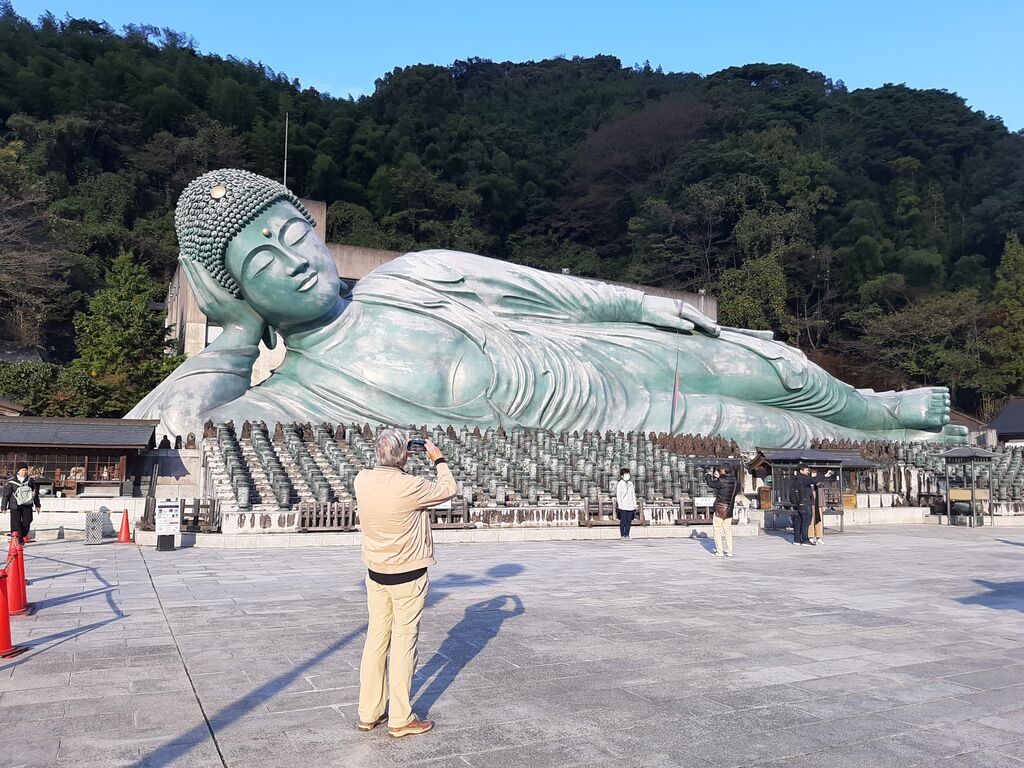
Habitually he is swimming several kilometers every morning in the sea off Melbourne, so this time, with some expectation he prepared for swimming.
I thought swimming in this season was unlikely, but before heading to the inn, we stopped by "Miyajitake Shrine," introduced the "Path of Light" connecting from beyond "Ai-no-shima" with sunlight and crossed the sea from the stone steps.
Then, to the "Miyaji-hama Beach."
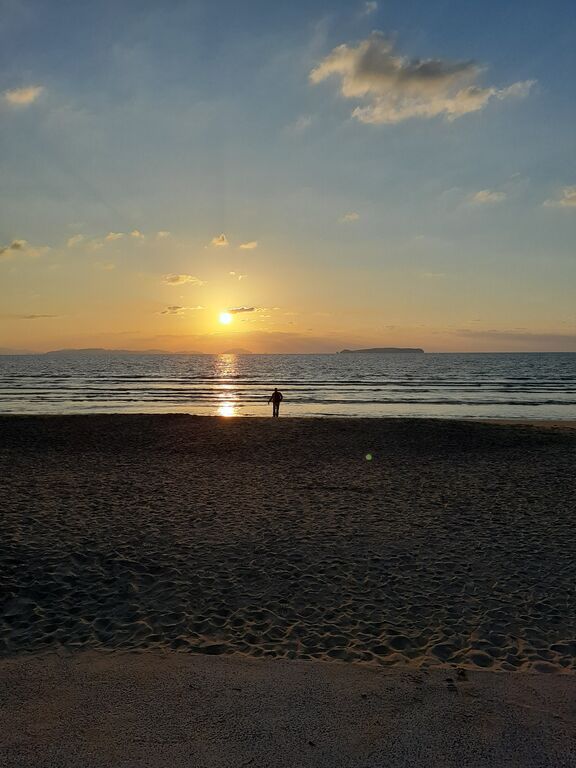
He checked the sea temperature, and said it should be okay, but this time, there might not be an opportunity.
My usual cycling route led us through the pine forest of Satsuki Matsubara, passing through Fukuoka's first roundabout, past Kane-saki Fishing Port, and along the coastal bike path.
On the way to the hotel, we stopped by my home, then headed to the hotel overlooking Genkai-sea and Ashiya, "Marine Terrace Ashiya" on a hill.
***
On the morning of November 16, we departed from "Marine Terrace Ashiya."
He mentioned walking part of the "Namikake Seaside Promenade" from early morning.
Since he couldn't reach "Doyama" and "Kario Senjo" due to time constraints, we walked a bit from the Kario Relay Station, explaining the legends associated with Doyama and gazing at Kario Senjo.
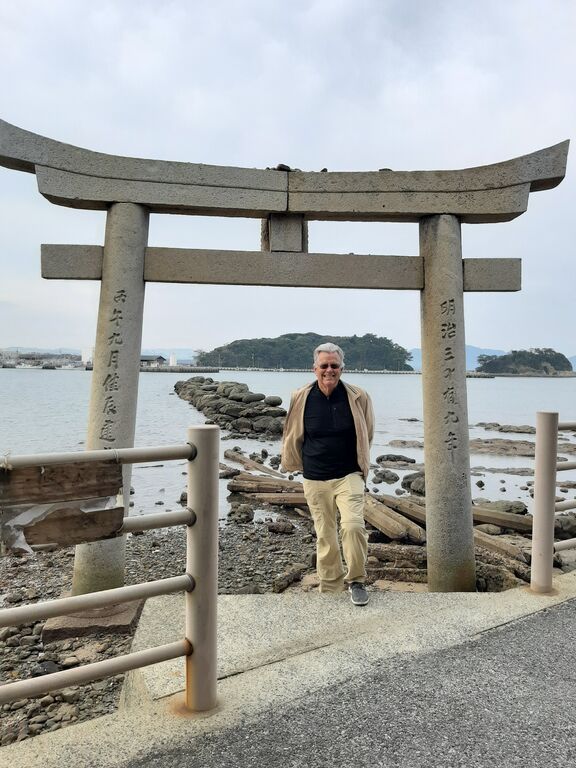
He showed interest in Kario Shrine's submerged torii gate and asked about the engraved era.
On the way from Kurosaki IC toward Nakatsu, I introduced him my entire outfit, all from Workman, including shoes, socks, pants, shirt, and outerwear, with individual prices.
He seemed to be interested and stopped by the "Workman Jyoshi" store in Einomaru, although he didn't buy anything due to limited carriage space.
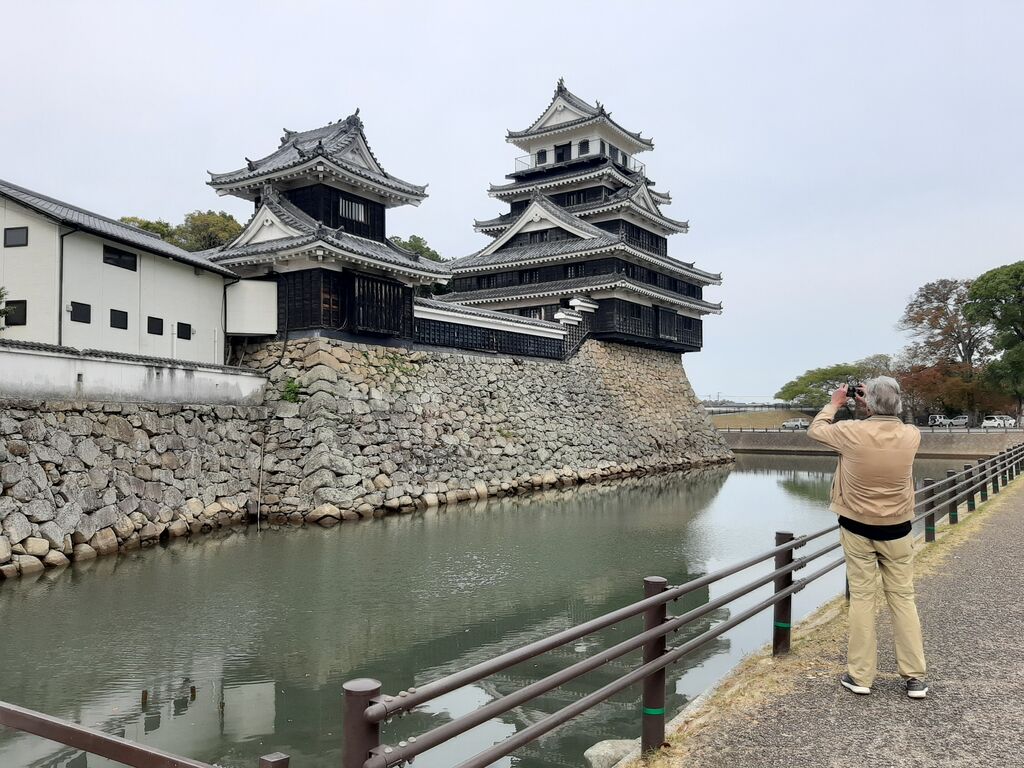
He had seen many Japanese castles designated as national treasures around the country.
I said, "the outlook of Nakatsu Castle should be fine," but in the end, we climbed to the top of the keep.
Interested in the struggles and governance between samurai clans during the Sengoku period, we briefly toured Nakatsu Castle, mentioning the bloody history of intrigue and slaughter, including blood-stained temples and red walls that still convey that history.
Since we were in Nakatsu, we tried to visit "Kitaro" for hamo katsu and Kanbei Gozen's meal, but it was full, with no prospect of waiting.
We stopped by a udon shop on the way and had tempura for lunch.
At the "Aoh no Doh-mon"
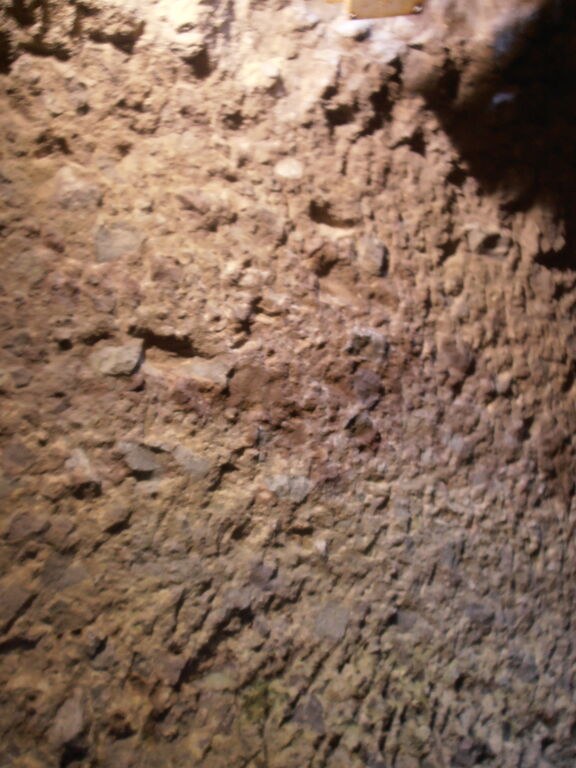
I explained to him the history of the "Aoh no Doh-mon" - a Buddhist priest on his way to the headquarter temple having heard that several people had fallen down from the rock wall sidewalk to death, he determined to make a tunnel through the rock wall by himself. It was completed 30 years later.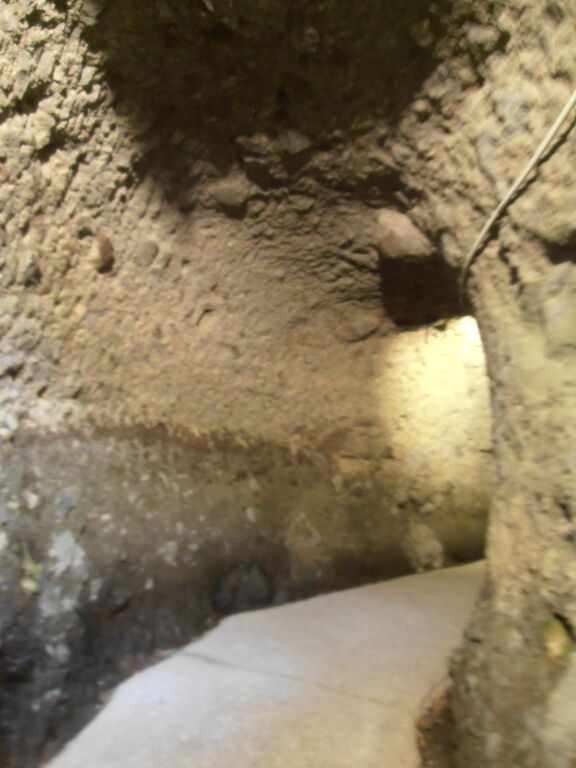
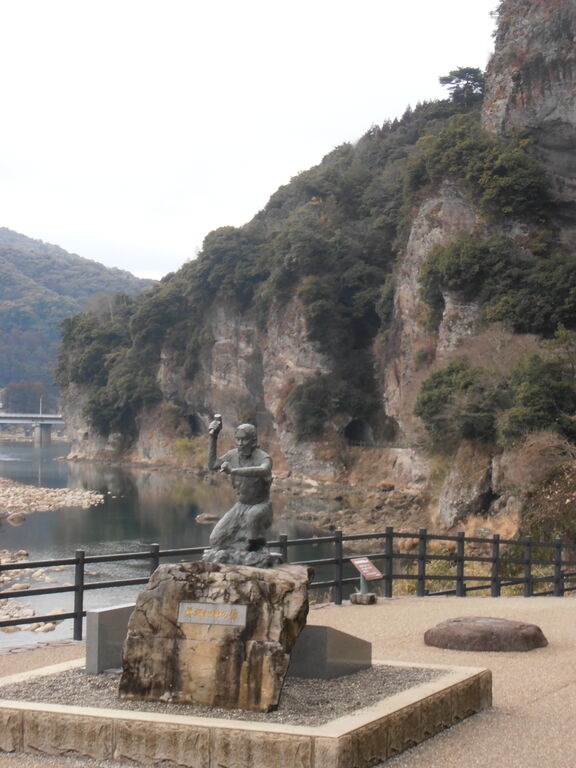
On the lift to the "Rakan-ji" temple, we learned about the change in the temple's policy since October, requiring a permit before selling tickets.
We reluctantly walked back a bit, climbed the stone steps to the Rakan-ji approach, and arrived at the reception.
The woman at the reception explained,
"Rakan-ji is strictly a place of worship, and we do not allow entry for mere tourists.
Therefore, after entering, please offer prayers at various places such as stone Buddhas and shrines, purify your mind and body, and visit with reverence.
Also, photography with smartphones inside the cave and main hall is prohibited. ... bla bla!"
This lengthy lecture, along with a strong emphasis on not using the lift, made it clear that walking up was expected.
Replied, due to time constraints and being foreign visitors, we hoped to be spared from the walking pilgrimage, instead we would silently vow to the respectful sites as we passed the mentioned areas on the lift.
We reluctantly endured the somewhat preachy sermon, paid 1000 yen per person at the reception, and received a permit to enter Rakan-ji.
I wanted to say a lot, but we held back our excitement and headed to the lift ticket counter.
At the lift ticket counter, we showed the entry permit and purchased round-trip lift tickets for 800 yen.
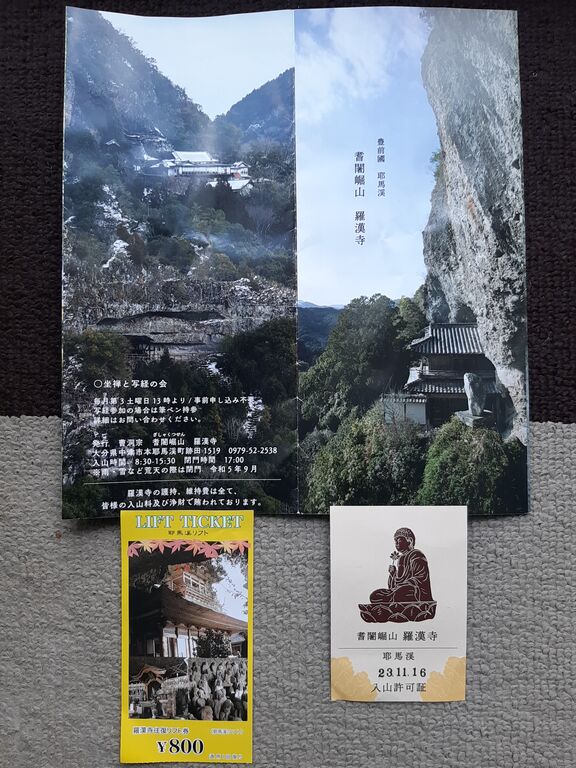
The male lift staff remarked, "with sneakers and a bright jumper, why did they allow you in quite easily," showing surprise, and continued.
- Entrants with cameras were told to leave their cameras at the information centre when obtaining the entry permit.
- Additionally, short sleeves and shorts were not allowed for entry, and those with an unfriendly appearance were also prohibited.
- This policy has significantly reduced lift riders.
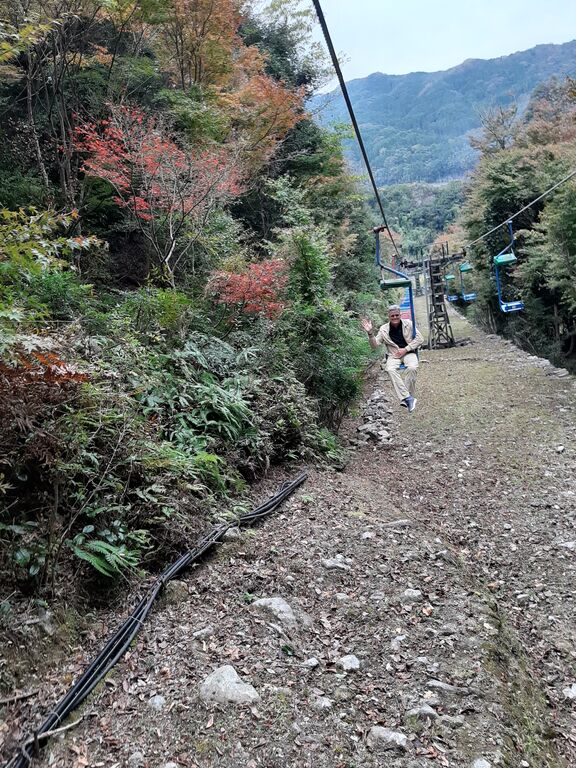
Due to the special consideration by the temple, luckily the visitors were rare in the best autumn season.
Who dare to cut off the smartphone power and/or stop taking photos, in such a photogenic site.
(as a gesture, herewith I refrain from putting the latest photo images, but providing with the recorded ones I took several years ago)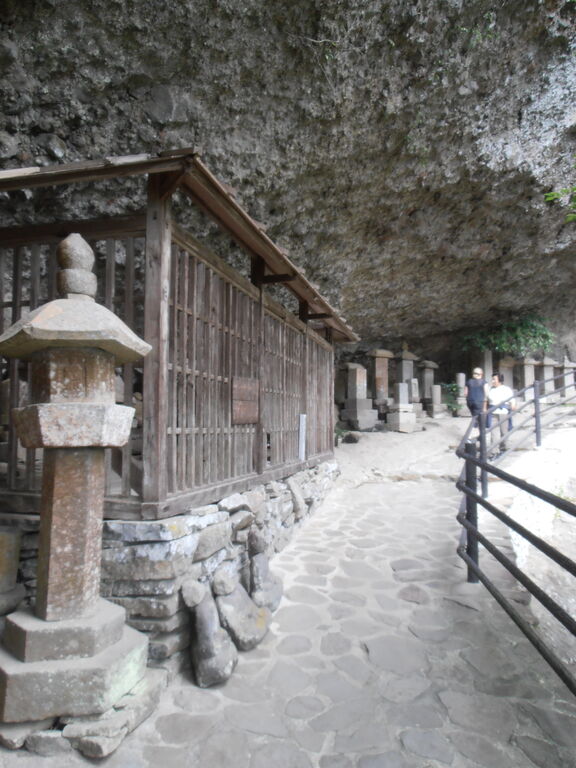
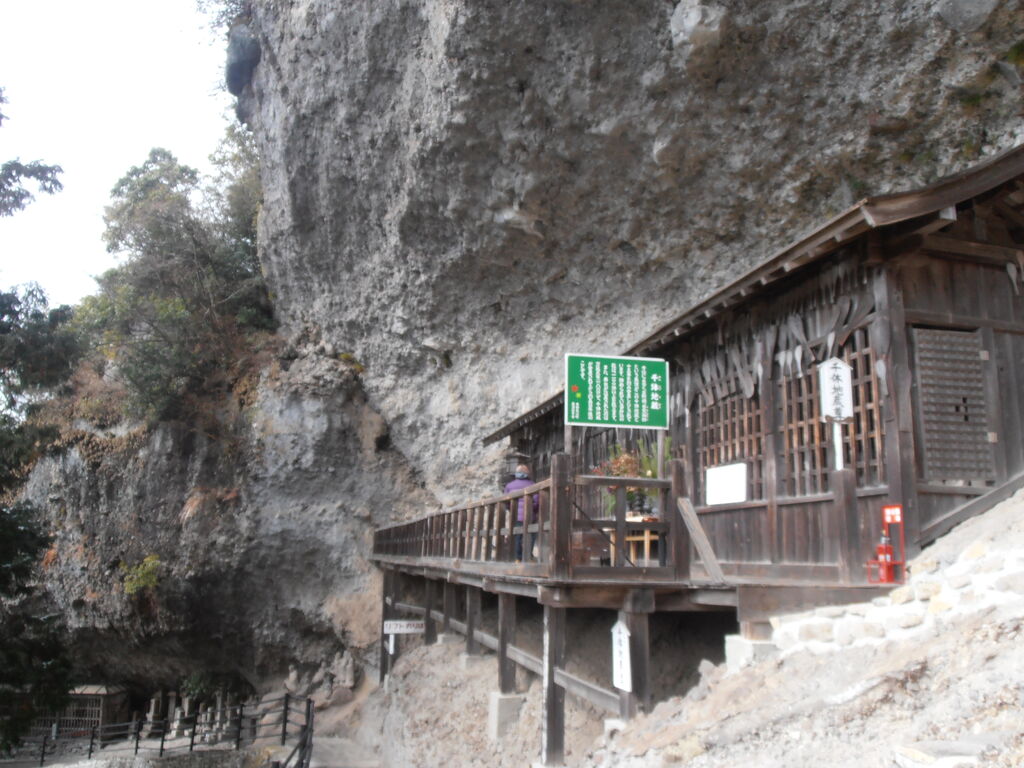
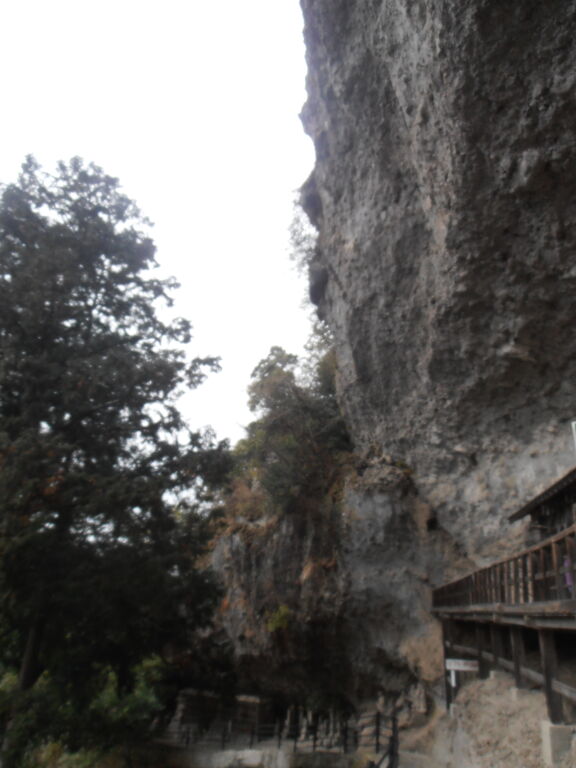
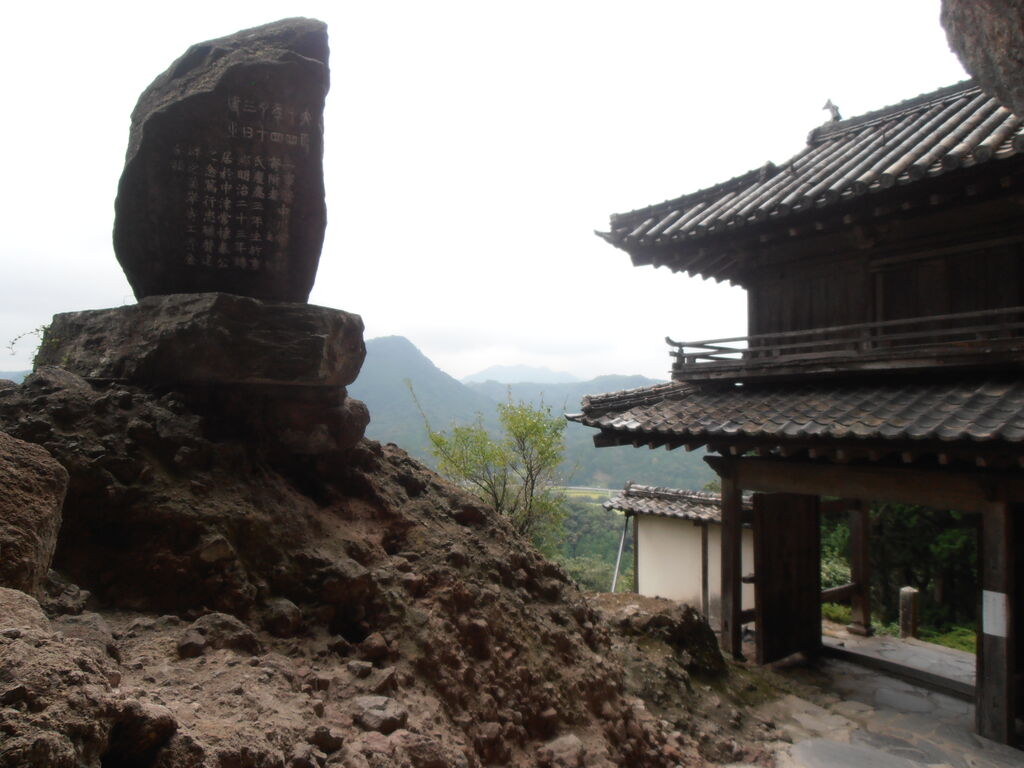
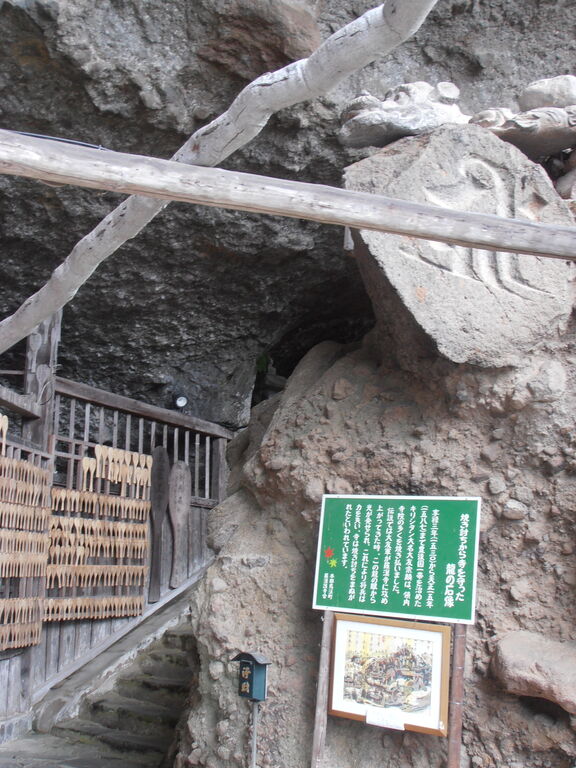
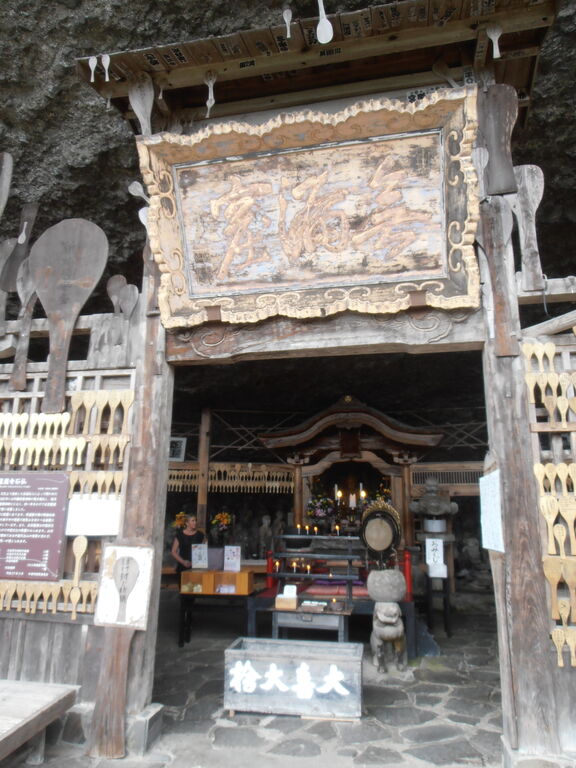
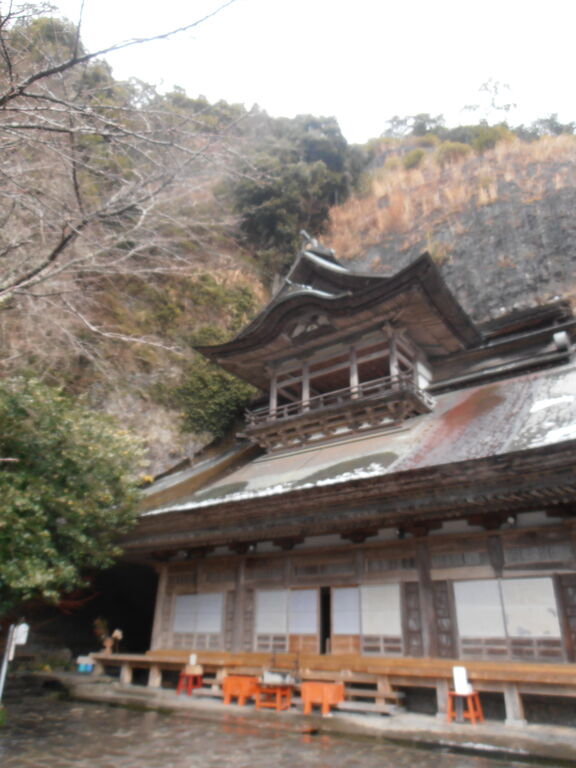
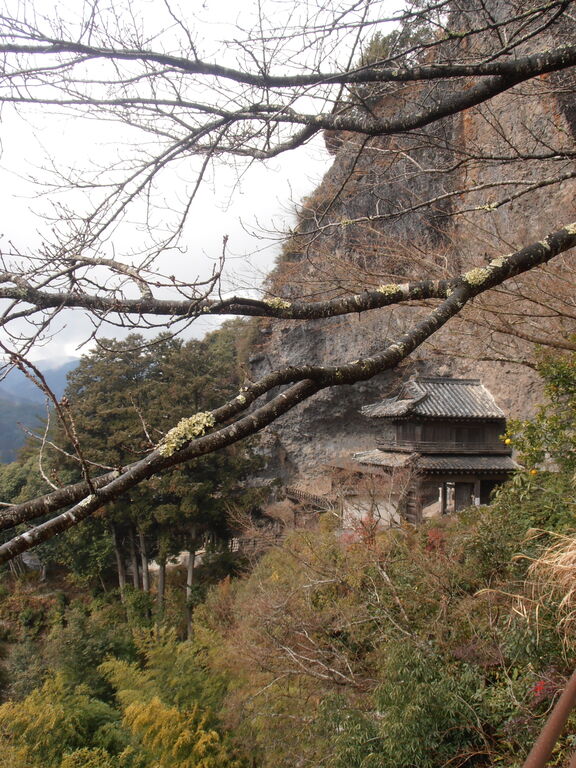
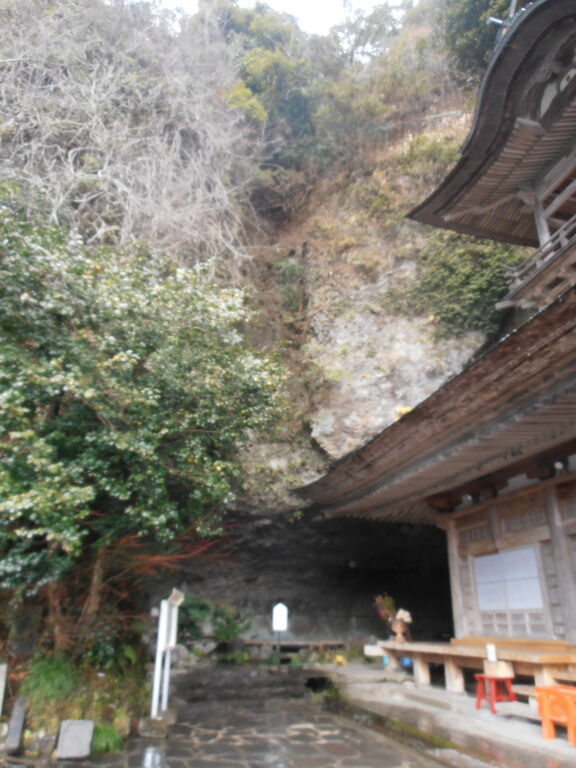
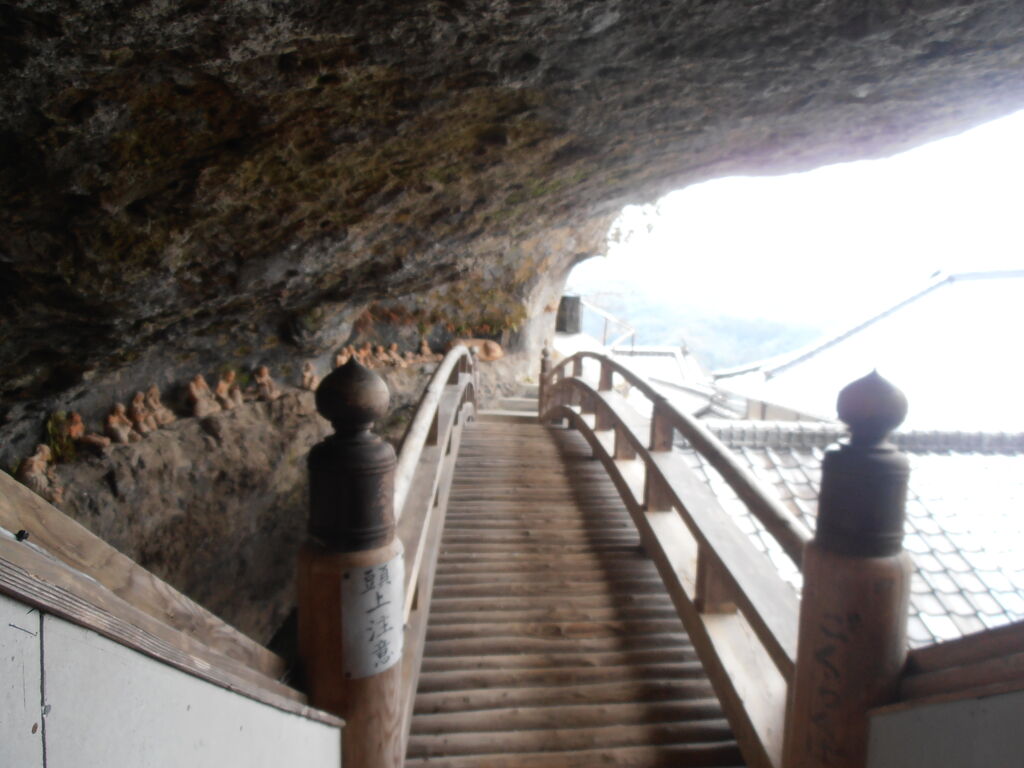
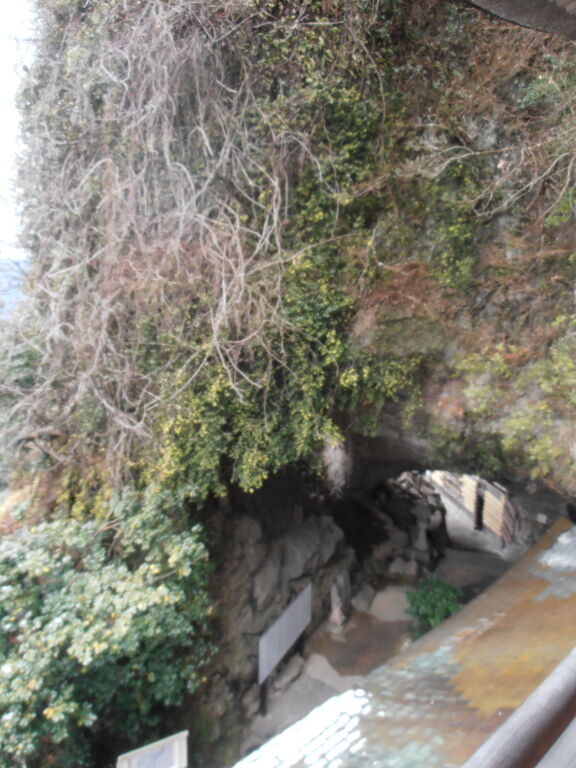
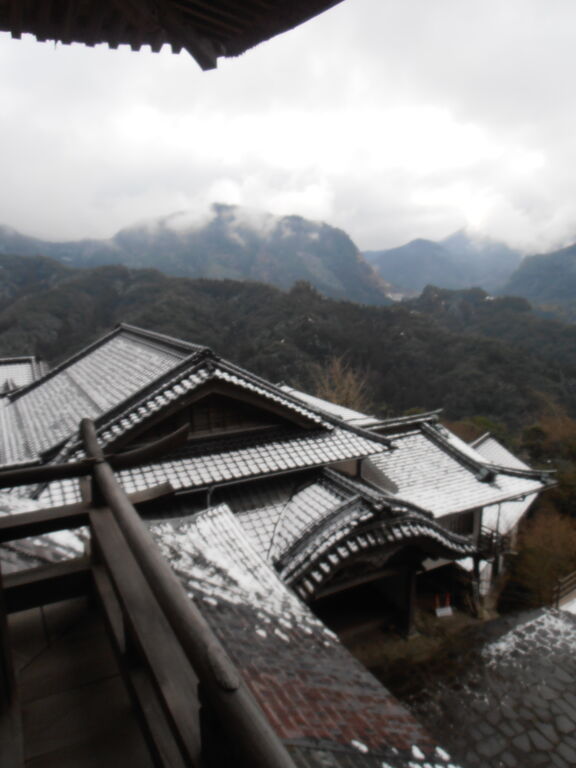
We toured the Rakan-ji temple area, and when he took a photo of the distant Yabakei with his smartphone and made the shutter sound.
Apparently, the staff had noticed, as the man on patrol came over and started the criticizing lecture.
Said, "Sorry, since he's a foreigner, he seems not to understand. "
After that, we changed our strategy (silencing his iPhone shutter sound).
I stuck close to the staff member and kept telling him, as if genuinely interested in the temple and its beliefs, diverting his attention.
With this, we managed to get some free photography time.
***
We transferred lifts to the top, where we gazed at the Yabakei foliage from the observation point.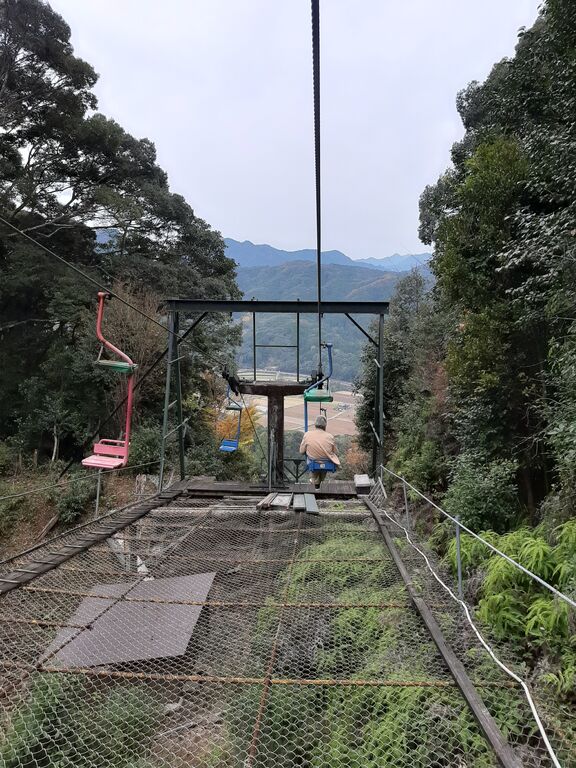
Unfortunately, the Yabakei foliage was already past its peak, and there was a shadow over its color.
We visited the "Hitome Hakkai (8 nice views at a glance)" in the deep Yabakei, but since the peak foliage was over, we couldn't enjoy the autumn sunlight on the foliage.
We could only admire it from the car window.
Unexpectedly, with a significant cut in the autumn foliage hunting time at the deep Yabakei, we had time to visit the "Sarutobi Sen-tsubo-Kyo Gorge" planned for the next morning.
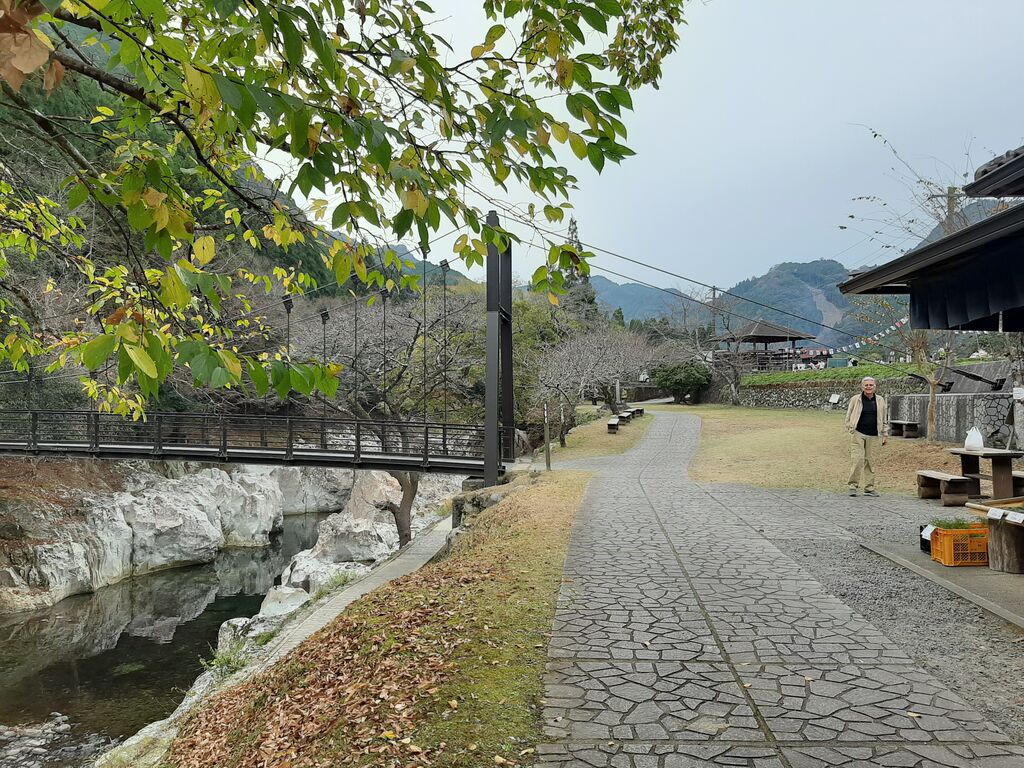
Sarutobi Sen-tsumo-kyo Gorge was also past its autumn peak, and it was late, so there were few people.
We at least viewed the holes in the white rock bed and the riverbed from the riverside and procured some roasted sweet potatoes being baked by old men while chatting at the shop.
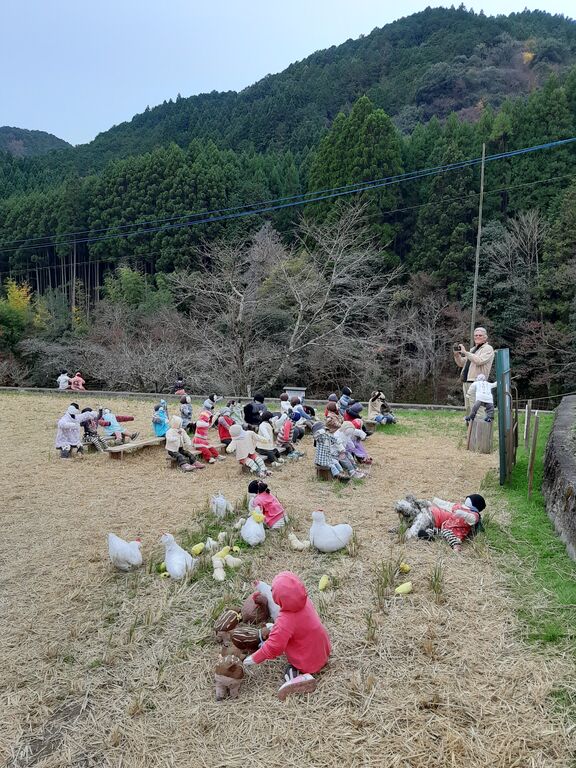
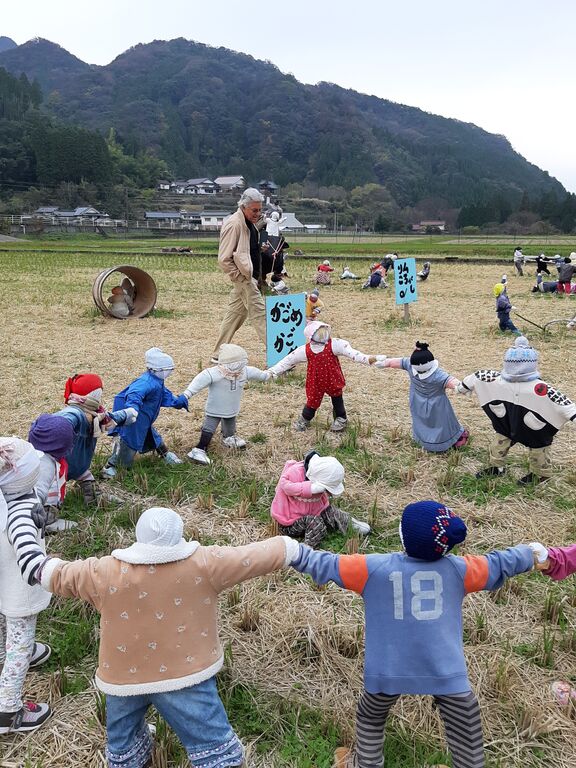
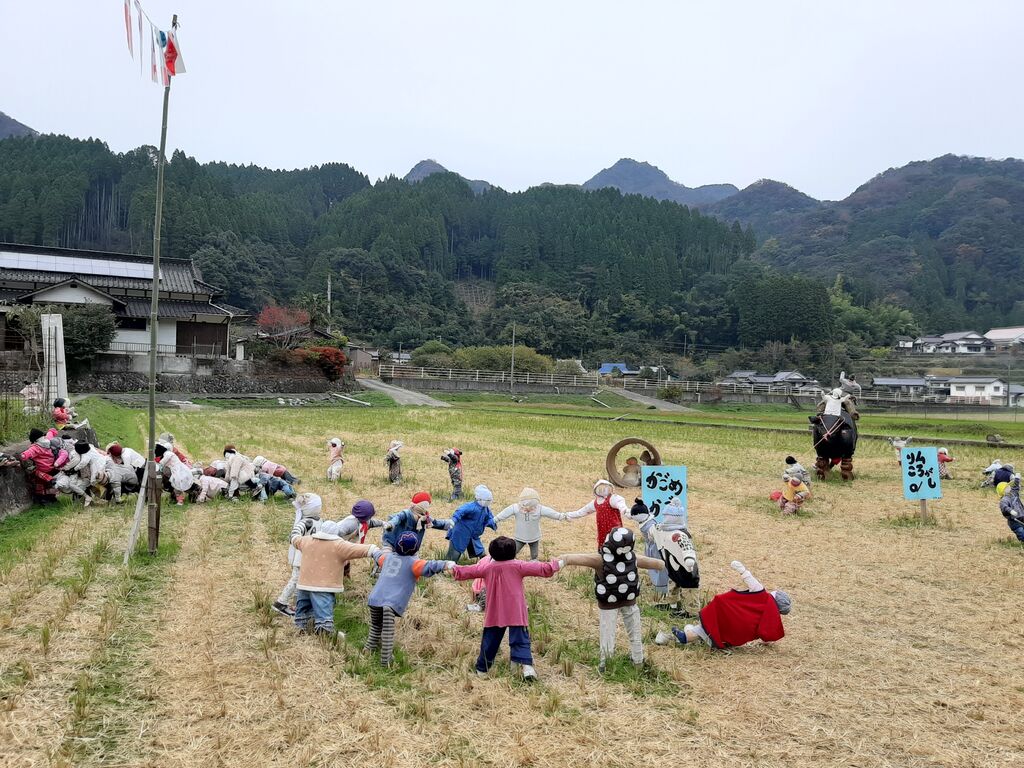
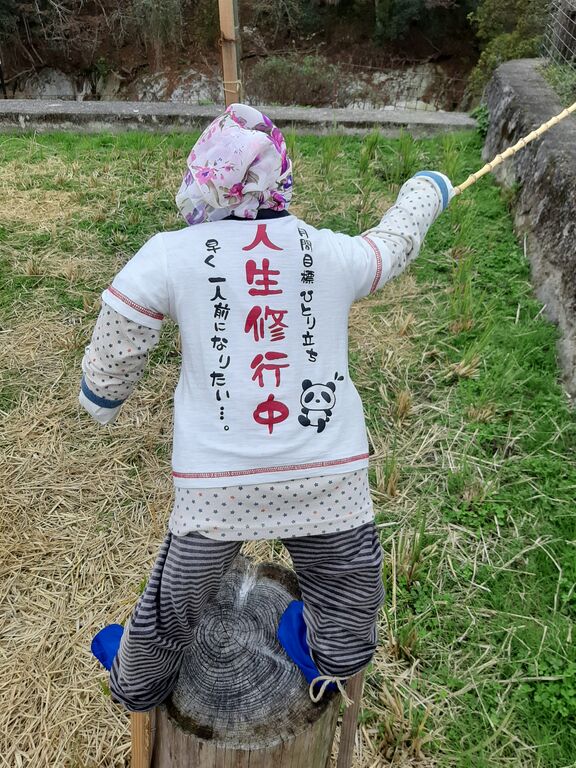
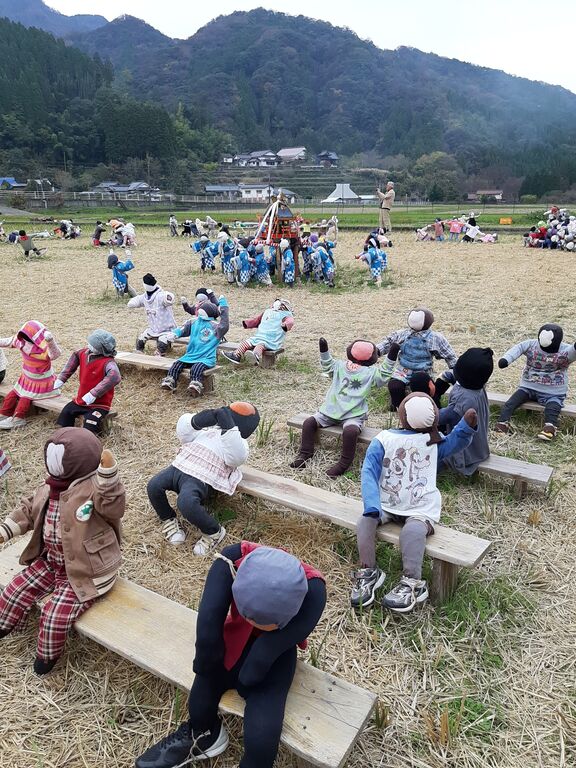
Near the parking lot, there were scarecrows made by local volunteers, creating a lively atmosphere.
The next day, we planned to cycle around the city of Hita and the town of Mameda, so we chose a very casual accommodation, "Yasuragi no Sato Yamakuni," which is the closest to Hita.
With no nearby restaurants, we had a meal in the dining room and then relaxed in the inn's hot spring.
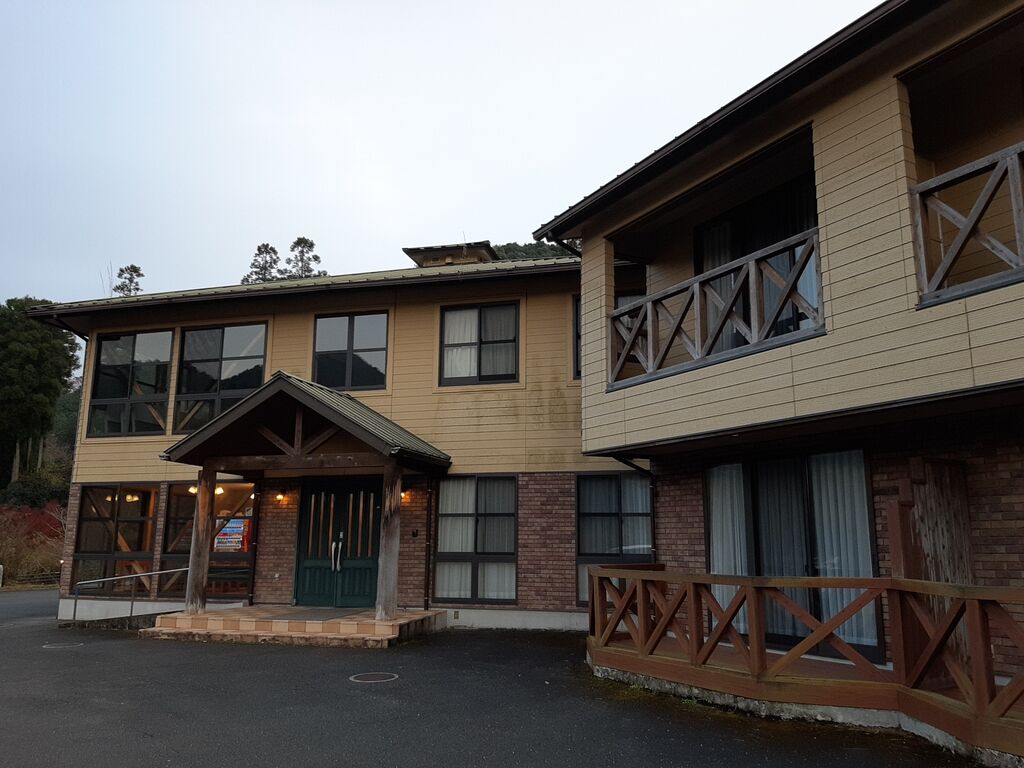
The accommodation building was a simple Japanese-style room with bunk beds or a ten-tatami mat room.
Although extremely simple, it offered a dark, quiet world where only the lights of houses across the Yama-kuni River could be seen through the window.
It was a peaceful setting – sometimes, simplicity is just as good.


Comments
Post a Comment