Ashiya Sand Sculpture Exhibition 2023 @ Ashiya "Aquacian"
I'm not a big fan of bugs, especially those flat, shiny brown cockroaches.
But back in my childhood, bugs were one of our mischievous playthings for us.
Tying thread under the wings of ladybugs, holding them in our hands, and letting several of them fly at once while we ran...
Or using a homemade slingshot and tiny pebbles to knock down cicadas singing in the trees...
In the evening, we'd stick our fingers into the small holes in the ground and catch the cicada larvae (cicada nymphs) clinging tightly, then let them rest on the garden trees, observing how they moulted late at night...
I might have read the children's book "Fabre's Tales of Insects," but I have no memory of it at all.

As this season approaches, I find myself peeking at the preparation stage of the works in progress and watching the exhibition on TV, thinking, "I have to go!"
Ashiya is known for producing numerous Cast Iron Tea Kettles used in the Tea Ceremony, several hundreds of years ago.
Out of 9 National Treasure Iron Tea Kettles, 8 were produced in the Ashiya area using Ashiya sand. (Even today, young professionals are creating the Kettles for traditional Tea Ceremony use.)
Every year, except for the two years during the COVID-19 pandemic, Ashiya hosts the "Ashiya Sand Sculpture Exhibition" using meticulously fine-grained sea sand.
This year's theme.
Insects.
I wasn't too eager but headed to the venue late in the afternoon on a weekday expecting fewer visitors.
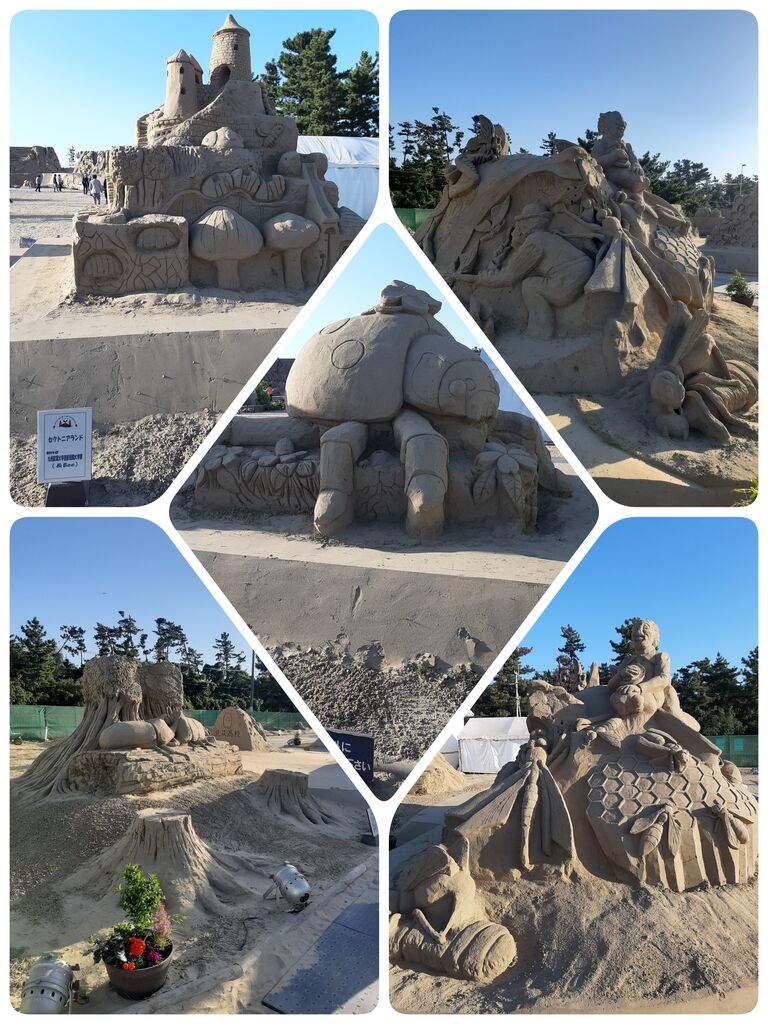
The various sand sculptures created by local enthusiasts have been improving in craftsmanship year after year.
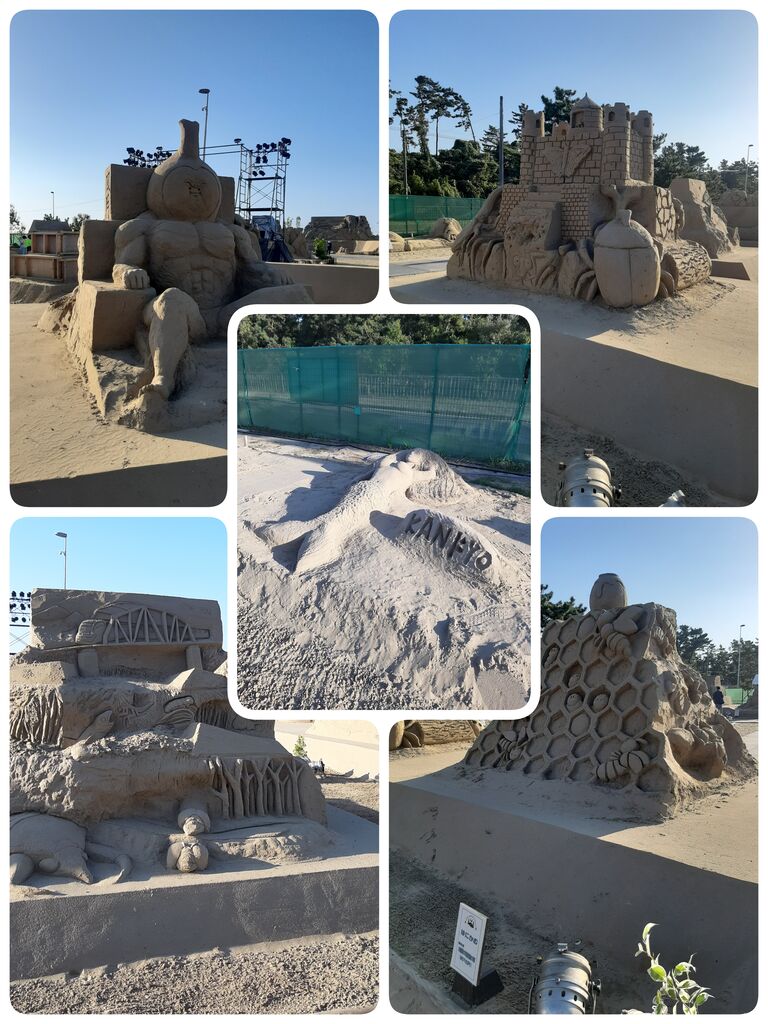
With the guidance of experts, creating such large-scale works is truly impressive.
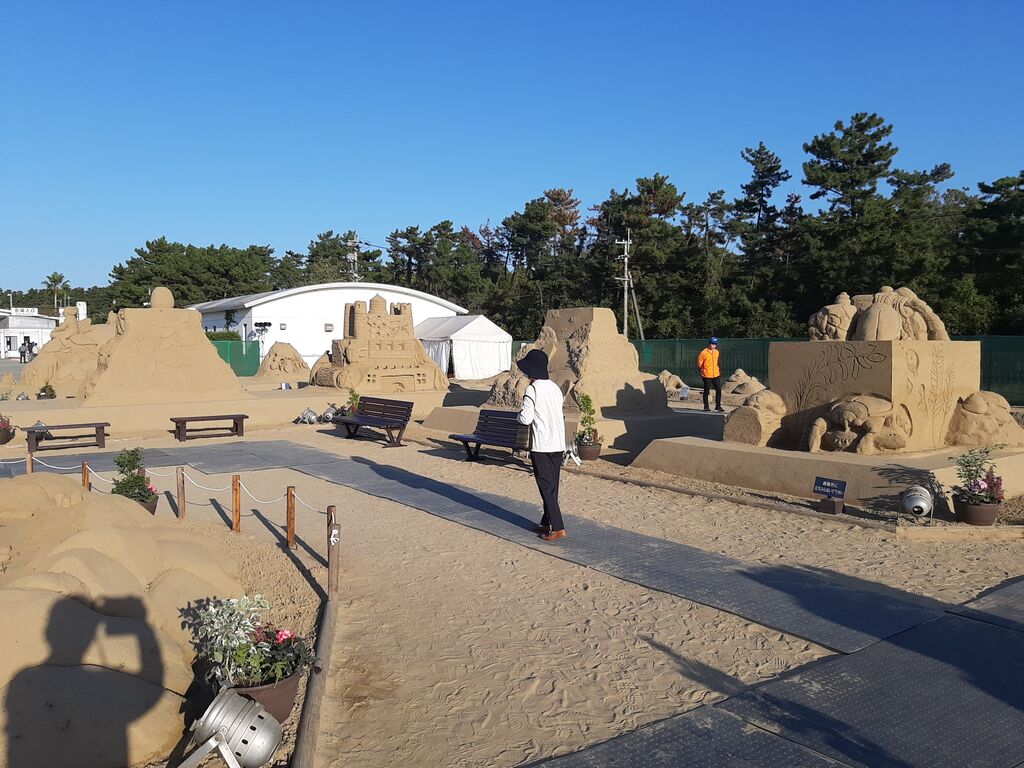
As I arrive in the late afternoon, the shadow's length tells the sun is nearly setting.
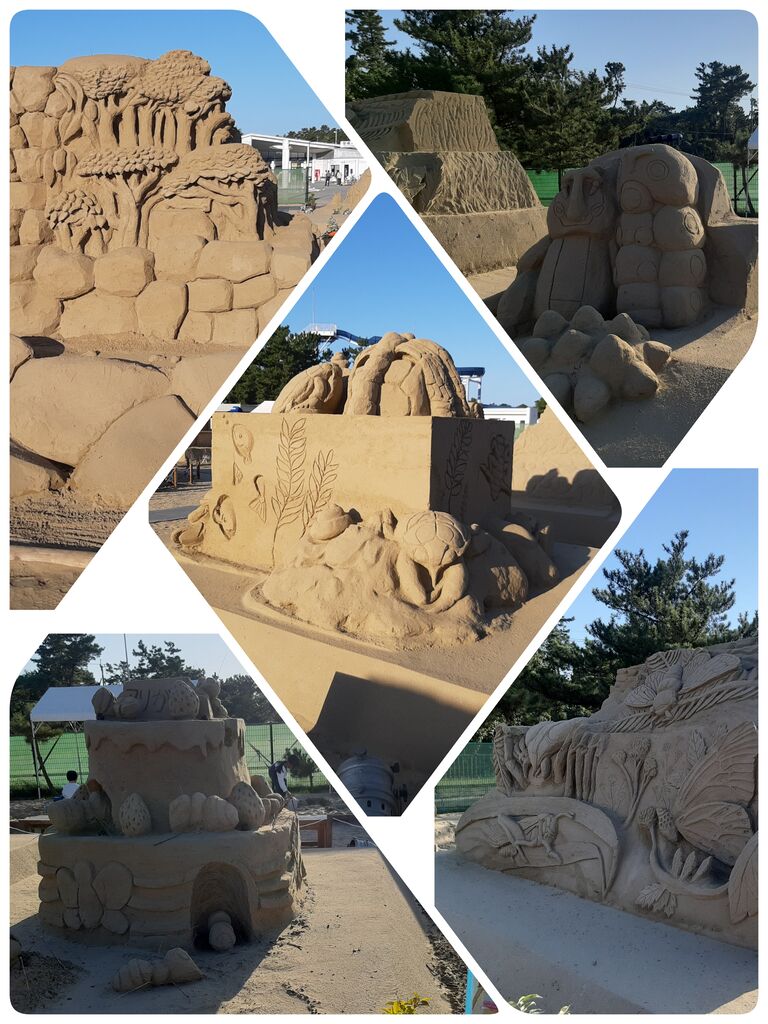
These large-scale works are truly impressive, even the members having got guidance from experts,
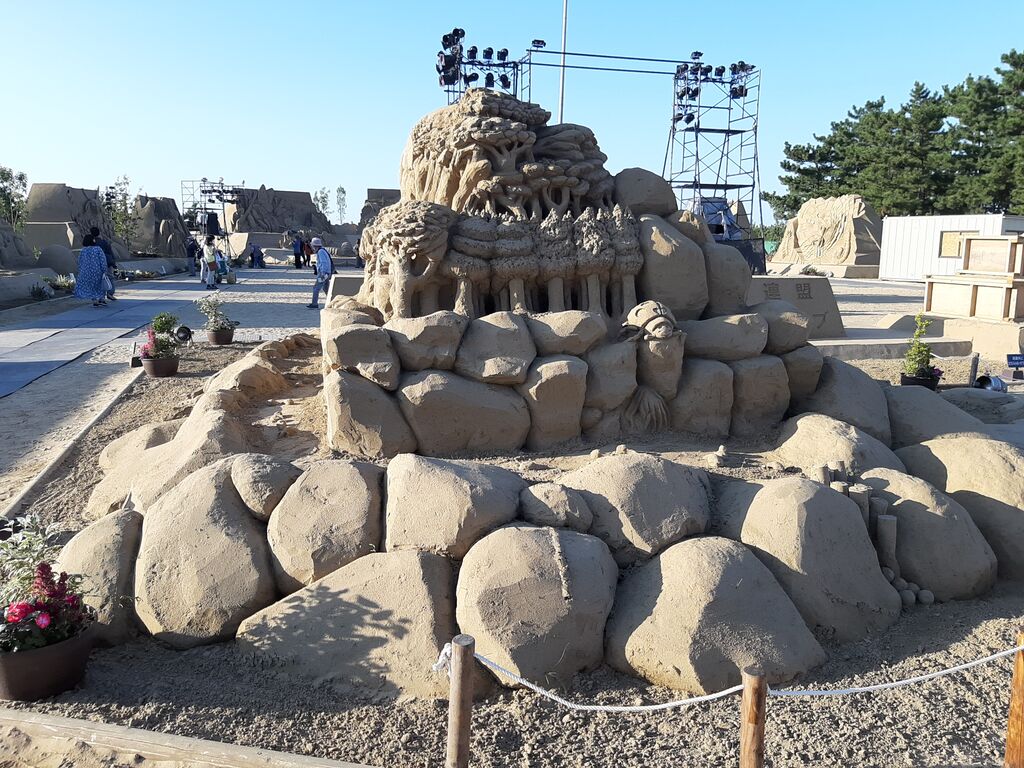
I was impressed by the relief-like details.
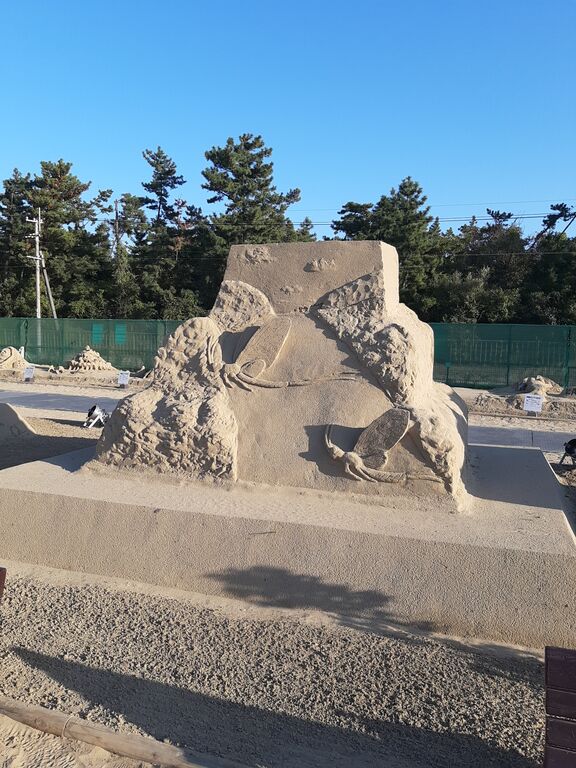
Even at this late hour, the practice jets are still taking off and landing at the nearby Air Self-Defense Force base.
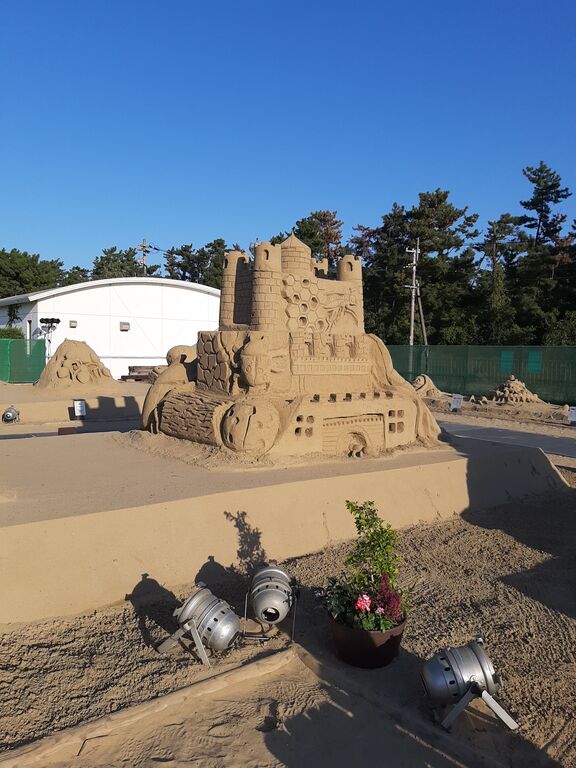
Avoiding backlighting, the photos in the shadows turn out completely dark (obviously).
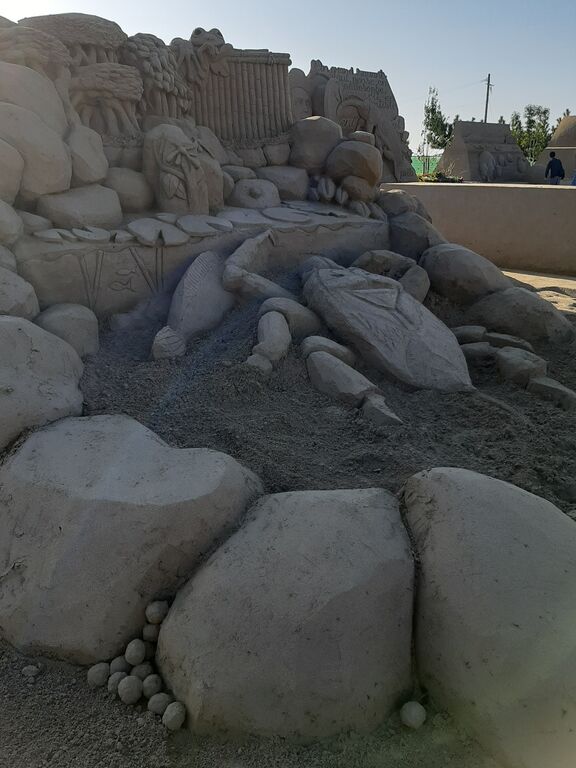
This year's creators: From overseas, professional sand sculptors have joined in.
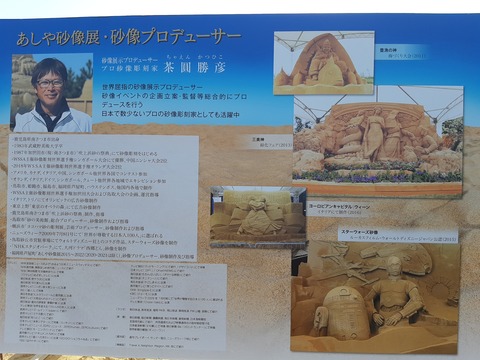
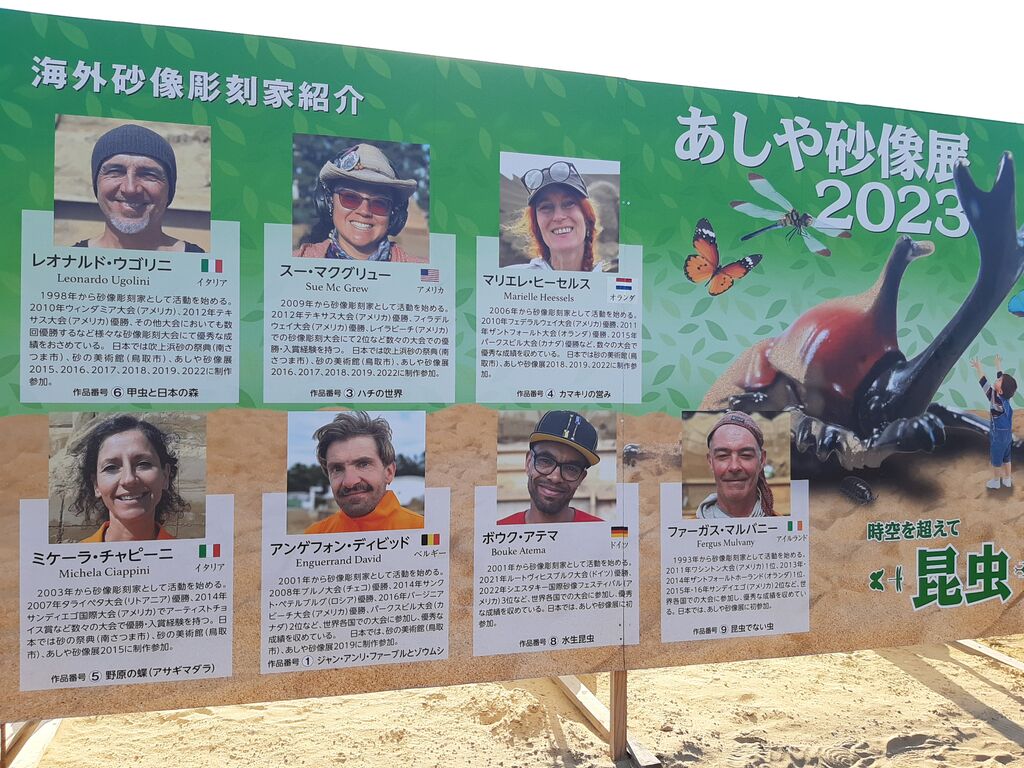
Their work, in every aspect from design to composition and finish, is truly magnificent.

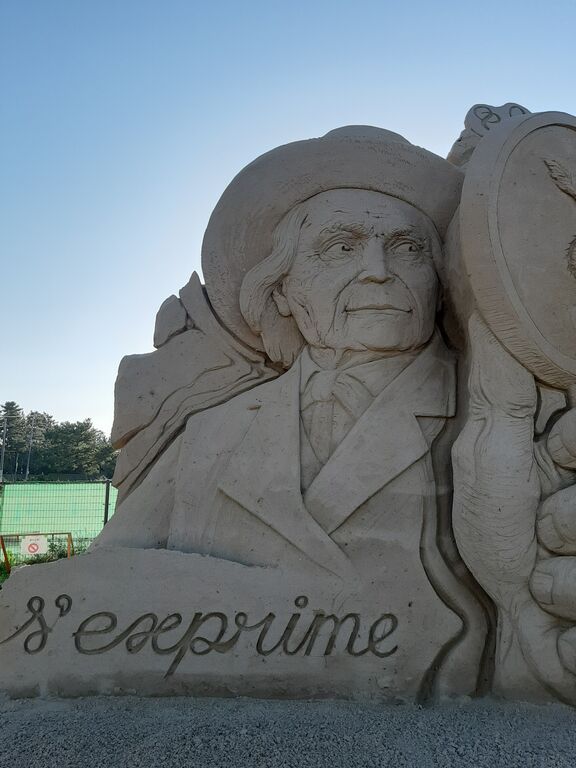
What's this?
In French?
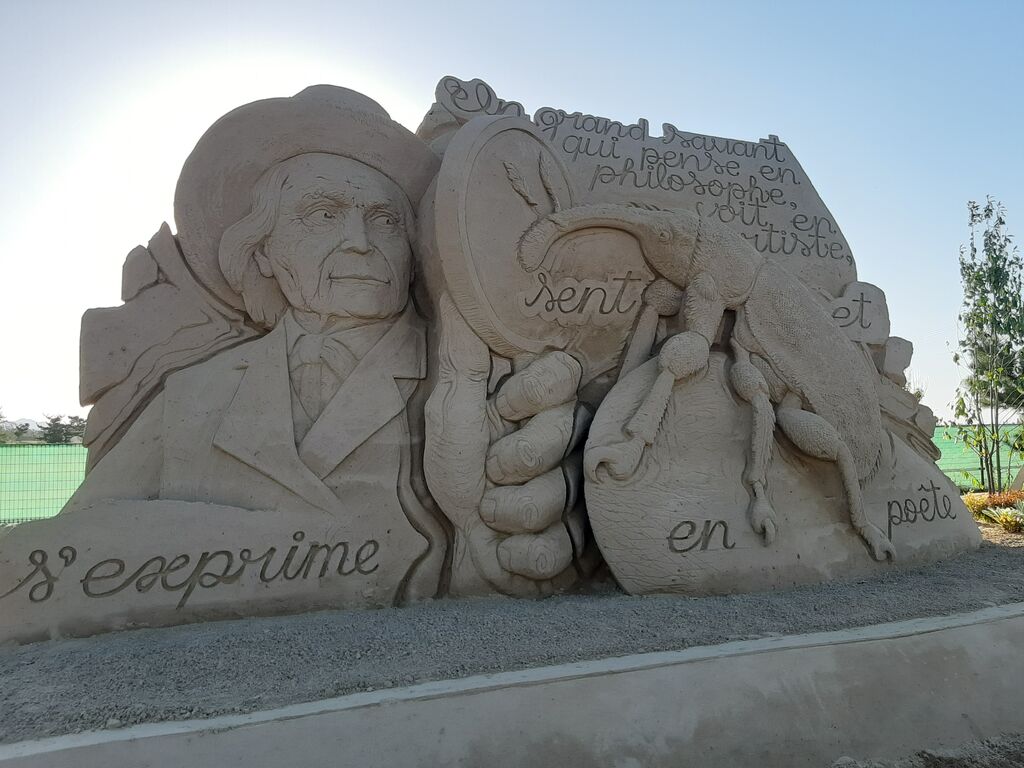
It's said that Jean-Henri Fabre meticulously observed the life cycle of dor beetles from when they bored holes into acorns for laying eggs to the growth of larvae into adult beetles.
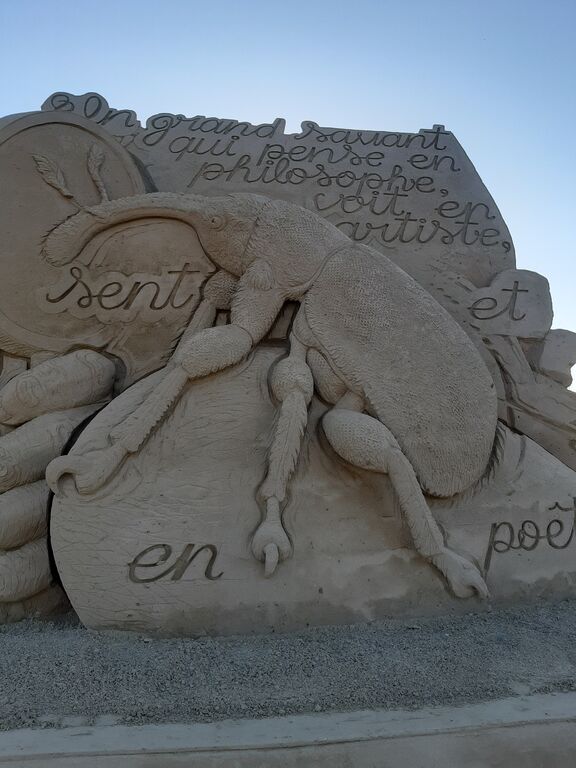
The first piece with a portrait of Jean-Henri Fabre.
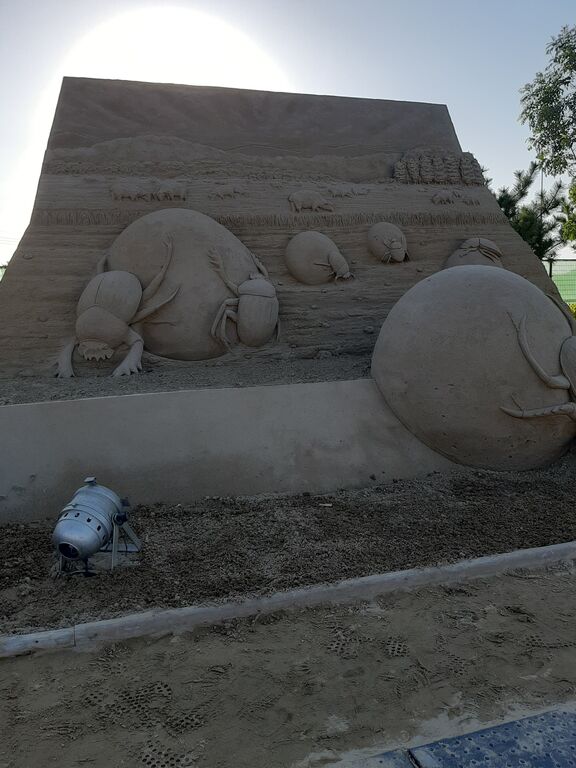
Followed by the initial episode from "Fabre's Insect Record" – the Dung Beetle.
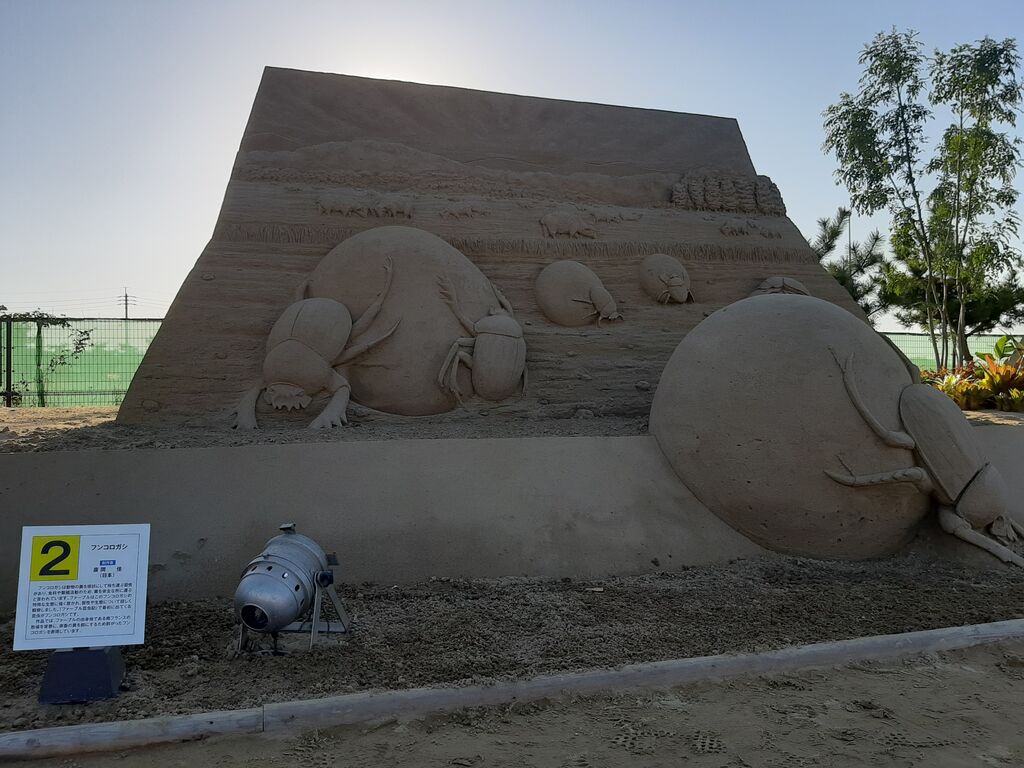
Depicting the agricultural landscape of southern France...
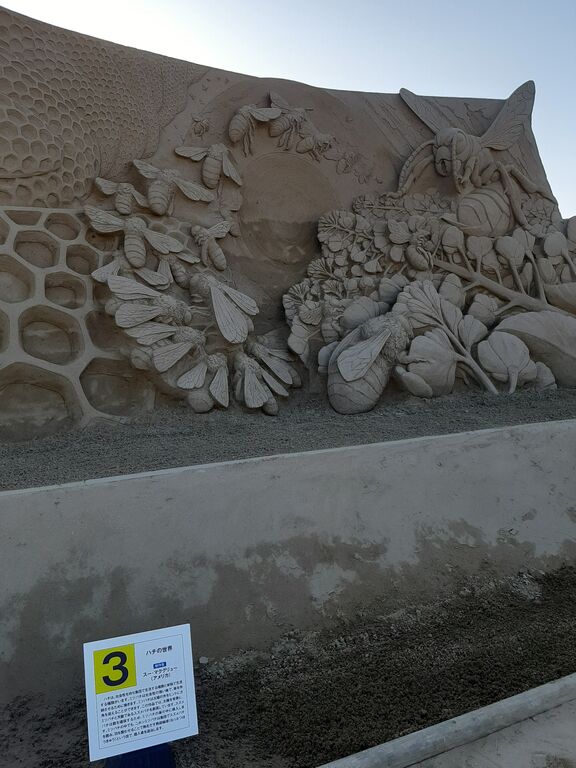
This is the ecology of Japanese honeybees.
When the natural enemy, the giant hornet, intrudes into the nest, Japanese honeybees surround it, vibrating their wings and using a self-sacrificing technique called "heat-killing bee ball" to eliminate it.
It was explained in the brochure that they are also expressing this scene.
It's a bit hard to see in the shadow, but there's a praying mantis.
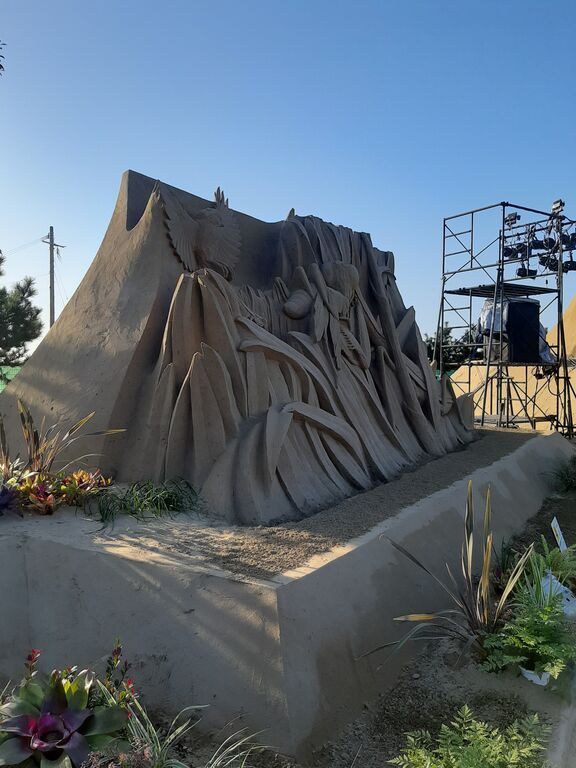
The hunting scene looks intense!
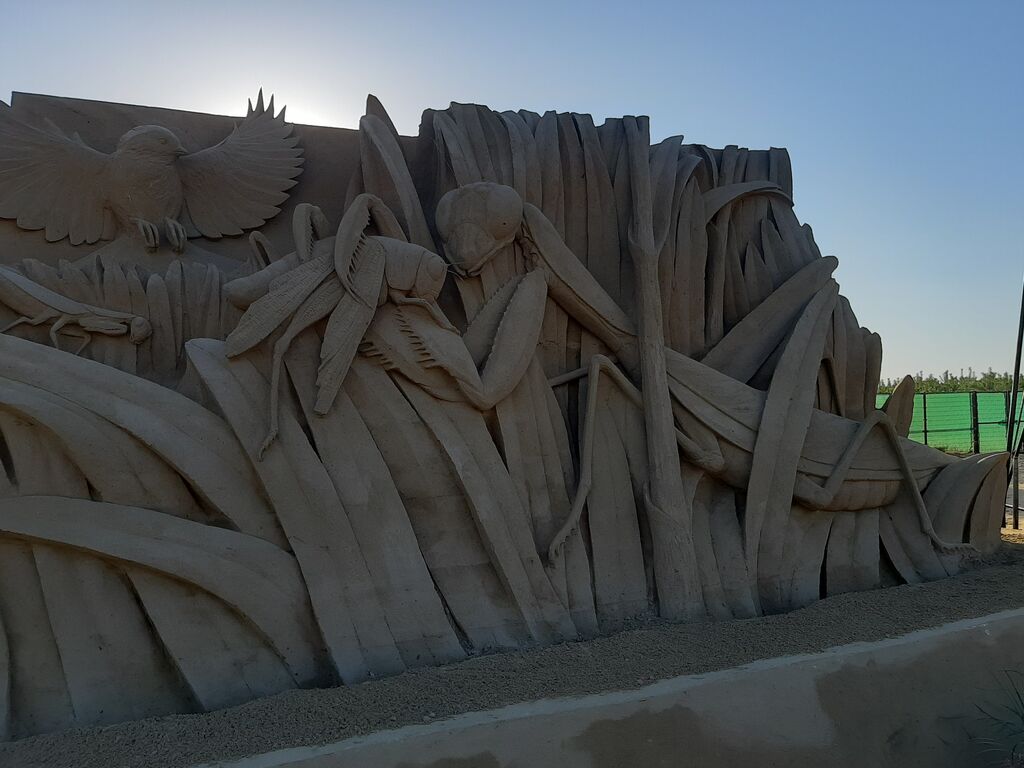
Here comes the main event!
The imposing stance increases the excitement.

A cricket and a bell-ringer cricket.
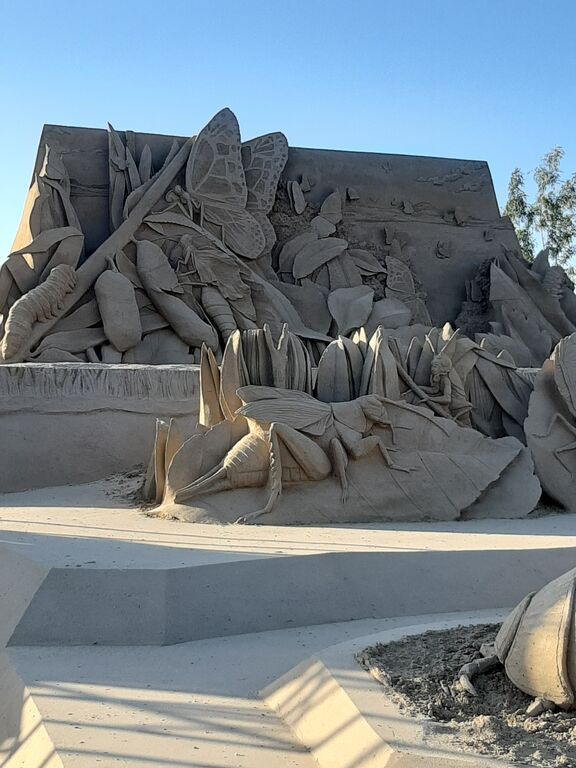
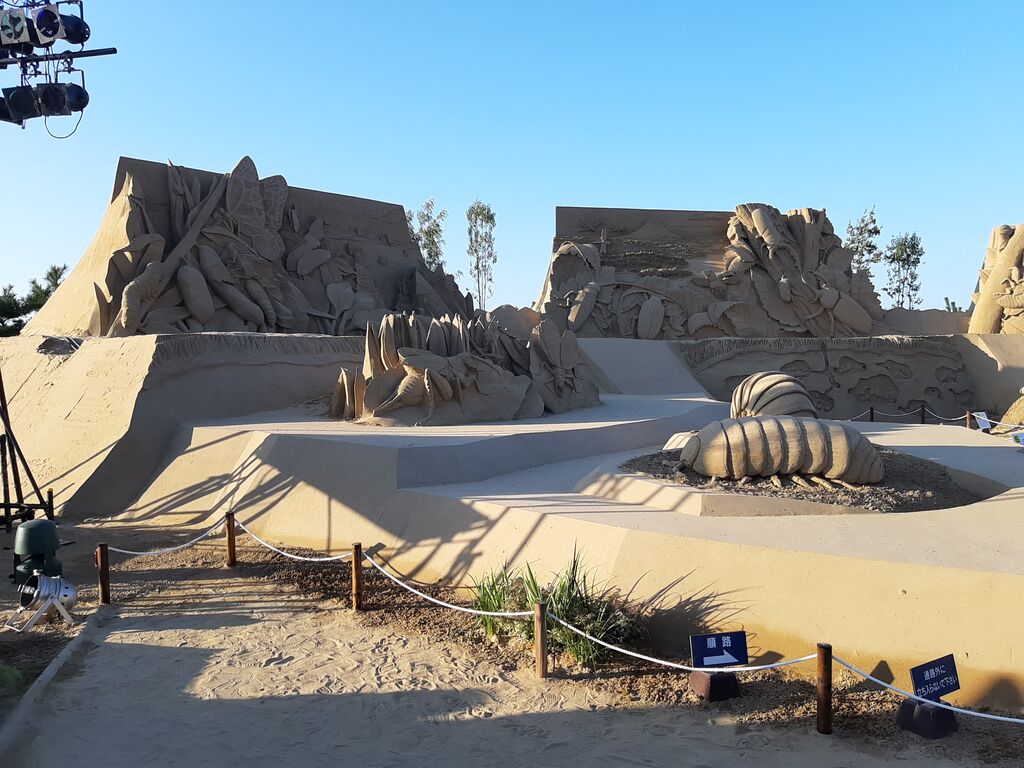
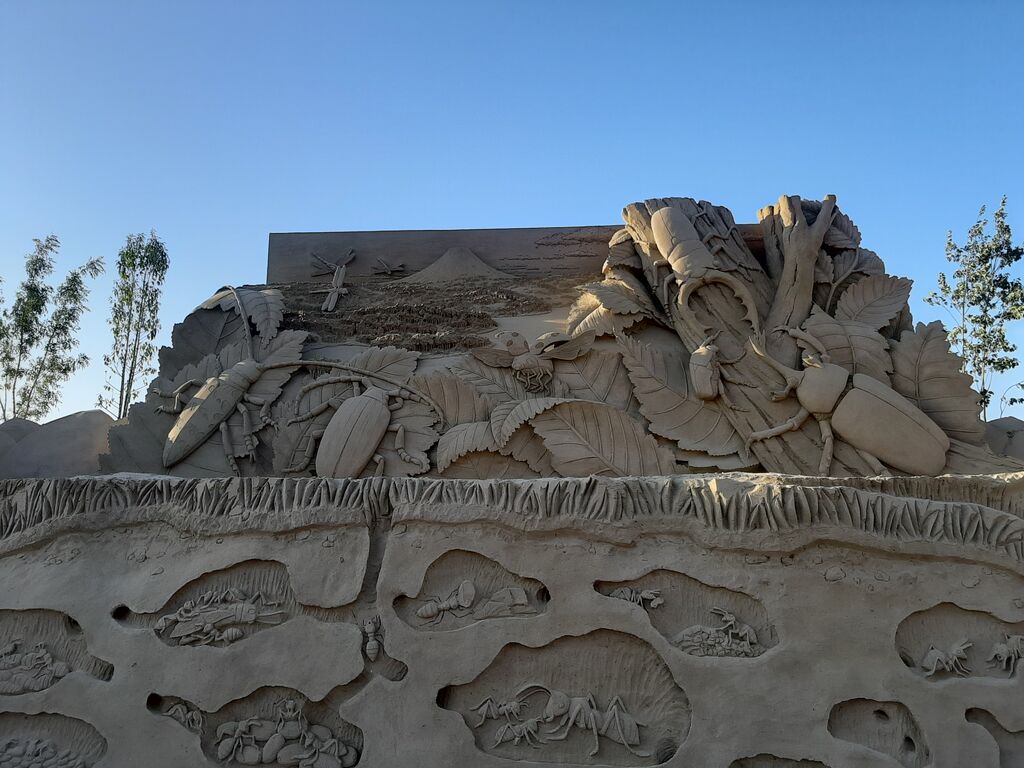
The ecology of ants, including their underground habitat, is showcased.
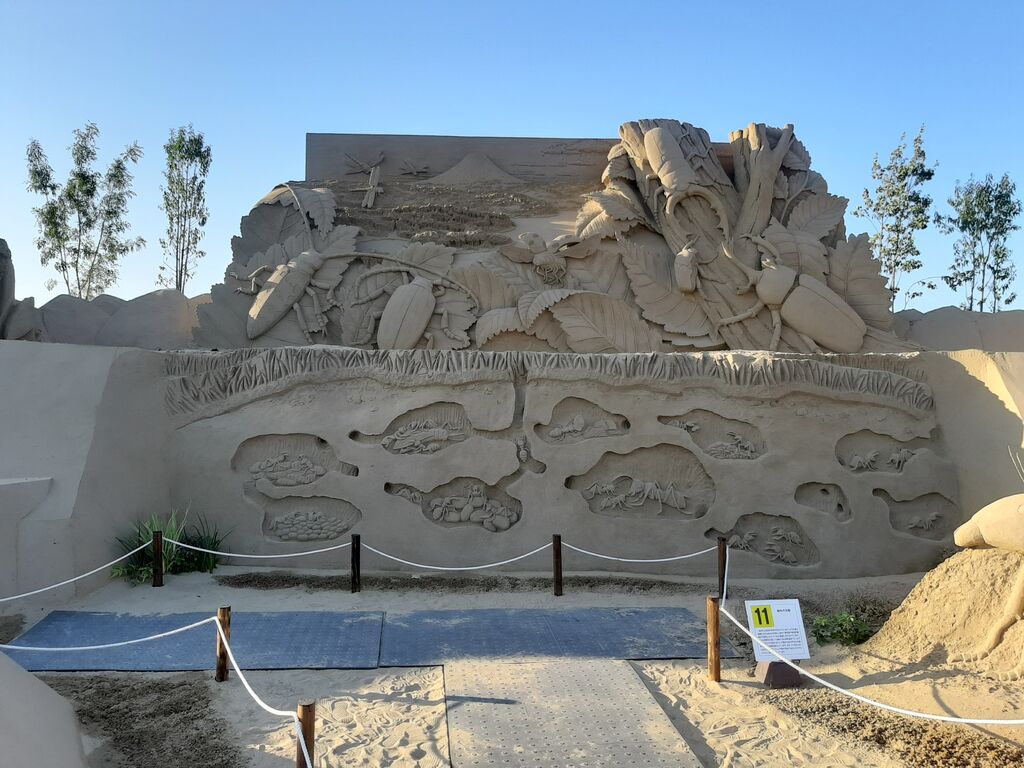
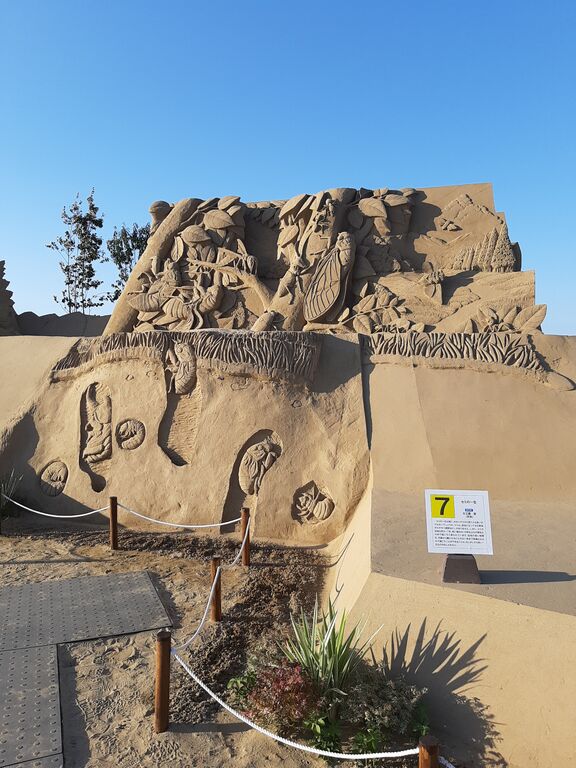
The life cycle of cicadas – something I've observed since my childhood!
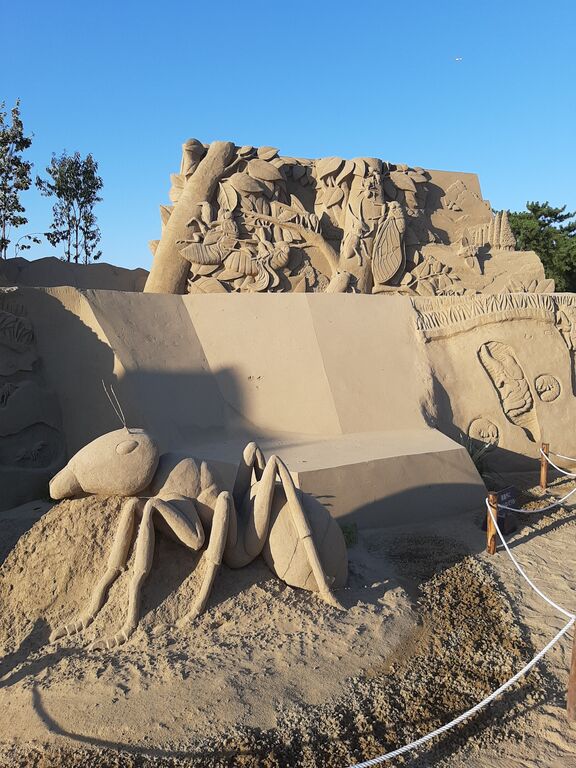
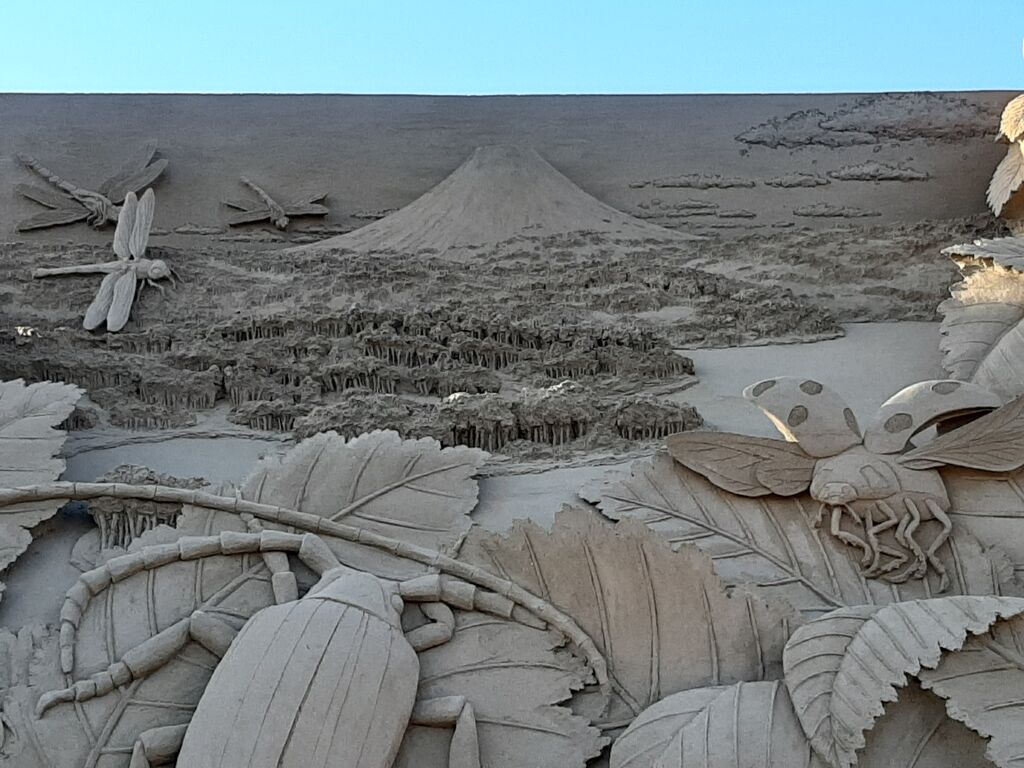
With Mount Fuji in the background, the grand composition depicts the world of beetles in the Chubu region where Mount Fuji is visible...
The left side showcases various aquatic insects.
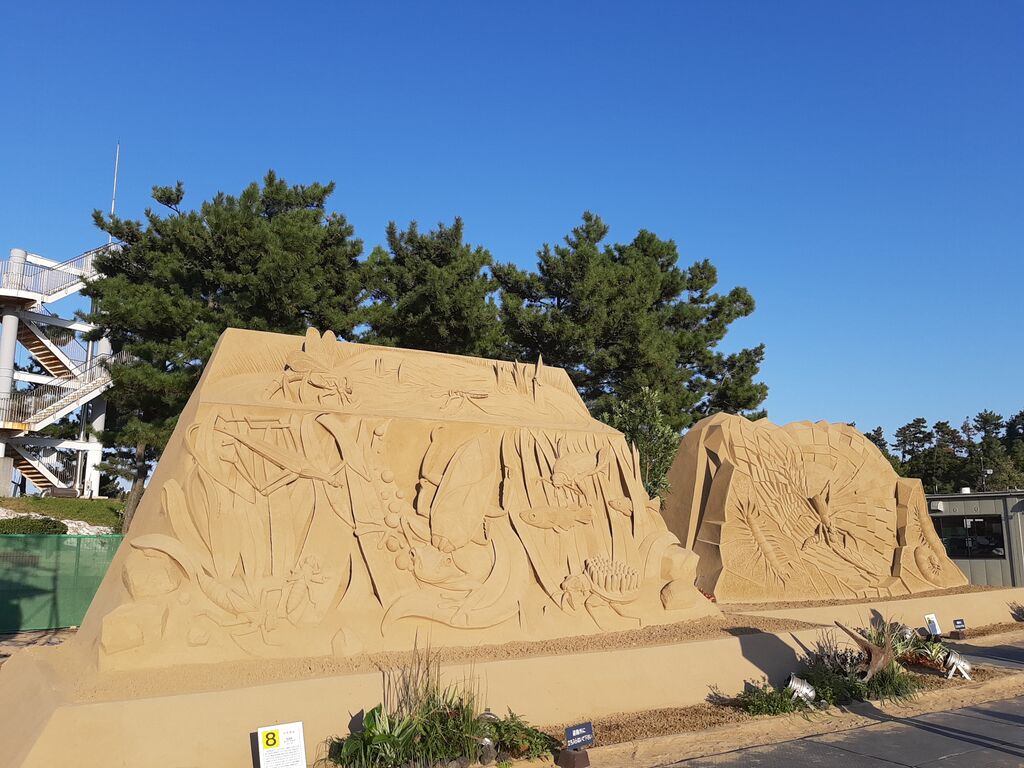
Of course, I'm particularly interested in cicadas.
It seems that spiders don't fall under the category of "insects" due to not having six legs, and other creatures with more than six legs that aren't insects are also introduced.
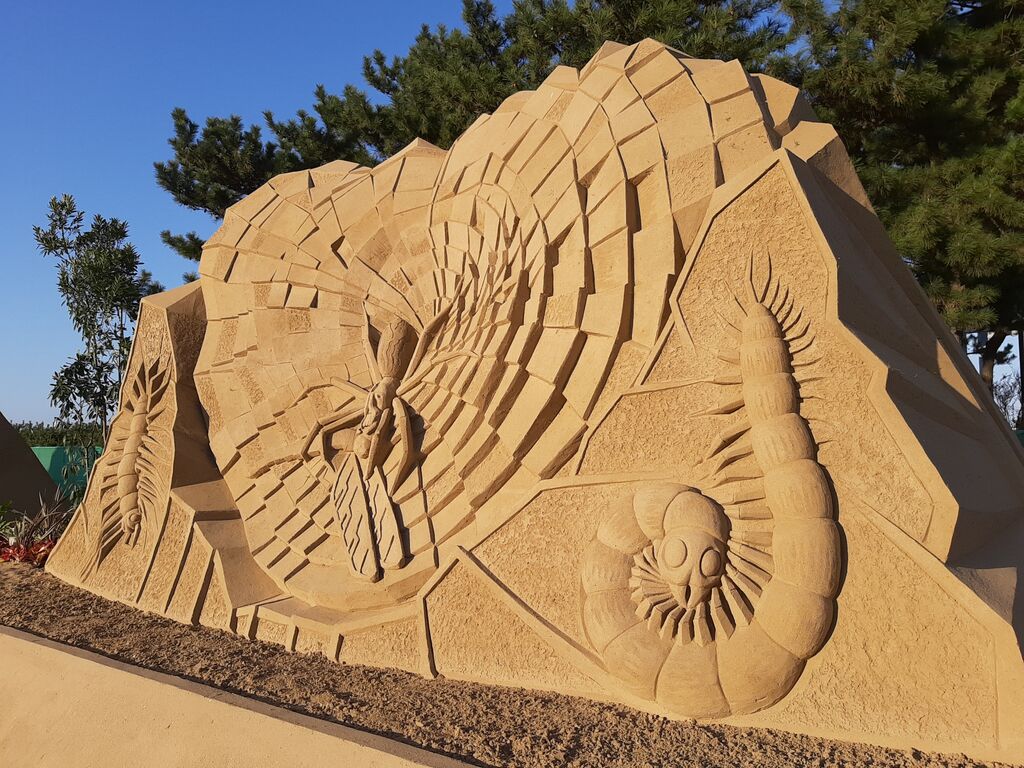
***
Our perception is vastly different from that of the ancient days, as the ancient poem by Princess Sotoorihime suggests.
"The night has come for my beloved; The spider's behaviour foretells it already." - Kokinshu
In the days of old, the sight of a spider spinning its web was seen as a sign that an awaited guest was coming!
***
In the Noh play "Tsuchigumo" (Earth Spider), when the Shite (earth spider's incarnation) lies ill in bed, Raiko (Minamoto no Yorimitsu) is told the first line, "The night has come for my beloved, the spider's behaviour foretells it already."
Raiko replies, "The spider's behaviour, I knew it not before. Yet even nearer it approaches...,"
but he quickly retreats, saying, "You, who know nothing, should withdraw at once!" when the spider approaches, attempting to entangle him with countless threads.
but he quickly retreats, saying, "You, who know nothing, should withdraw at once!" when the spider approaches, attempting to entangle him with countless threads.
Raiko then retaliates with his treasured sword "Hizamaru," cutting and subduing the spider with a triumphant cry.
Unable to endure, the form disappears and vanishes...
***
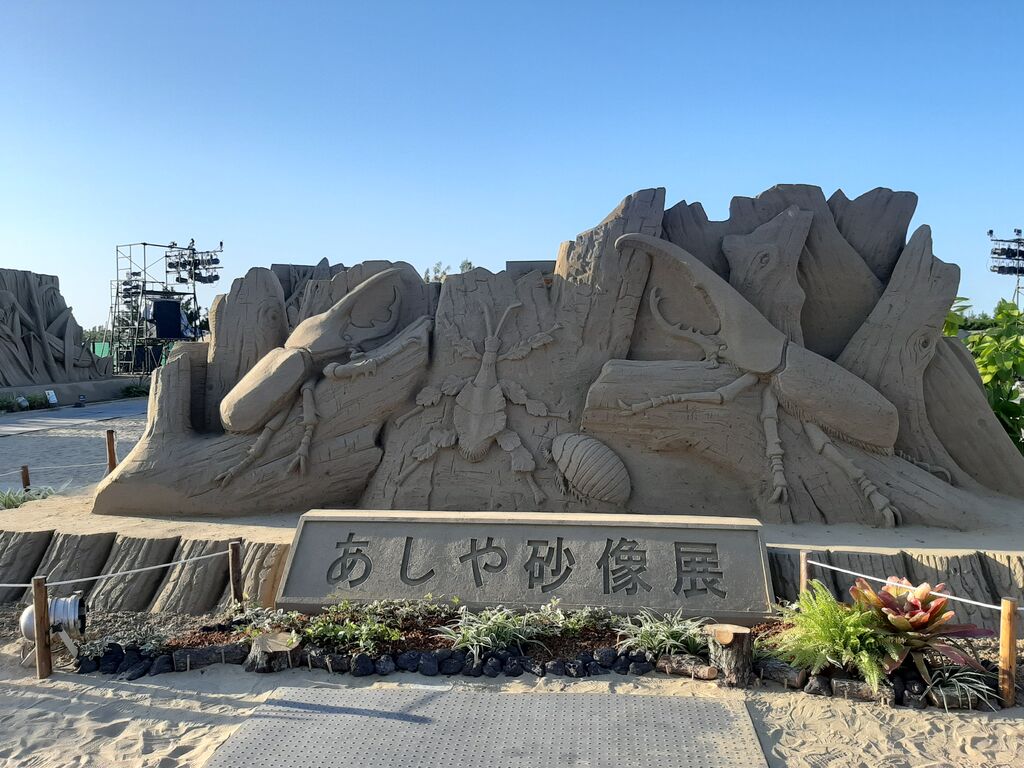
This setup is for commemorative photos, designed for multiple couples and children to take pictures.
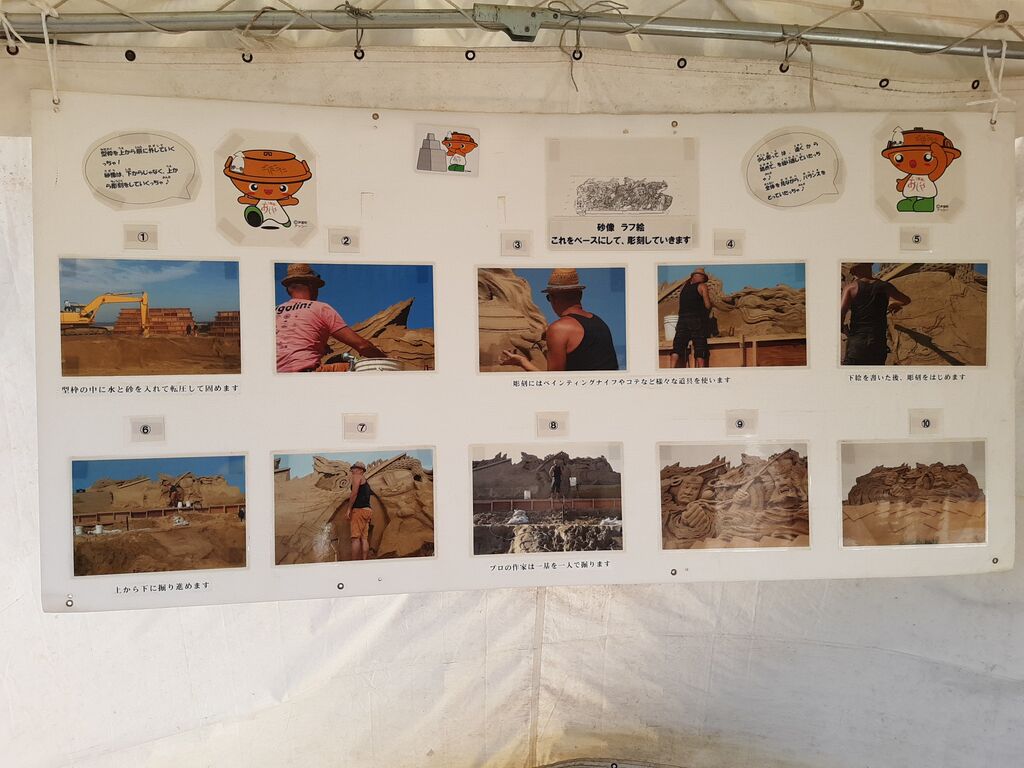
You can see the various steps involved in creating the sand sculptures.
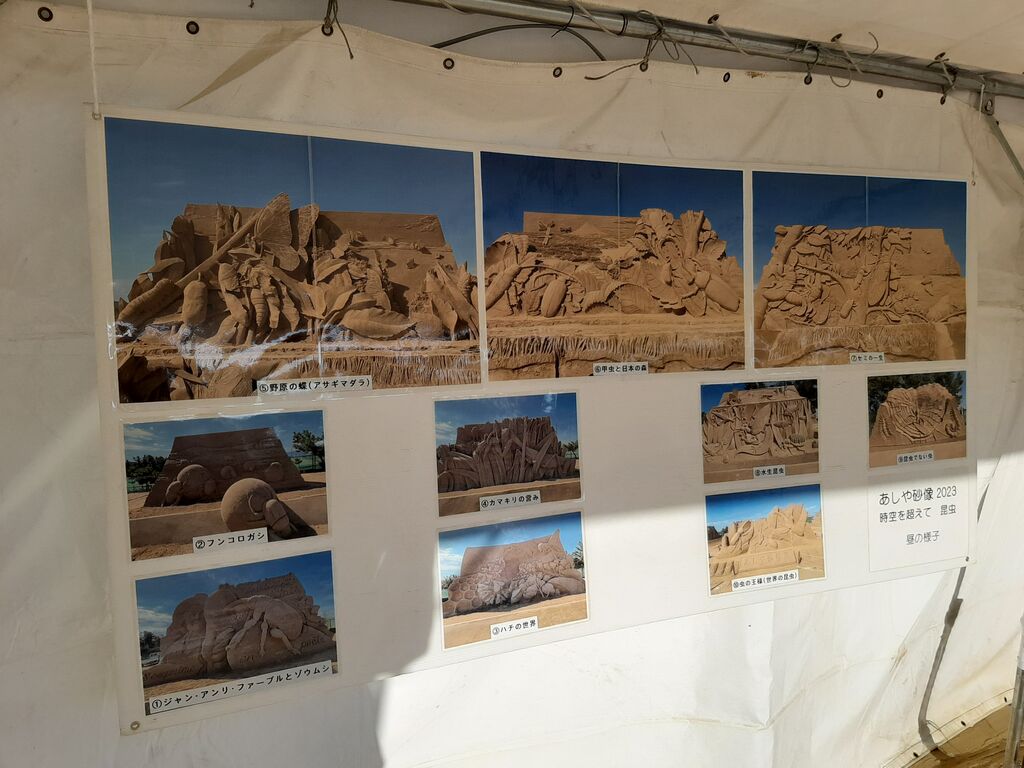
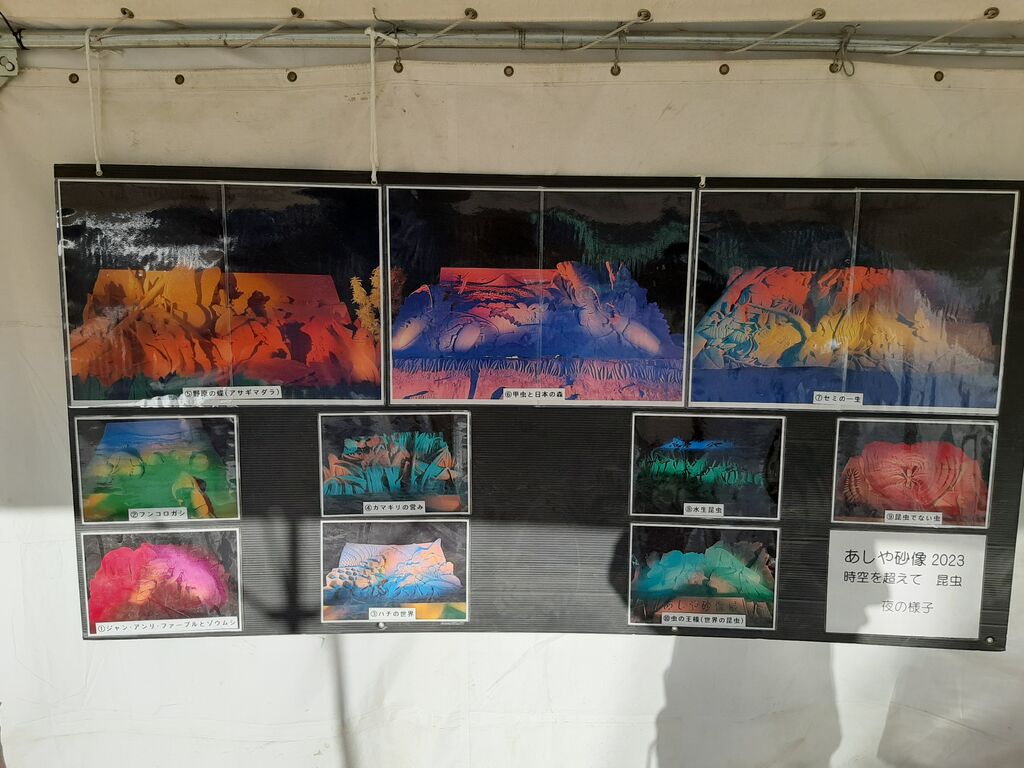
It seems they light up the sculptures at night.
Before I leave, I'll take one more look at Mount Fuji's image.
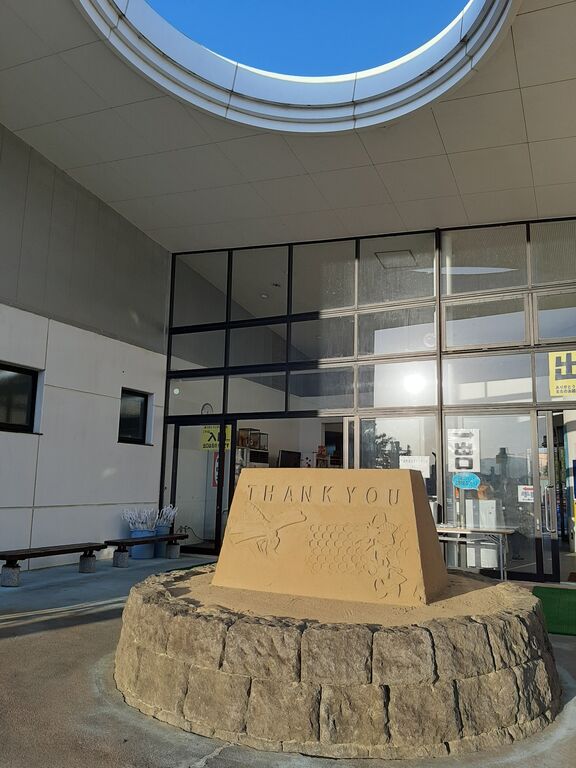
Through the entrance ceiling hole, gazed up at the blue sky.


Comments
Post a Comment