A Casual Autumn Ride: Cosmos, Yatsurugi Shrine, Udon Ban, and Horikawa
It's November, but summer weather still lingers on.
I've been taking it easy on my bike rides, often opting for short trips by car to see specific places.
But today, I decided to switch things up a bit and take my trusty Brompton "Pota-kichi" on a ride through familiar roads.
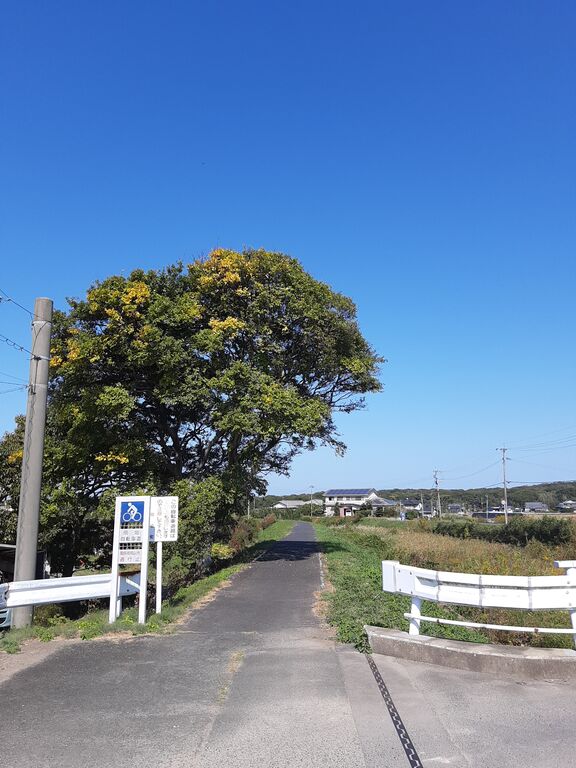
The riverbank path has been neatly trimmed, offering clear views of the surroundings.
As I pedalled along, hints of red caught my eye amid the greenery.
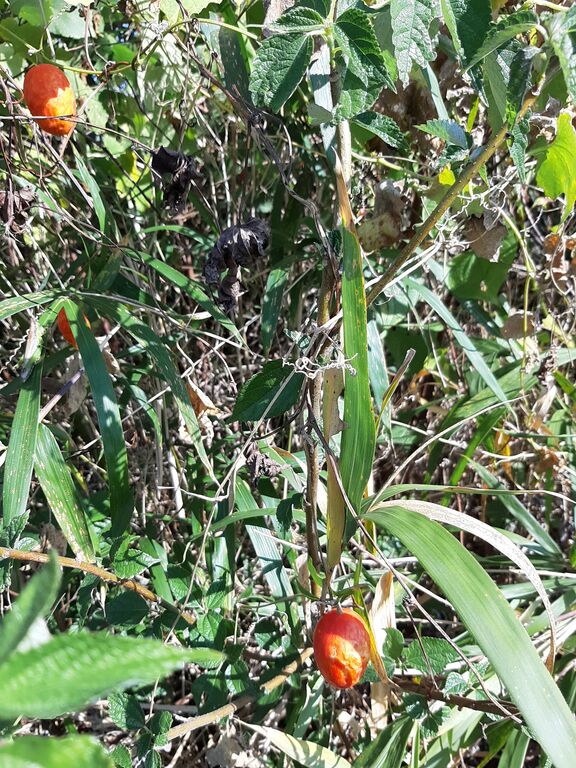
The ripe fruits of "Karasu-Uri" (lit. crow-melon) gleam golden-red.
It's funny how we associate crows with black, but in the world of plants, you come across names like "Karasu-〇〇〇" surprisingly often, never black in colour.
Speaking of which, I stumbled upon something interesting recently –
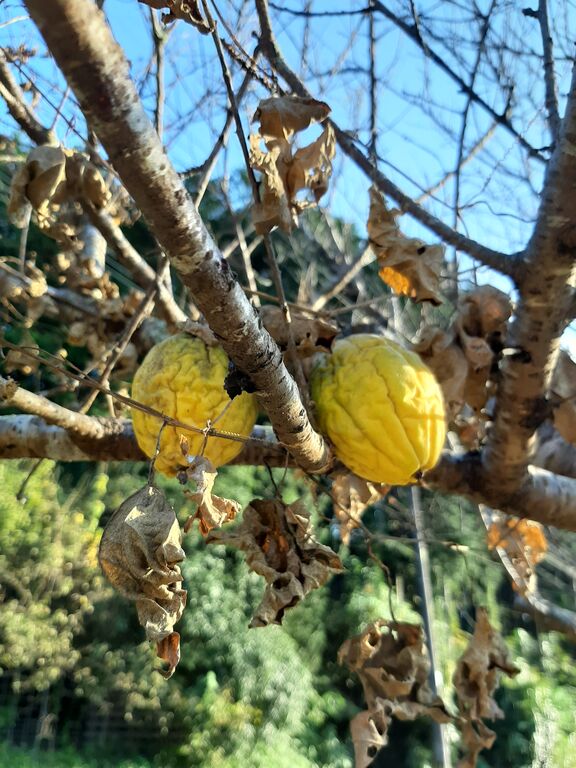
I turned to Google Lens for help and found out it's called ""Ki(yellow) Karasu-Uri."
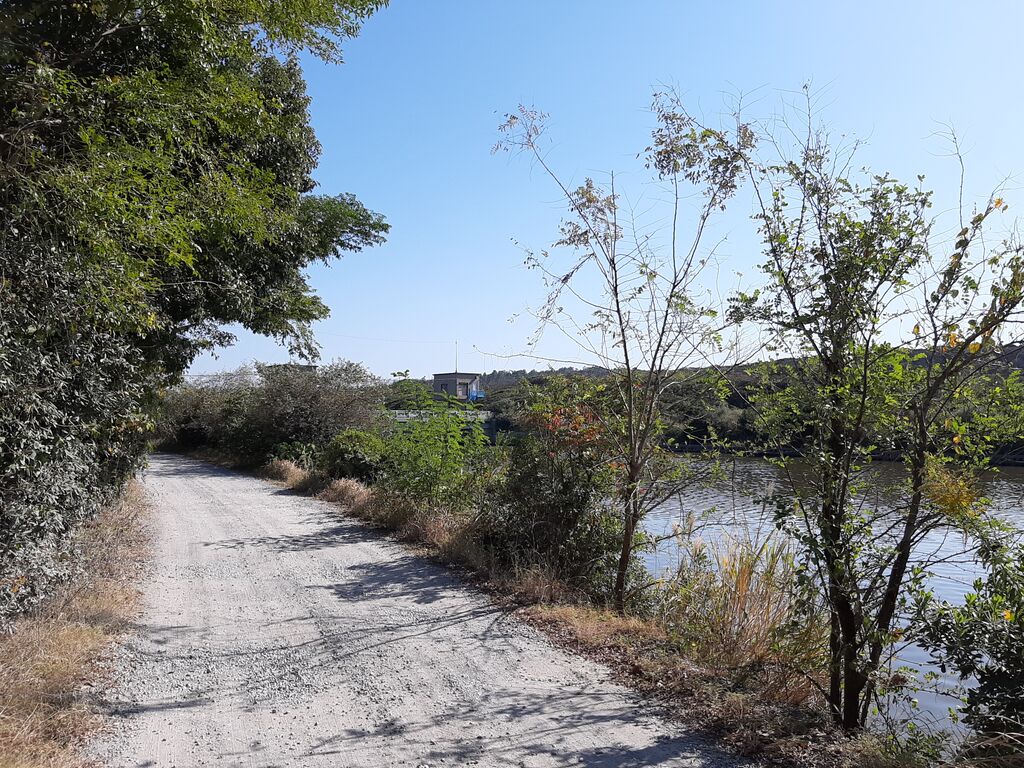
Realizing that I hadn't visited the Cosmos flowers by the Onga River this year, I decided to take a shortcut along the gravel road by the Shioiri River.
The road had previously been quite rough due to surfers and anglers driving on it, but it seemed to have been recently improved, as the extreme bumps and potholes were mostly gone.
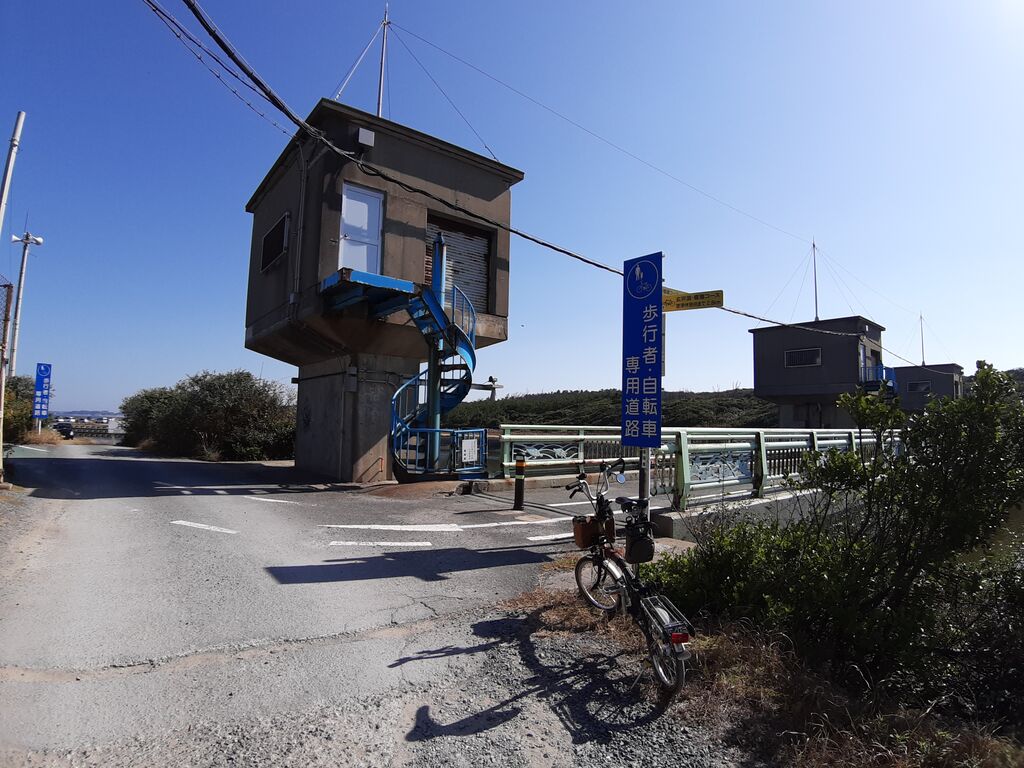
On the way from Okagaki Town Hatsu to Ashiya Town, there's the highest point on this bike path that offers a fantastic view.
Taking this shortcut helps avoid a steep slope.
Taking this shortcut helps avoid a steep slope.
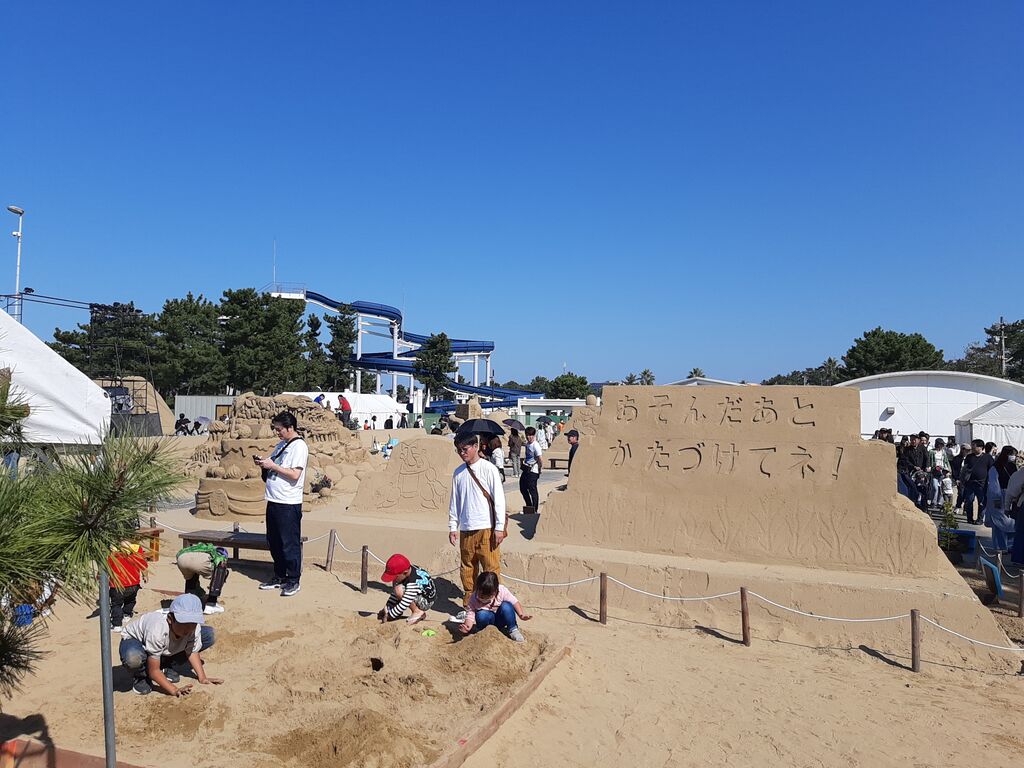
I also took a short detour to check out the Ashiya Sand Sculpture Exhibition from the parking lot on the back side of the venue.
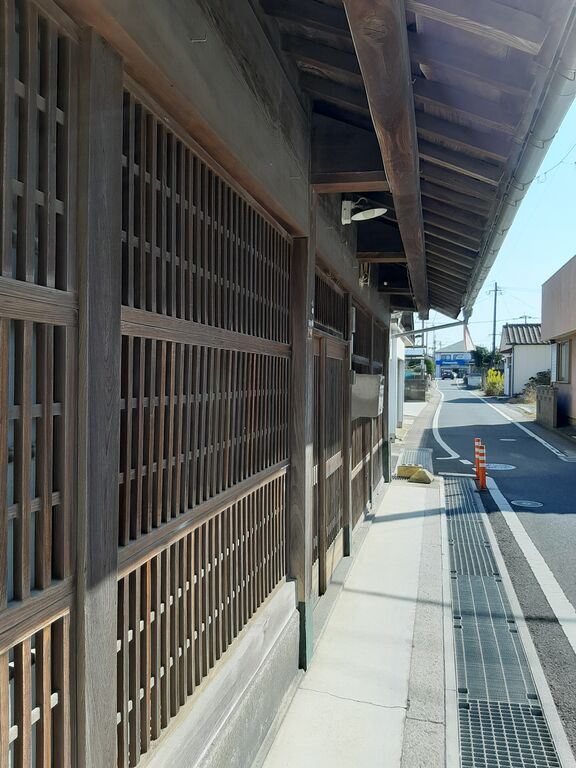
The Ashiya area, once known as "Ashiya Sen-ken (thousand buildings)," was a thriving town.
Even today, you can still see houses with that historical charm.
While en route, I couldn't resist the temptation of trying the famous croquettes from a local meat shop.
Unfortunately, it was closed today!
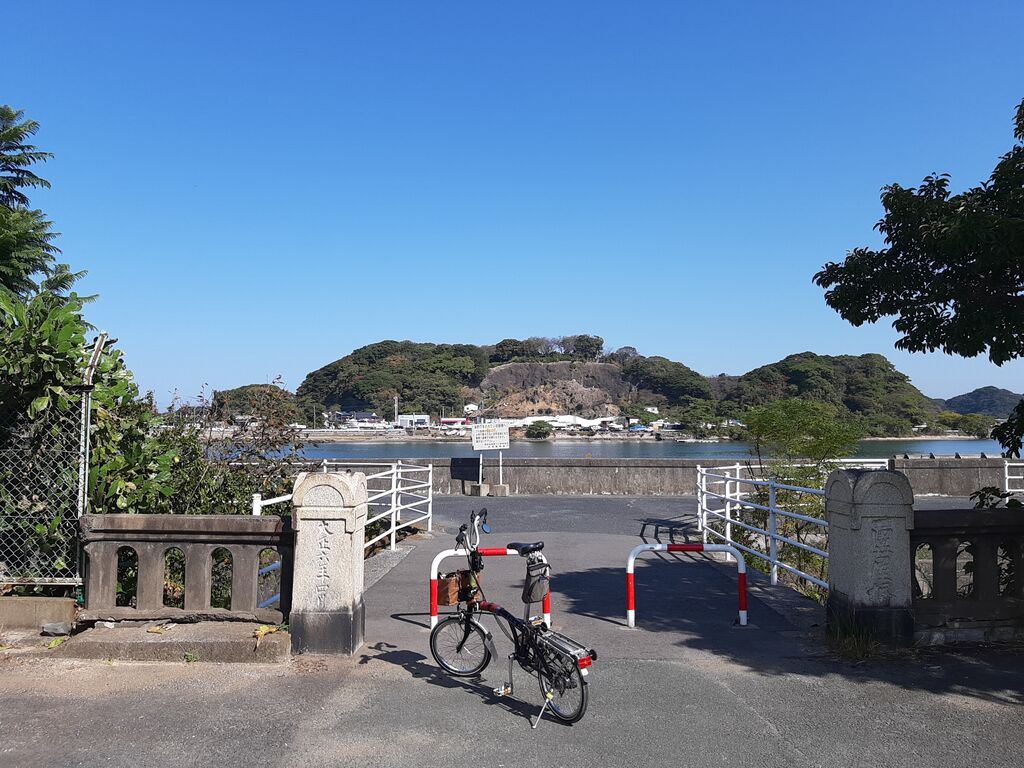
There used to be a bridge from here to the opposite bank.
You can see the Ashiya Castle Ruins Site from here across the river.
You can see the Ashiya Castle Ruins Site from here across the river.
Sticking to my policy of taking roads less travelled by cars, I continued the "slow-pottering" journey, following the wall-side road.
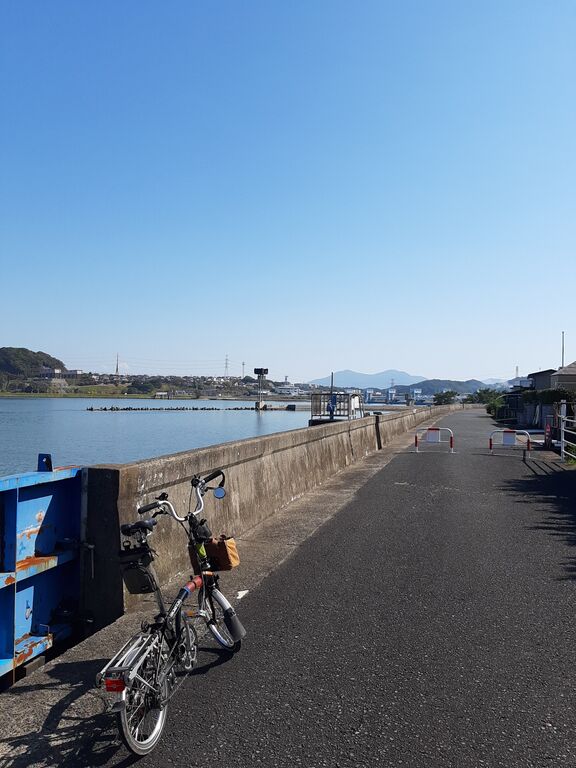
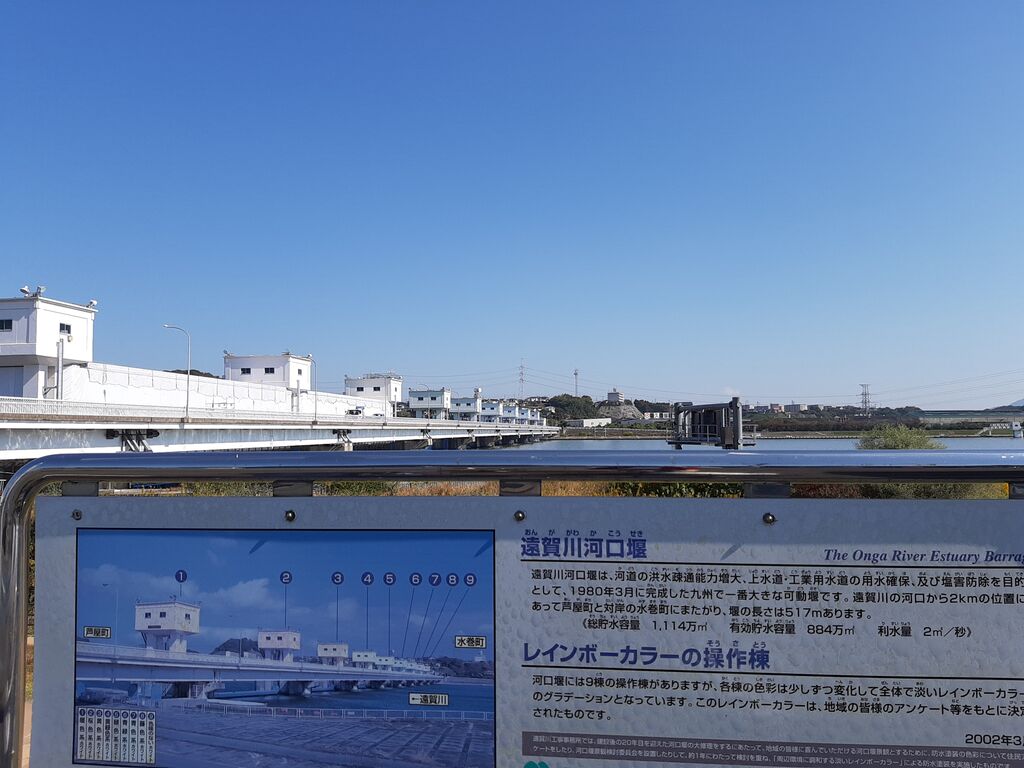
The road leading to the Onga River estuary dam is for pedestrians and bicycles only.
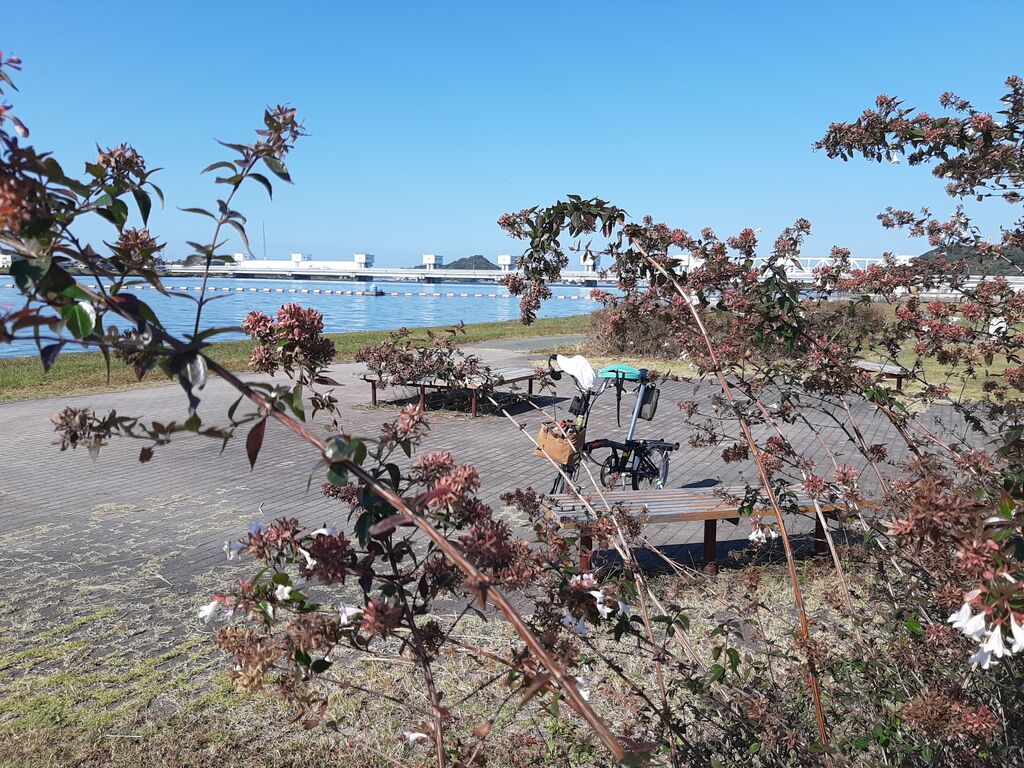
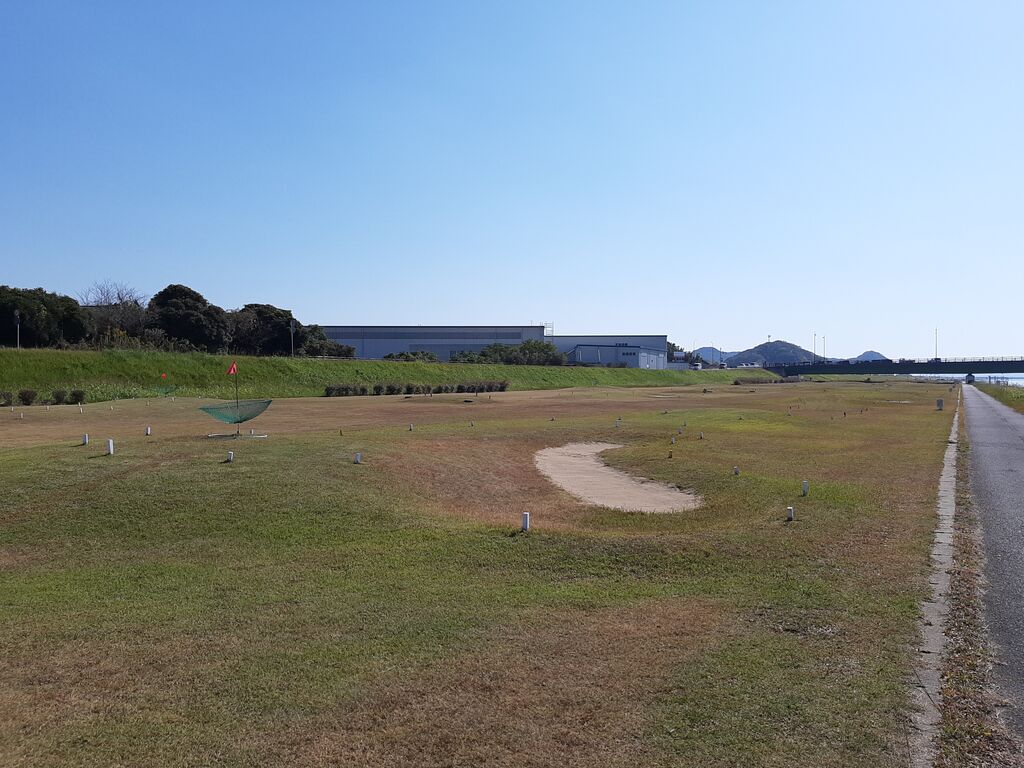
I took a break next to the golf course, where a golf ball fitted with shuttlecock-like feathers and the net for the hole being used. They even have bunkers ready.
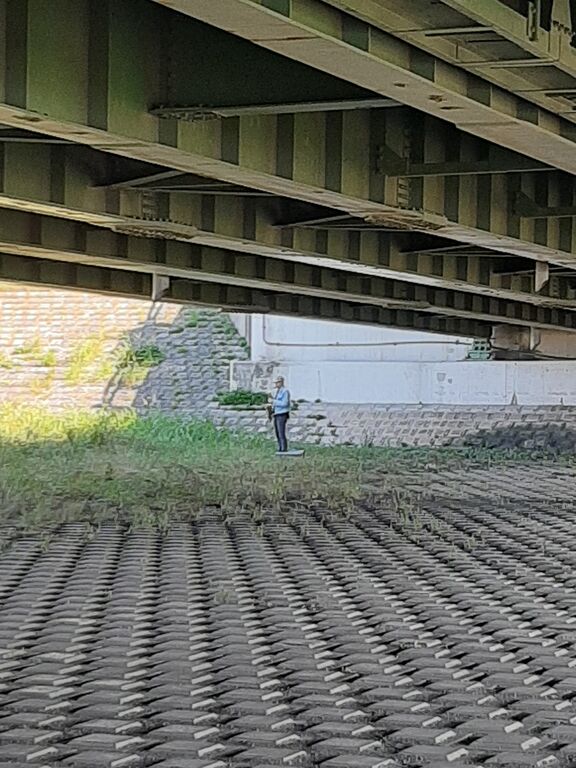
Passing under the Mimaki-Ohashi bridge, I heard the melodious notes of a saxophone.
Turning around, I saw a gentleman practicing under the bridge.
I heard that this year, the range and size of the vegetation are smaller than usual...
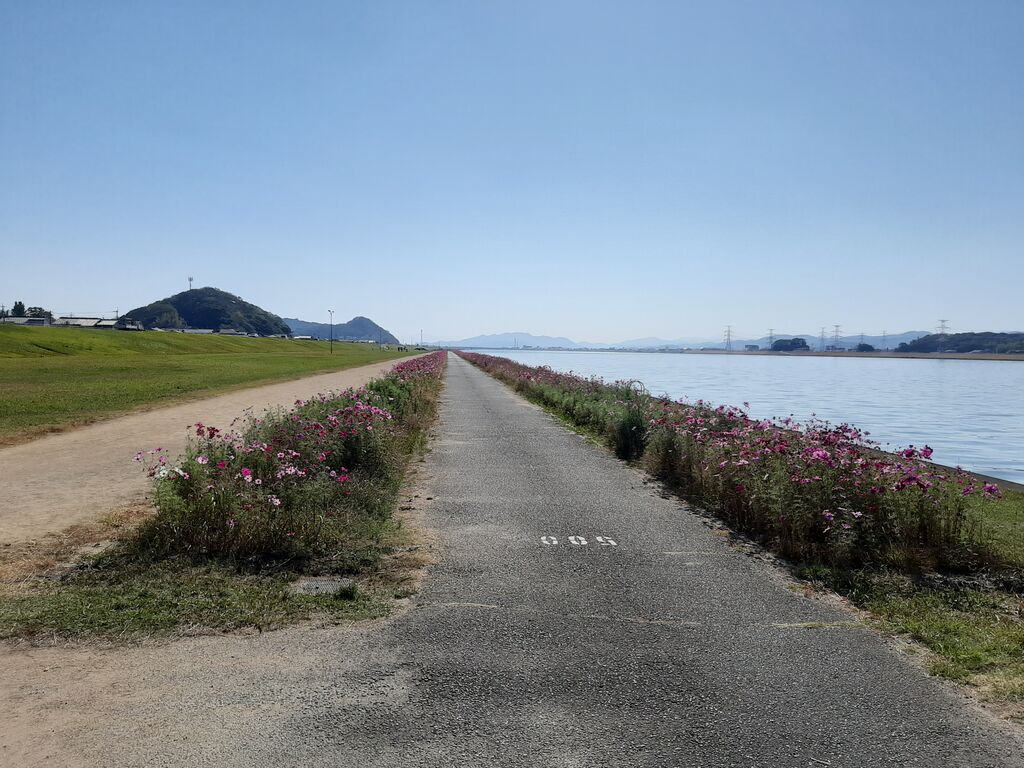
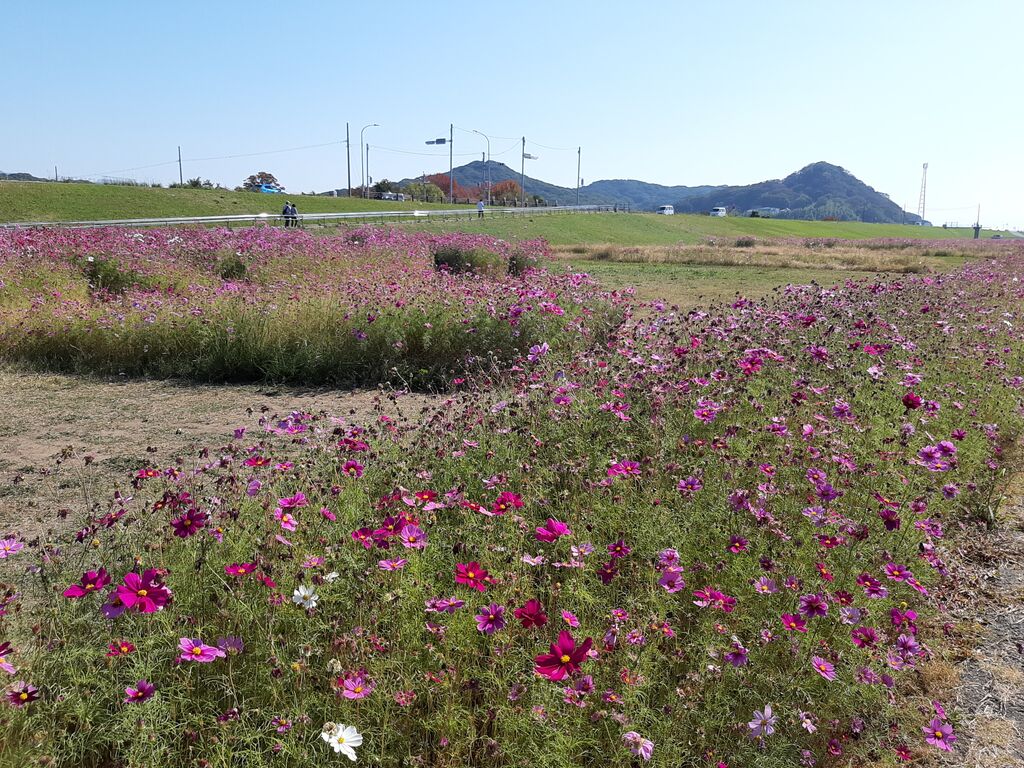
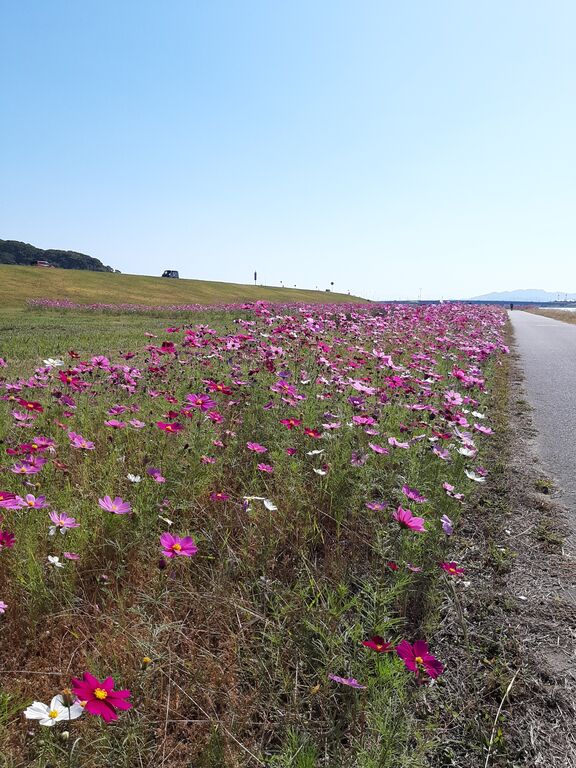
It's a bit less colourful than usual, perhaps because the season is running a bit late.
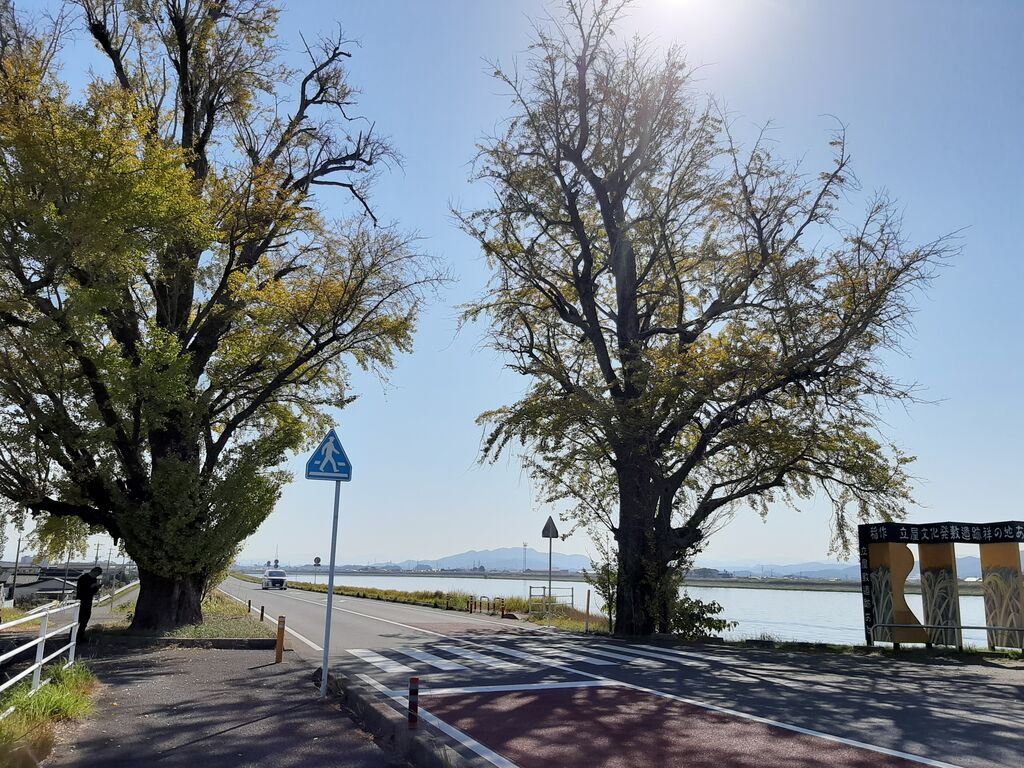
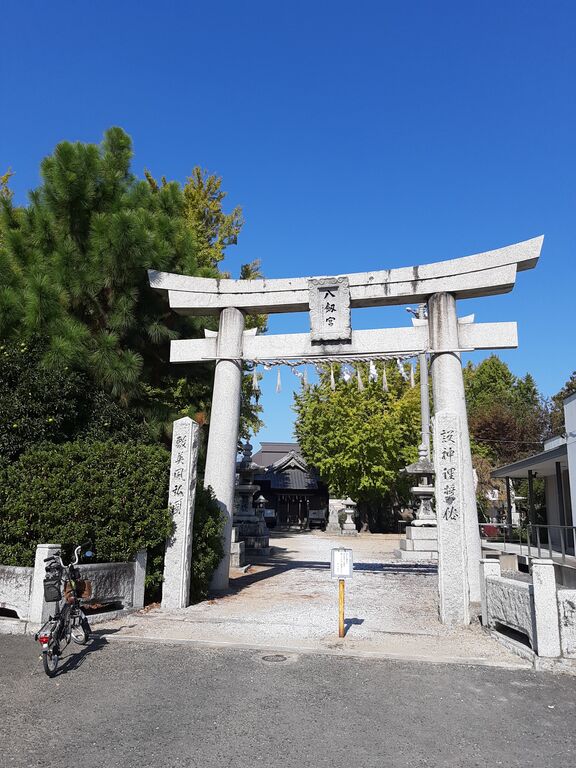
After passing through down Route 3, I headed to the Ya-tsurugi (8-swords) Shrine.

On both sides of the road, beautifully aged ginkgo trees stood tall.
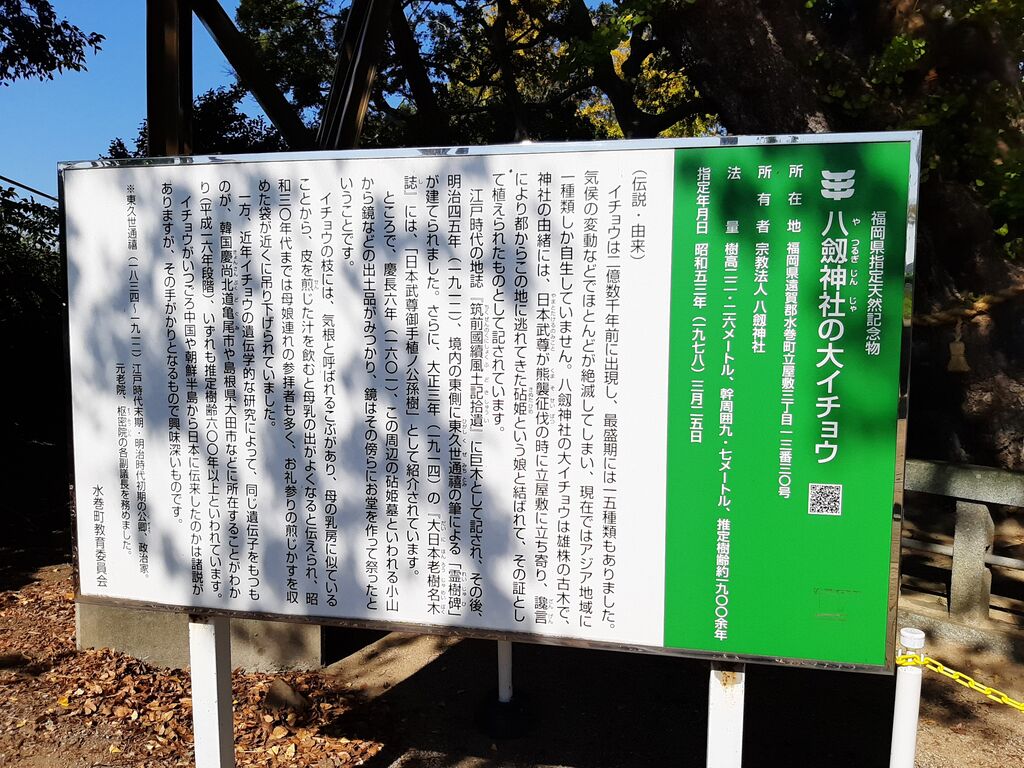
This shrine is closely associated with Japan's legendary prince Yamato Takeru-no-Mikoto and Kinuta-hime-no-Mikoto.
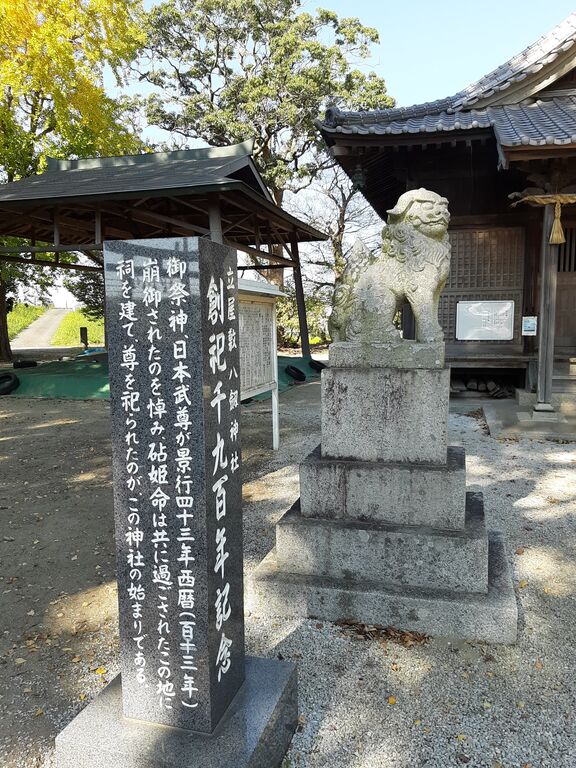
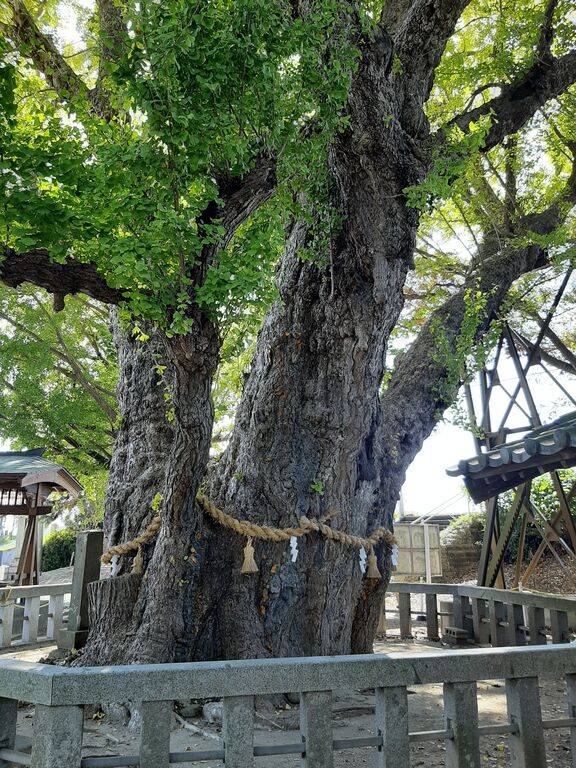
But the real eye-catcher here is the magnificent ginkgo tree.
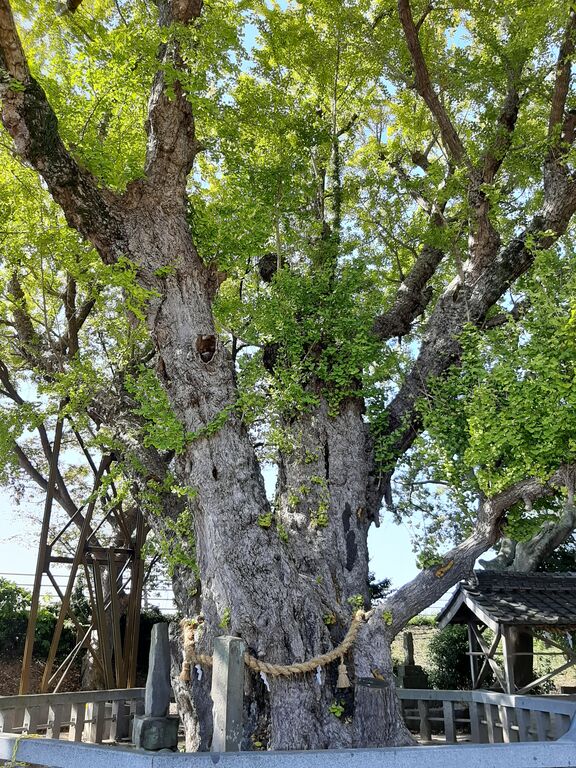
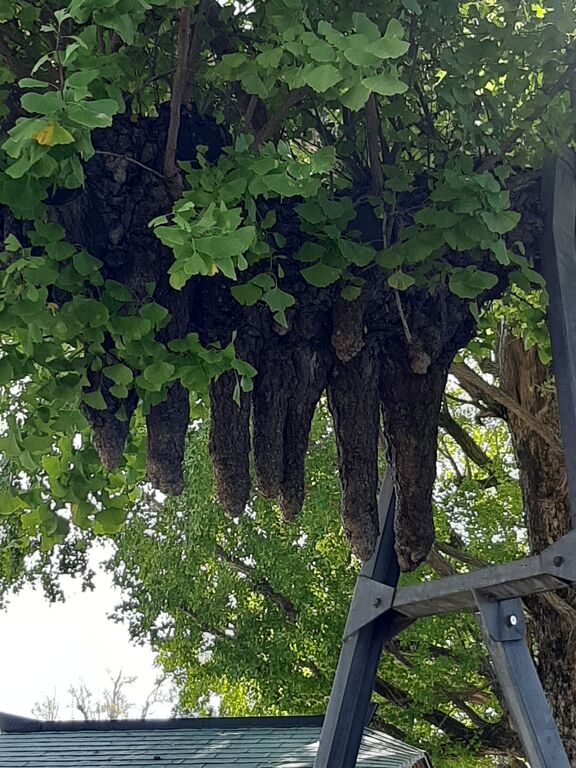
The aerial roots are impressive too.
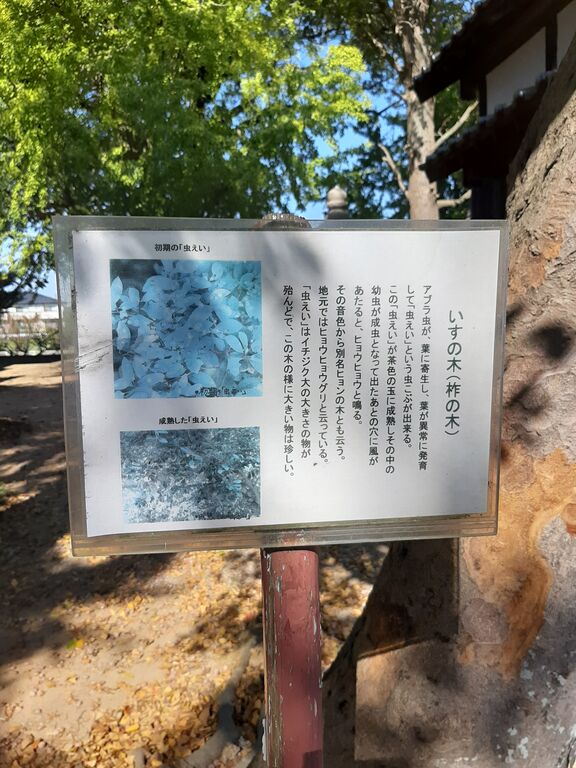
The Ishinoki tree, known for forming bulbous growths on its leaves, wasn't in sight this time.
Back on the riverside road, I made my way to Nakama City, with one goal in mind:
Udon Ban's Chikuwa Tempura and Bukkake Udon.
I folded my Brompton to 60x60x20cm and placed it in the space next to the entrance.
"Chikuwa Tempura and Bukkake Udon, please~~~!!!"
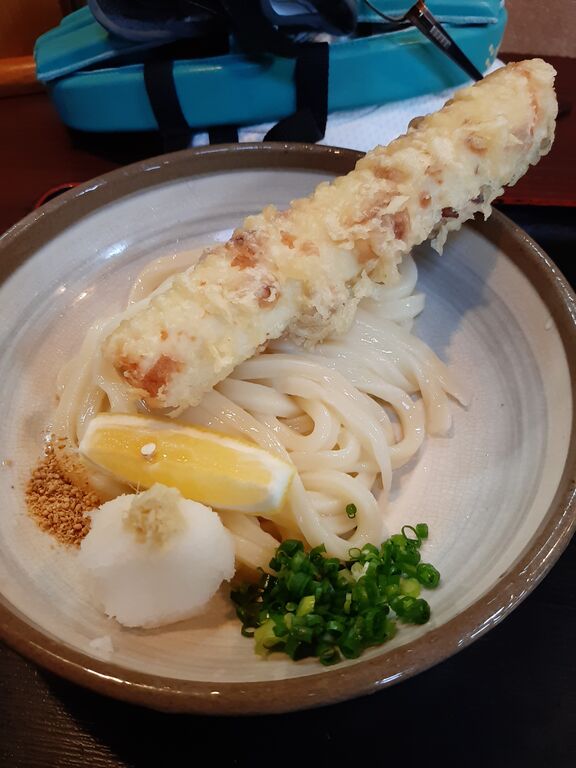
Since I'll continue biking, I opt for a regular size instead of a large one, even though I'm tempted.
The udon noodle handcrafted by the master of the Karate Dojo is Sanuki Udon, and it has a unique flavour that you won't find in Sanuki. It's absolutely exquisite.
The udon noodle handcrafted by the master of the Karate Dojo is Sanuki Udon, and it has a unique flavour that you won't find in Sanuki. It's absolutely exquisite.
When you bite into it, you feel like the sound of it being chewed as a thick al dente noodle.
The strength of the texture is incredible.
The strength of the texture is incredible.
Once you experience this texture, you'll find that the udon shops praised for their texture in various food reports seem a bit lacking in comparison.
After my favourite treat, I decided to explore the Horikawa area.
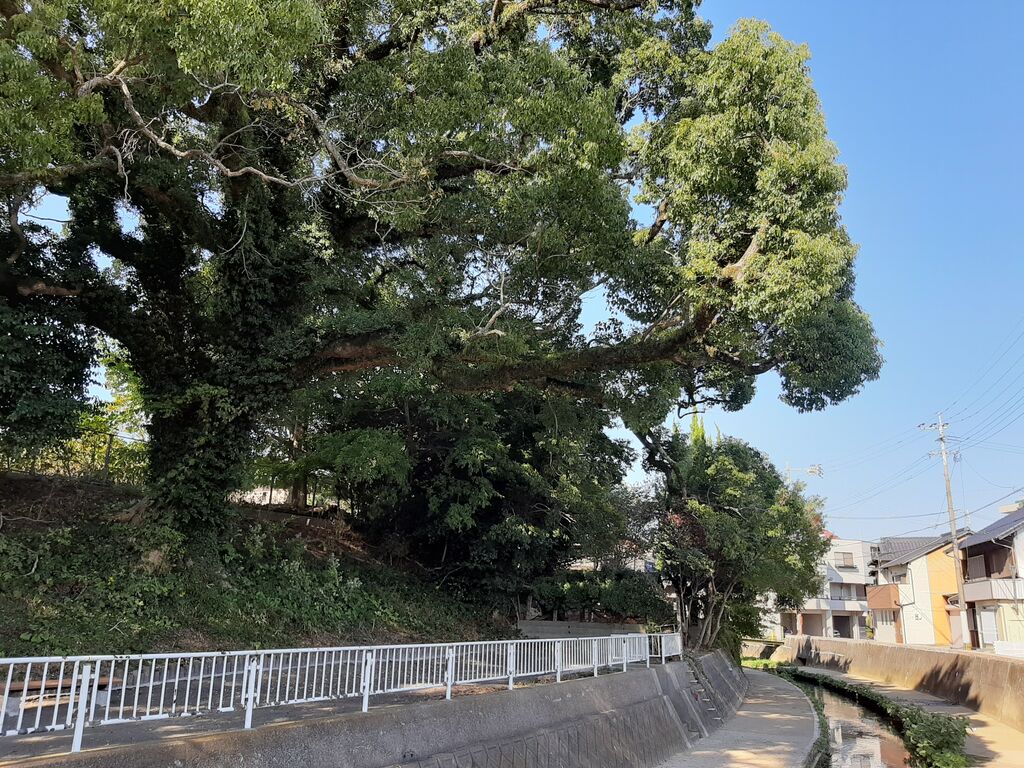
The large camphor tree has likely cast its shadow on the river since the time of the Kuroda clan in the Edo era.
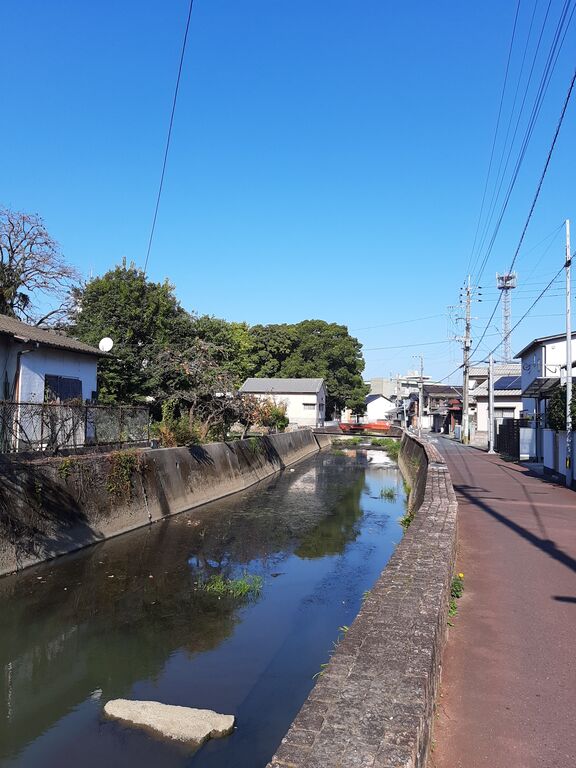
In the past, this river was said to be filled with small wooden boats called "Kawahirata," carrying coal from the Chikuhō coal mines to Wakamatsu Port via the Dōkai Bay.
Even with this description, I can't quite picture it.
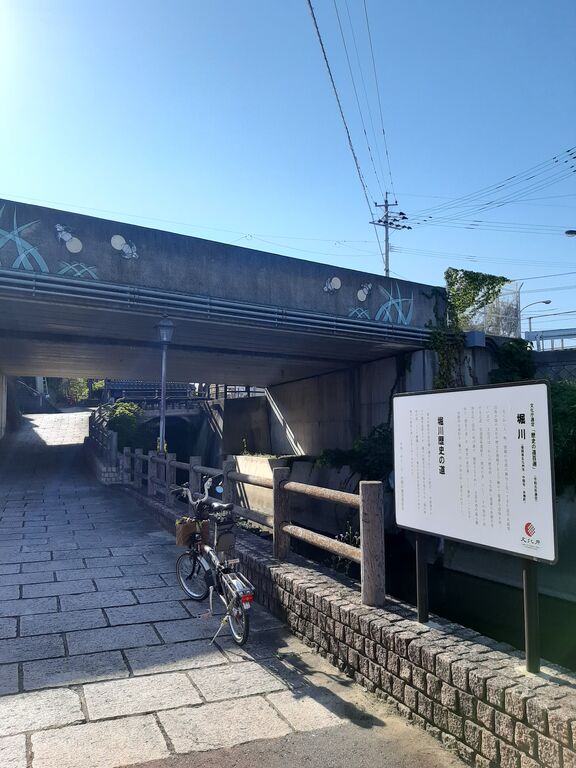
The Nakama Karato (Floodgate) at the entrance to Horikawa.
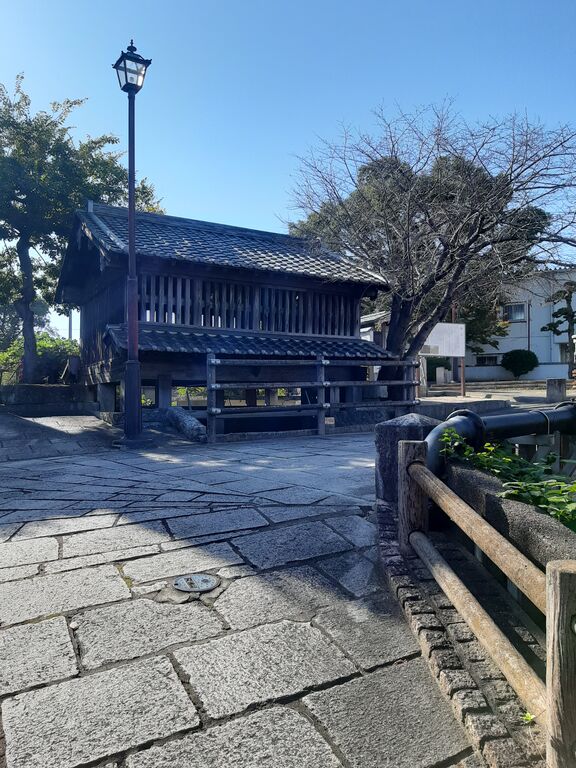
During the Kuroda clan era, the Horikawa was opened to connect the Onga River and Dōkai Bay, aiming to improve the efficiency of cargo transportation and increase the cultivated area through basin irrigation improvements.
This was the result of significant efforts.
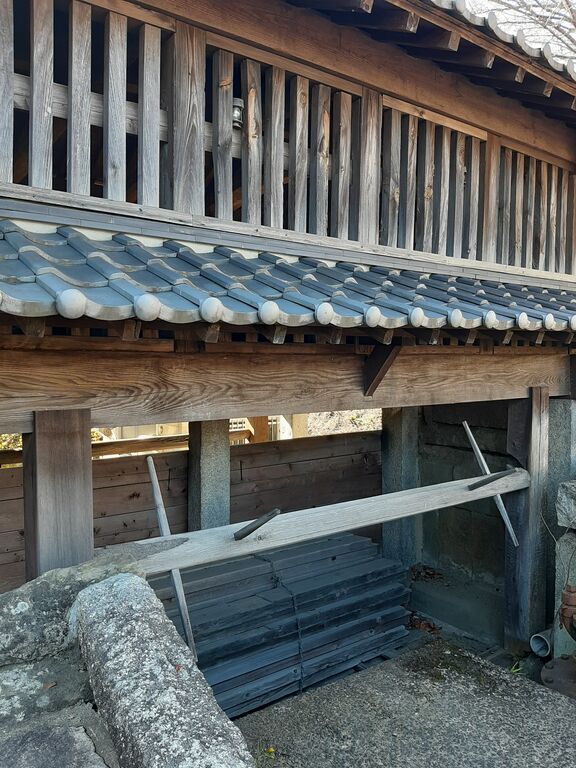
When the Onga River swells, water damage occurs downstream of Horikawa, so water volume regulation and damming are performed here.
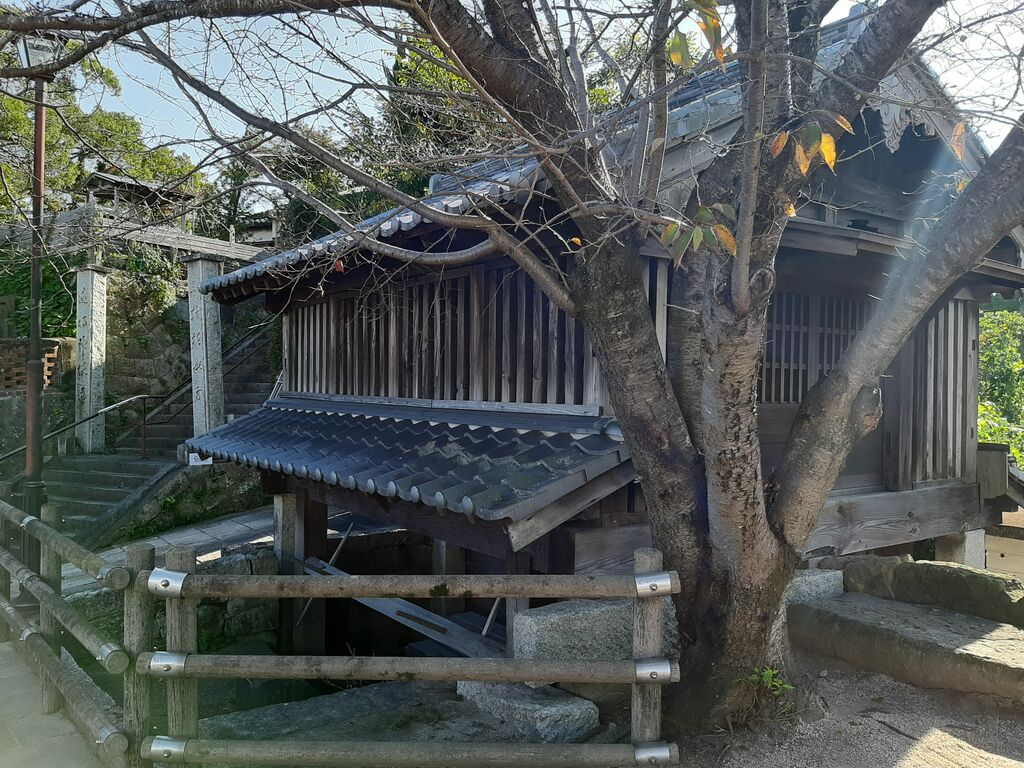
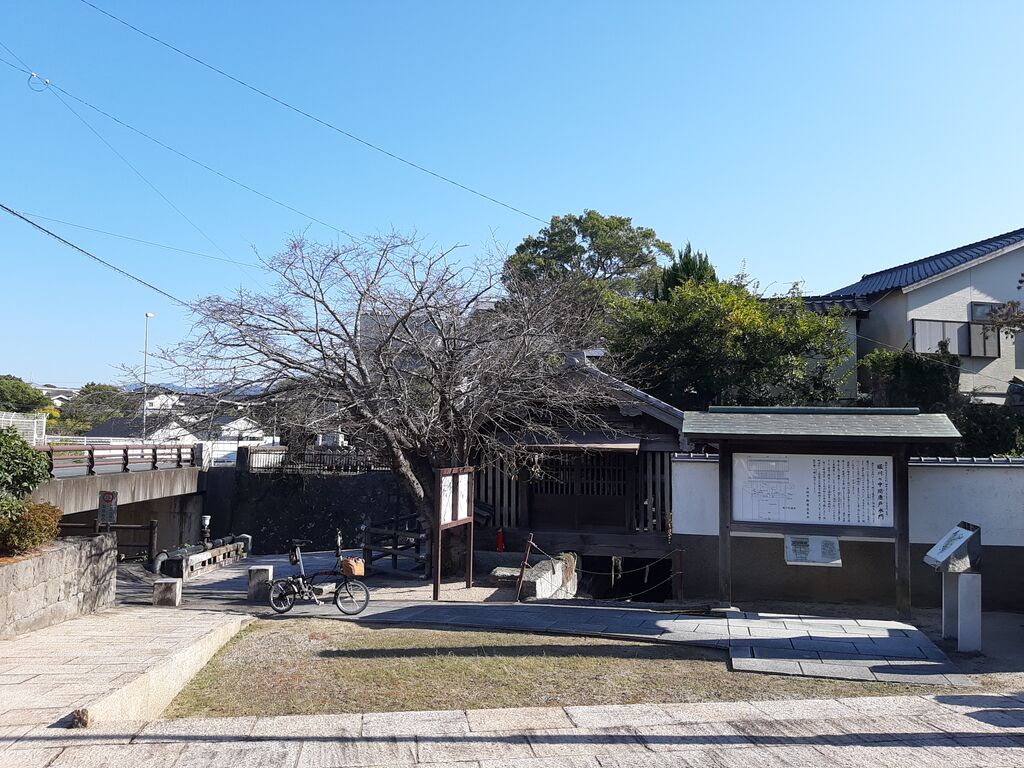
Every time I come here; I'm amazed by the wisdom of our ancestors.
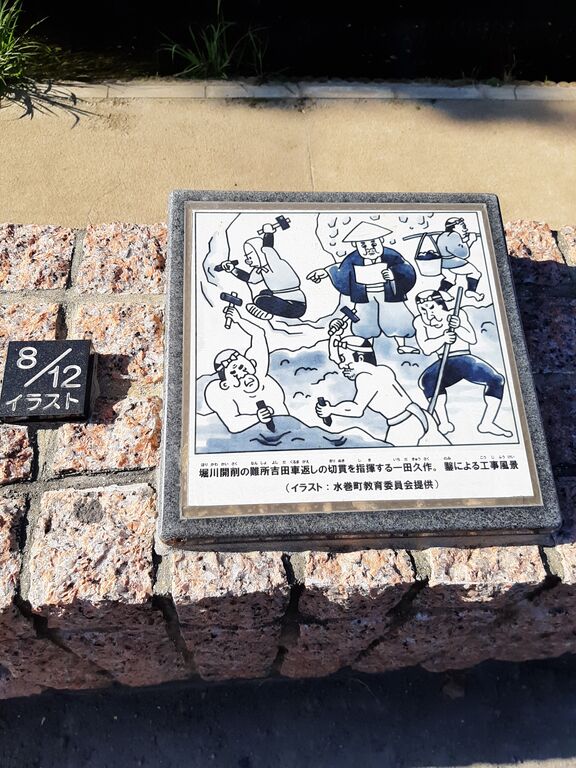
One interesting tidbit about the Horikawa area is that the descendants of Ichida Kyuusaku, a local resident mentioned in a ceramic plaque, run the "Onga River Onsen (hot spring)."
Having believed there should be a hot spring source in their residence area and discovered a high-quality medicinal spring with a unique combination of iron and salt minerals in their backyard, following a thorough drilling survey.
This special spring is known to be effective for various physical discomforts that involve pain.
Even professional chiropractors and osteopaths are interested in the benefits of this hot spring.
***
A visitor who had accidentally fallen and bruised himself rushed to this onsen to apply cold onsen spring water.
After continuously rinsing the wound and alternating between cold and warm onsen baths, the pains and bruising had largely subsided within three days.
***
The Ichida family generously donated numerous valuable historical documents and construction records related to the Nakama Karato area to specialized educational and research institutions.
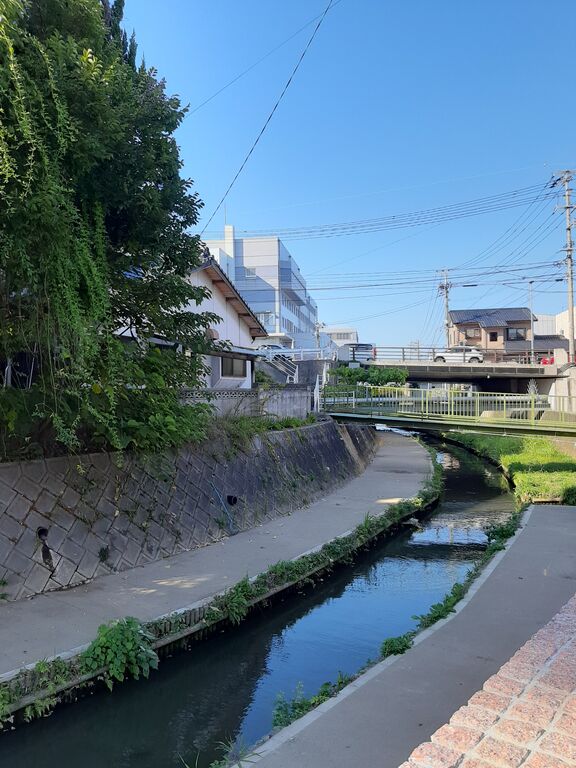
As I follow along the Horikawa River, the Nakama City Hall comes into view.
On the riverbank leading to the city hall, ceramic plates like the ones I introduced earlier are placed at intervals.
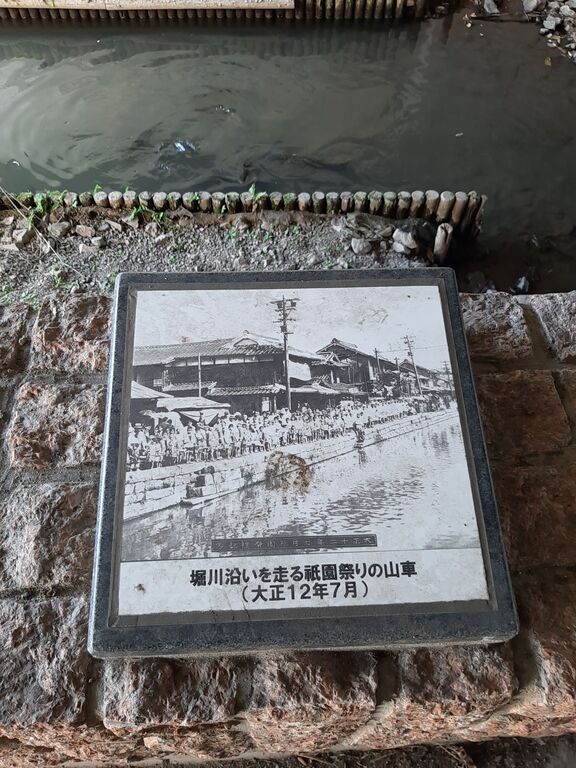
These plaques provide glimpses into the history of the Horikawa area, offering a unique perspective on the past.
The river appears wider than it does today, reflecting its former grandeur.
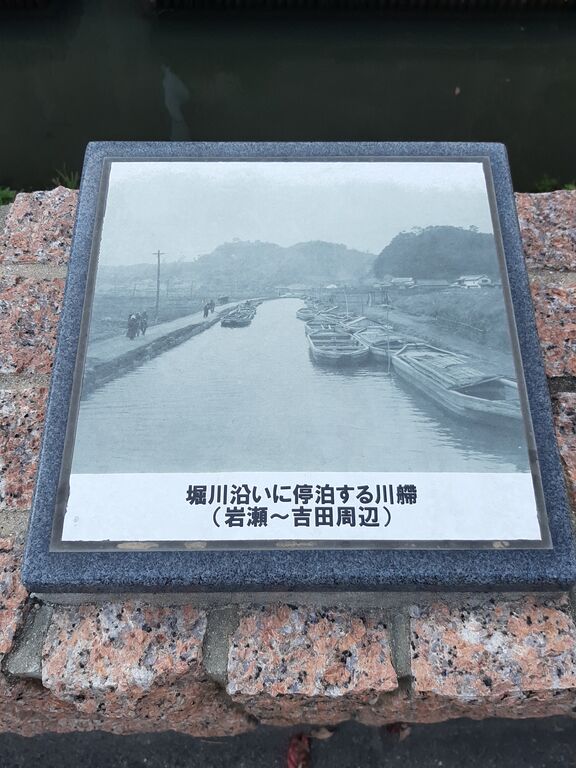
Continuing downstream along the Horikawa River, the surrounding landscape changed to a residential area, complete with schools and more.
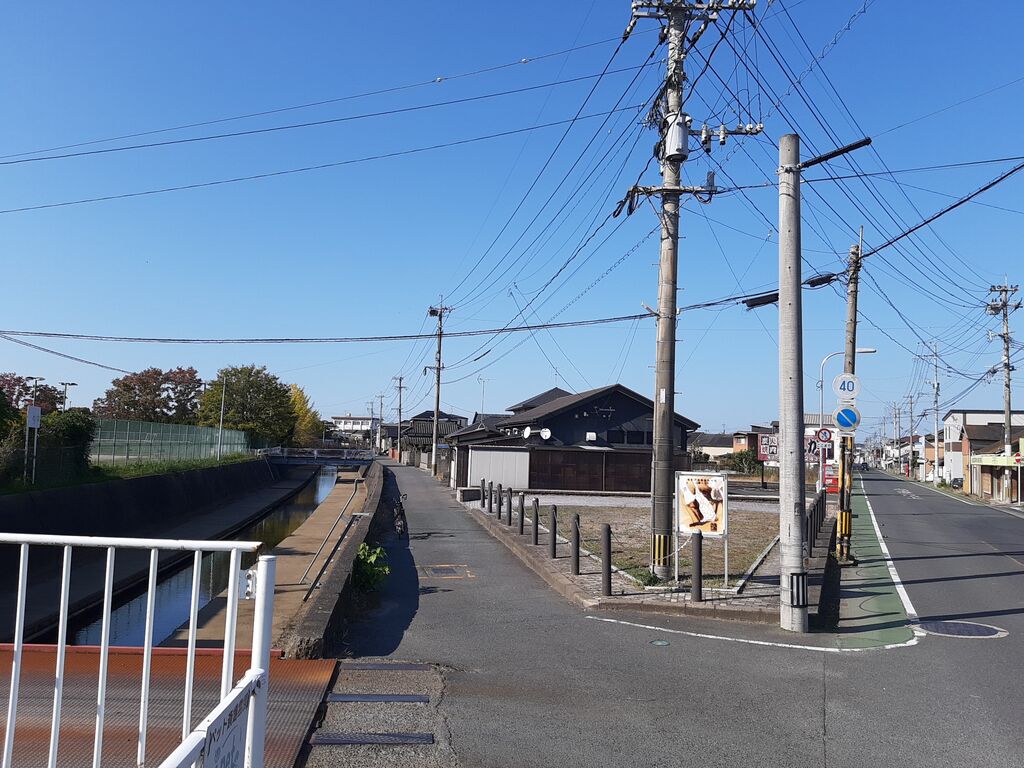
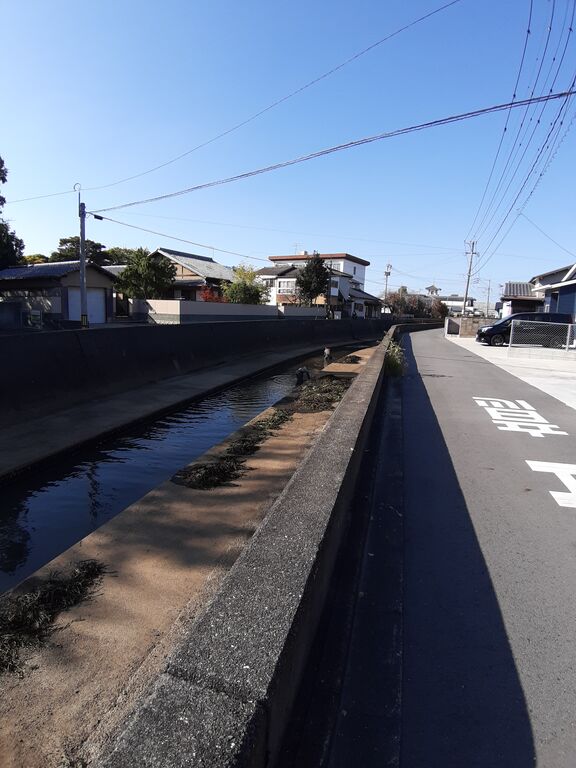
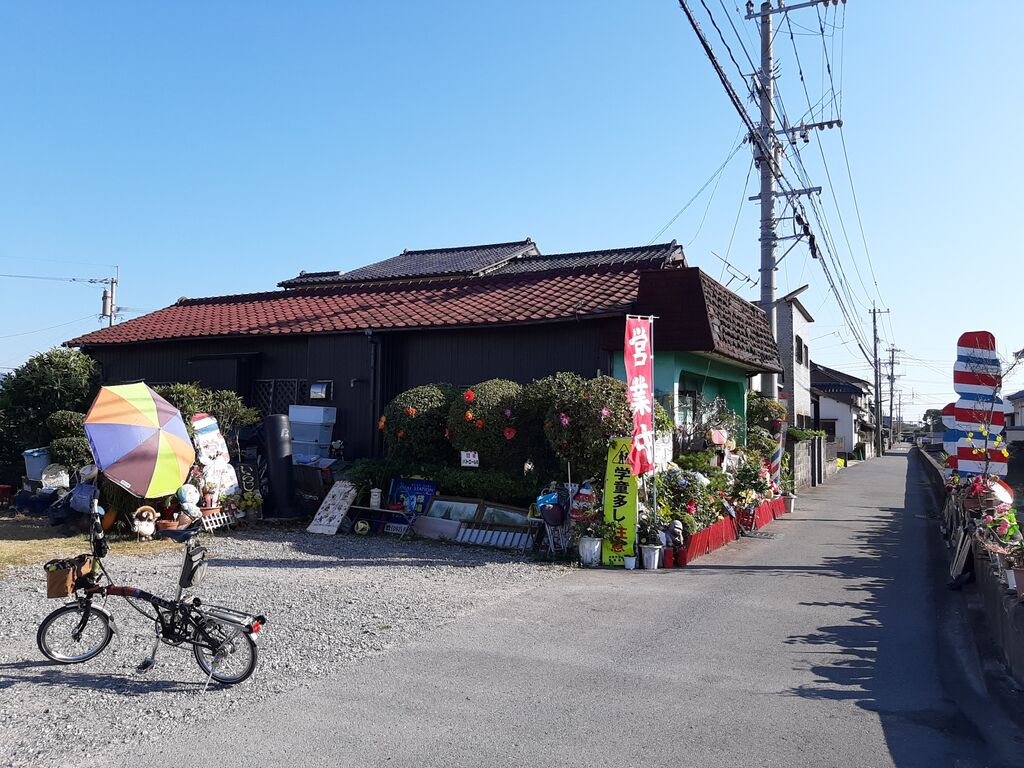
Among them, there's a flashy hair salon that could easily appear in the TV program "What's This?! Bizarre Hundred Views" and adds a bit of fun.
When the spikes of Makomo (Indian rice) open and start to turn white, there's something I can't help but say when riding on the embankment.
"I am the withered silver grass of the riverbank~
The moon over the Itako Dejima shines on the withered true grass~"
Ah, the Showa era, the Good Old Days!
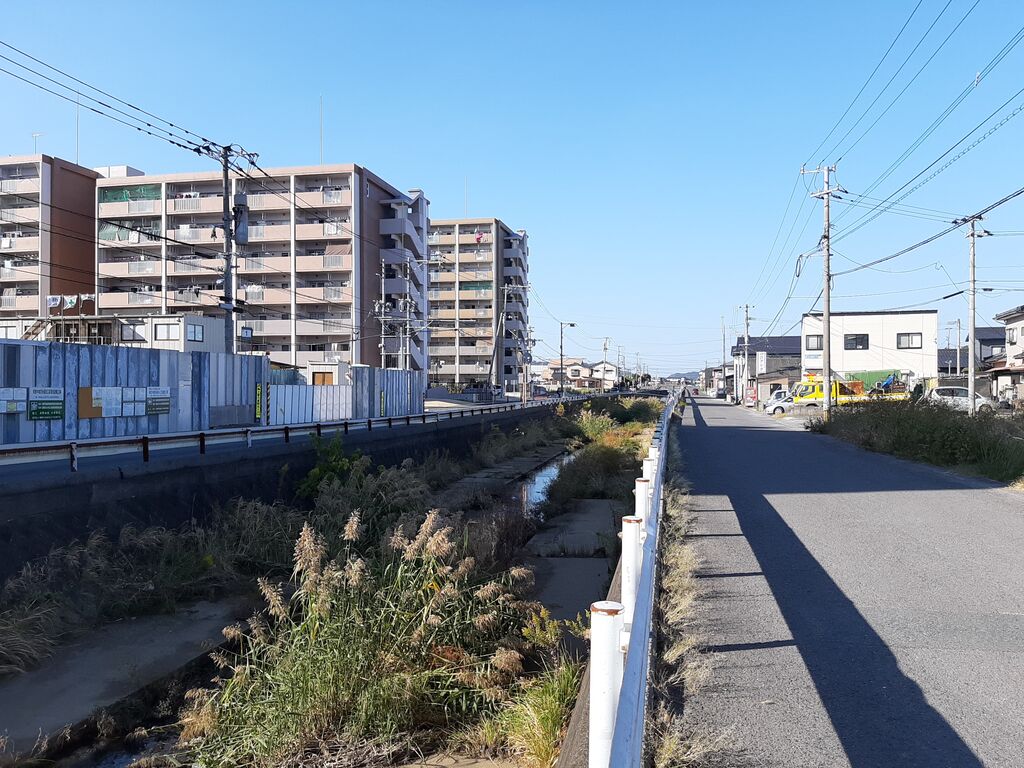
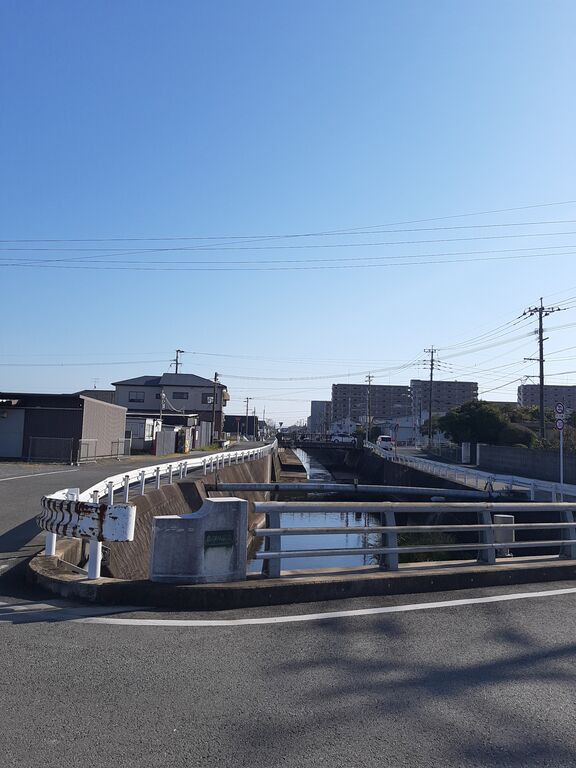
Finally, I reached the confluence of the Horikawa and Magarikawa rivers.
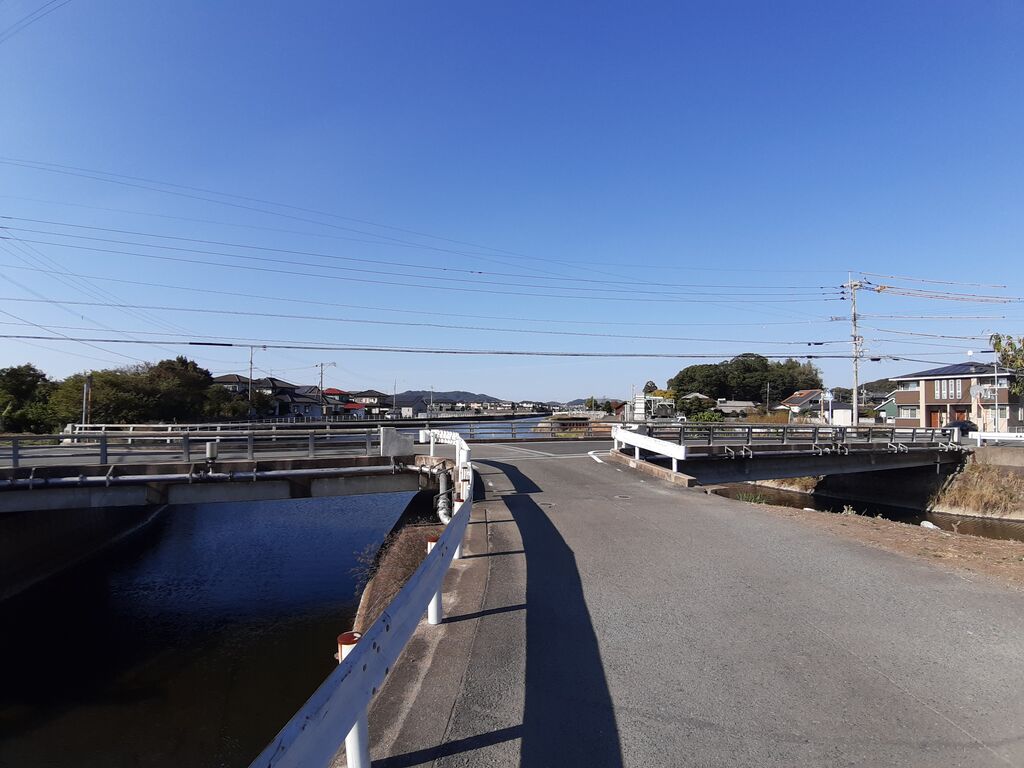
It's time to conclude my journey along the Horikawa River.
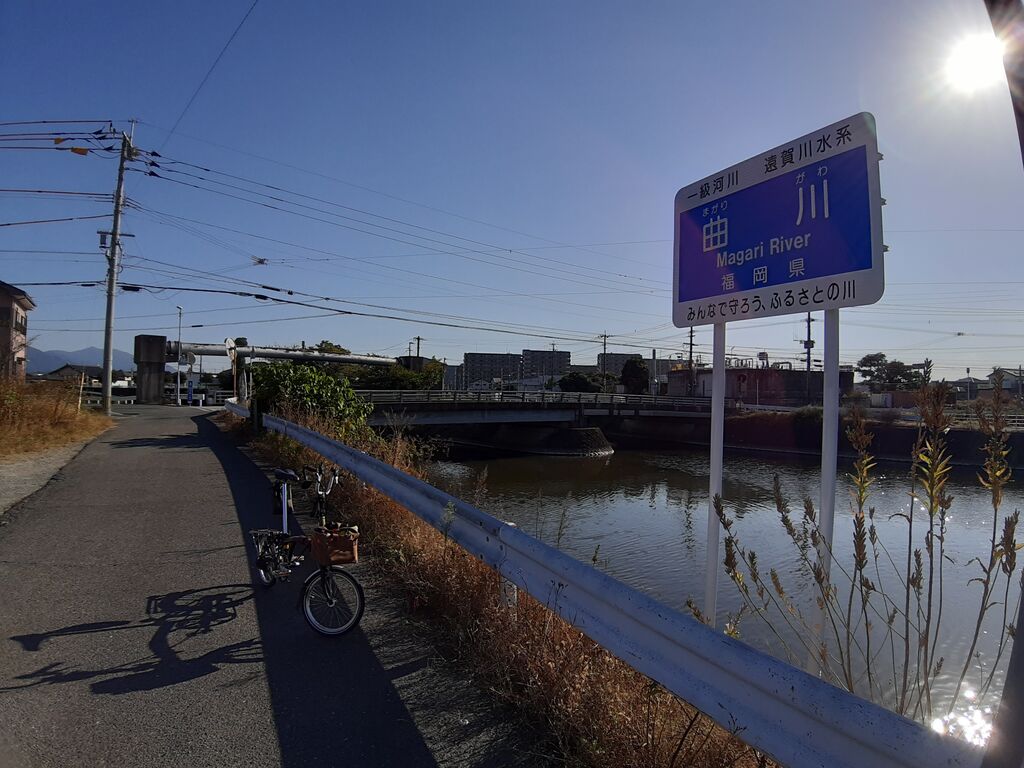
That's the end of the Horikawa.
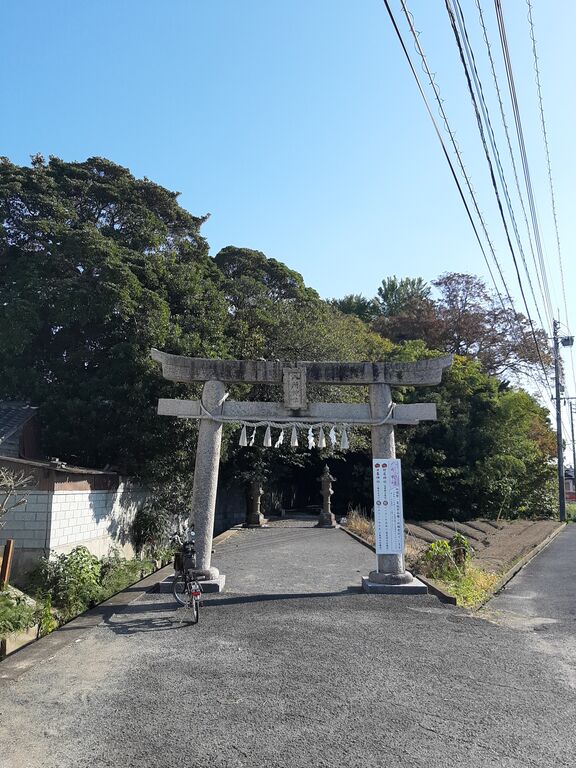
Hassho Shrine.
I've visited it before, and it's a shrine with a nice atmosphere.
It also has a Kofun ancient burial mounds.
It also has a Kofun ancient burial mounds.
Once upon a time in Ashiya Bay, there was Kario Shrine, which had an impressive main hall and gathered the faith of fishermen.
It was enshrined here at Hassho Shrine after Kario Shrine burned down and was abandoned.
It was enshrined here at Hassho Shrine after Kario Shrine burned down and was abandoned.
It's been a wonderful adventure exploring these charming places and learning about their history.
Now, it's time to leisurely make my way back home.
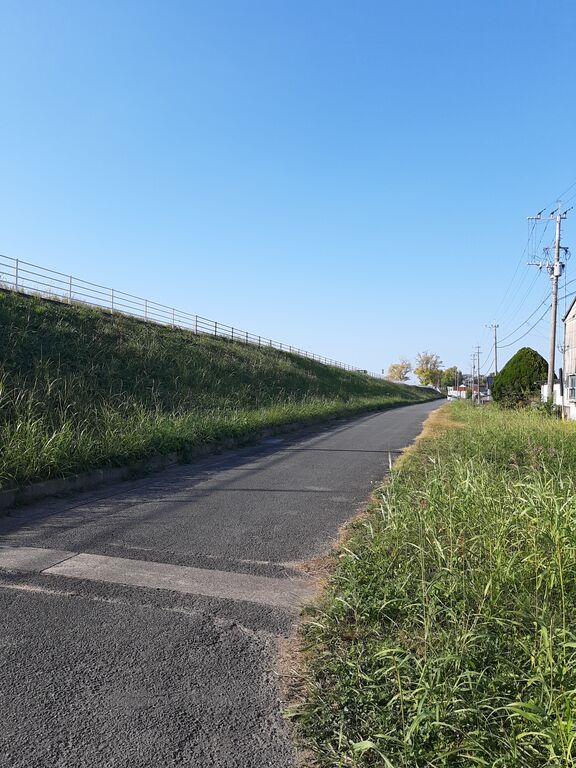
In the distance, I can see the magnificent ginkgo trees of the Yatsurugi Shrine.
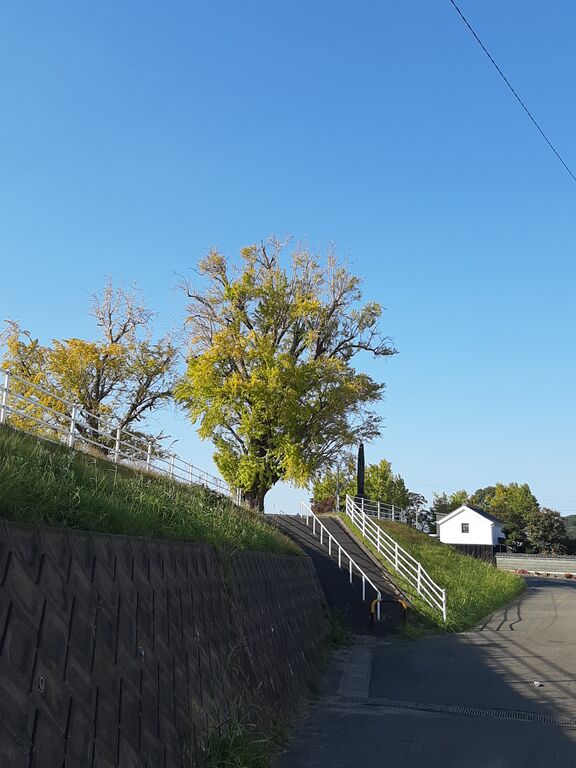
With that, I'm on my way back to the Onga River Riverside Road.
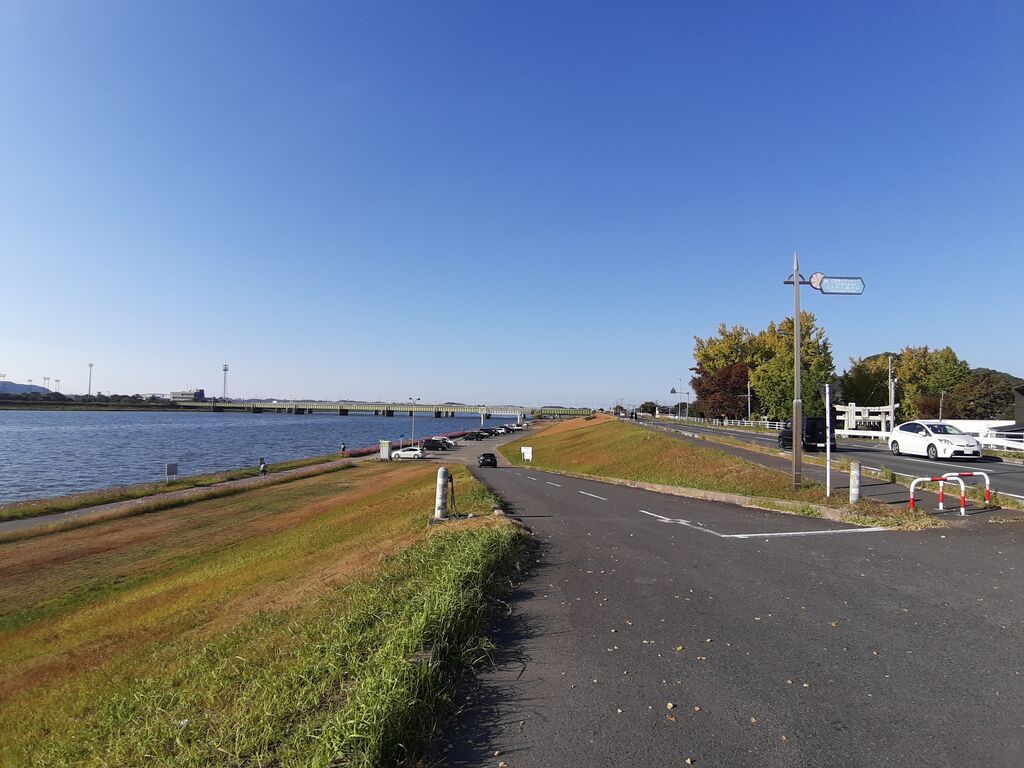
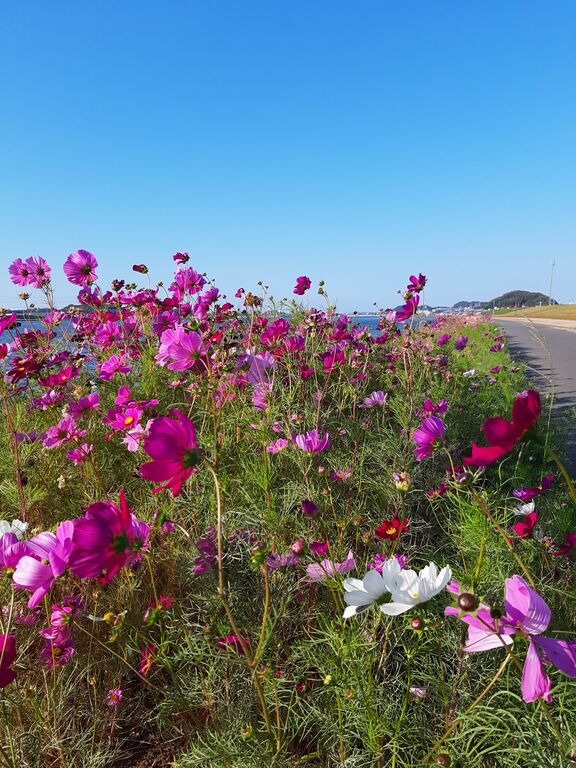
The crowds for flower viewing have started to thin out, and the evening sun bathes the cosmos flowers in a warm glow.
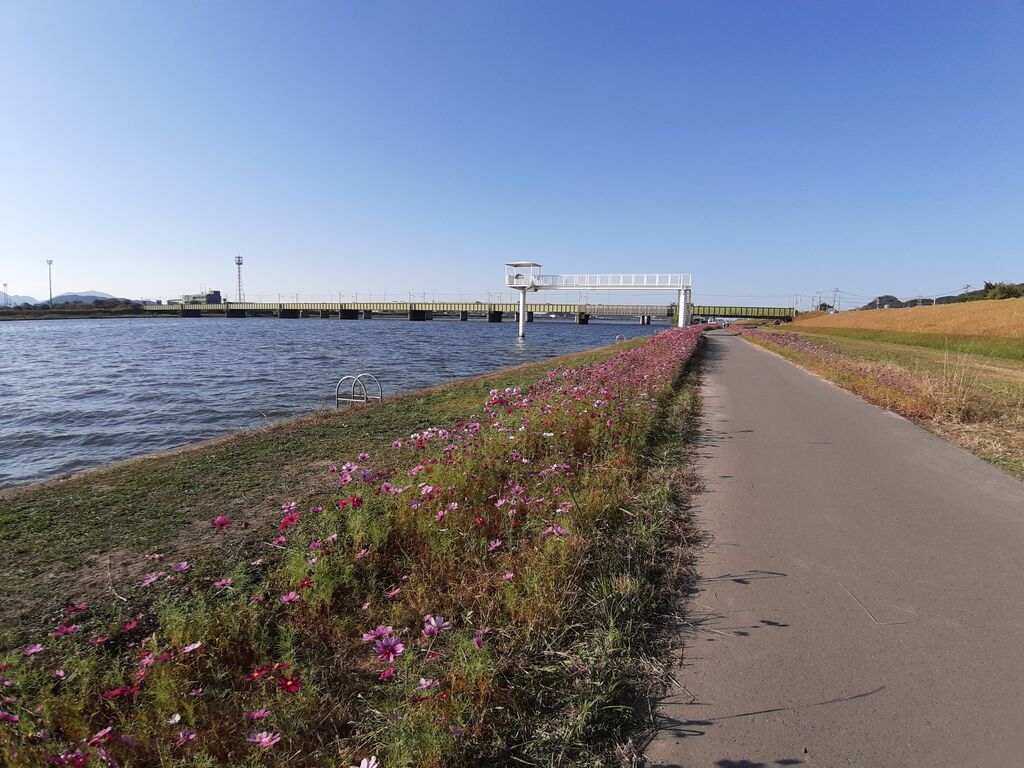
It's a lovely sight.
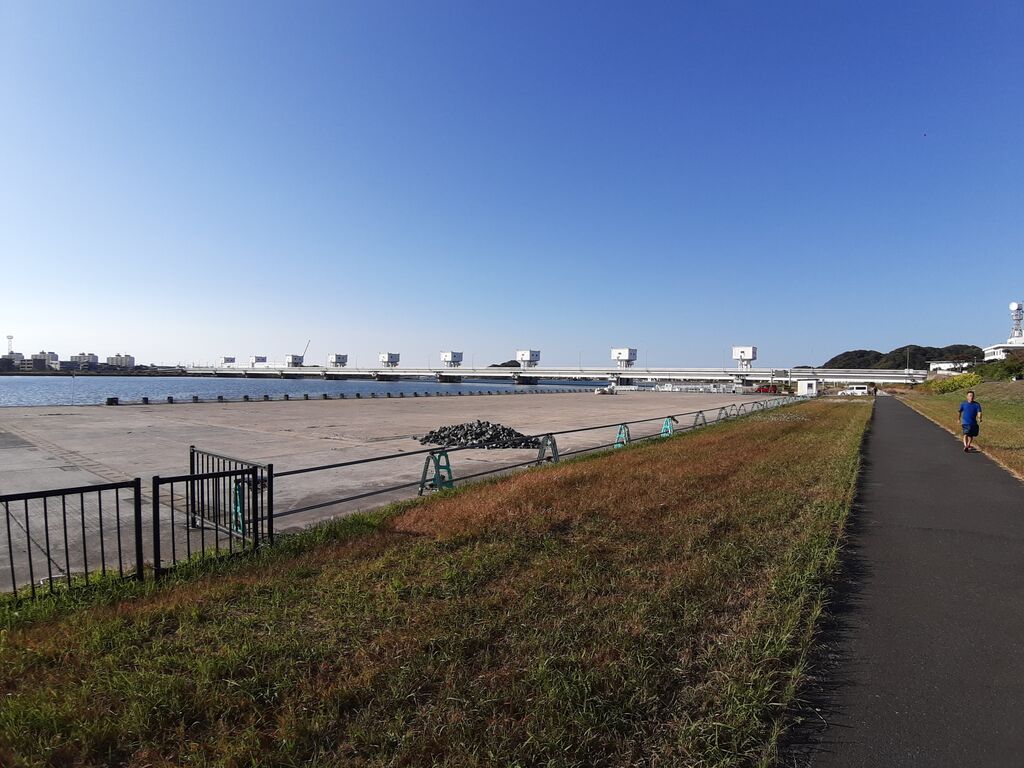
Returning to the Onga River Estuary Dam, I settled on the grassy bank on the opposite side for a short rest.
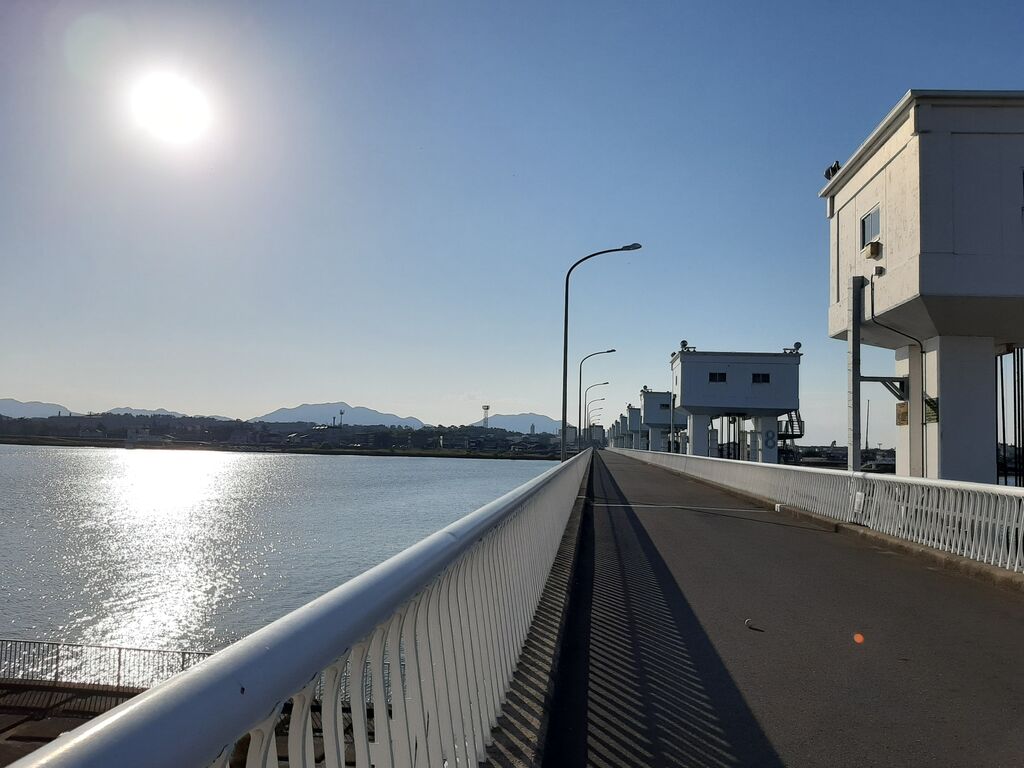
It's been a while, but perhaps I rode a bit too far today.
After indulging in some mandarins, persimmons, and sports jelly, I began preparing to head back.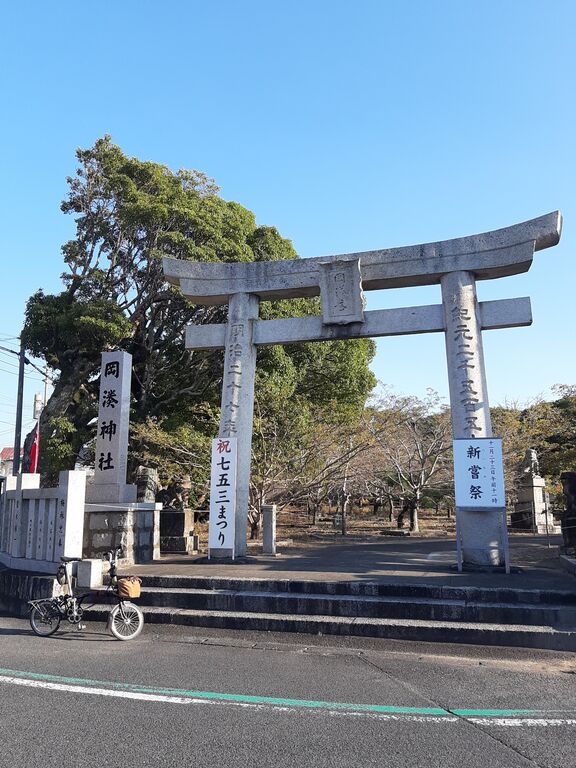
On the way back from Okaminato Shrine, I wondered which route I should take.
Which one will be easier?
Which one will be easier?
Since I'm not in a rush, I'll take it easy and make my way back...


Comments
Post a Comment