A Leisurely Ride through Shika-no-shima: Stories from a Charming Cafe
When gazing at a map of Fukuoka Prefecture, one can spot an intriguing sight: a peninsula-shaped giant sandbar that resembles a kicked-up soccer ball, connected by a slender strip of land to an island just across Fukuoka and Hakata's northern bay.
This island is none other than Shika-no-shima (Shika Island).
This time, it's all about the easy-going "Shika-no-shima Ride."
Embarking on the Shika-no-shima Ride typically starts from Fukuoka, offering breathtaking views of the city skyline from the pine groves.
As you speed along the Umi no Naka Michi (Road on the sea), you'll catch glimpses of the azure sea and sky.
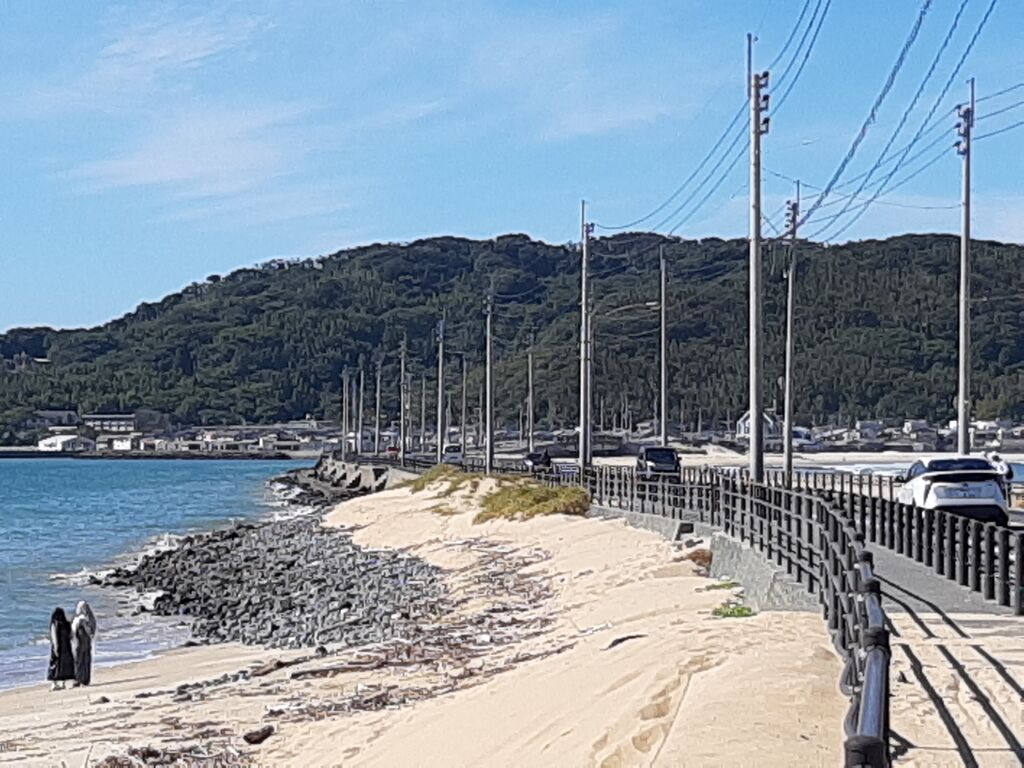
While entering Shika-no-shima, you'll be greeted by waves crashing from both sides.
You can choose between clockwise or counterclockwise routes, both of which lead to quaint cafes in
Shika-no-shima's district for a well-deserved break.
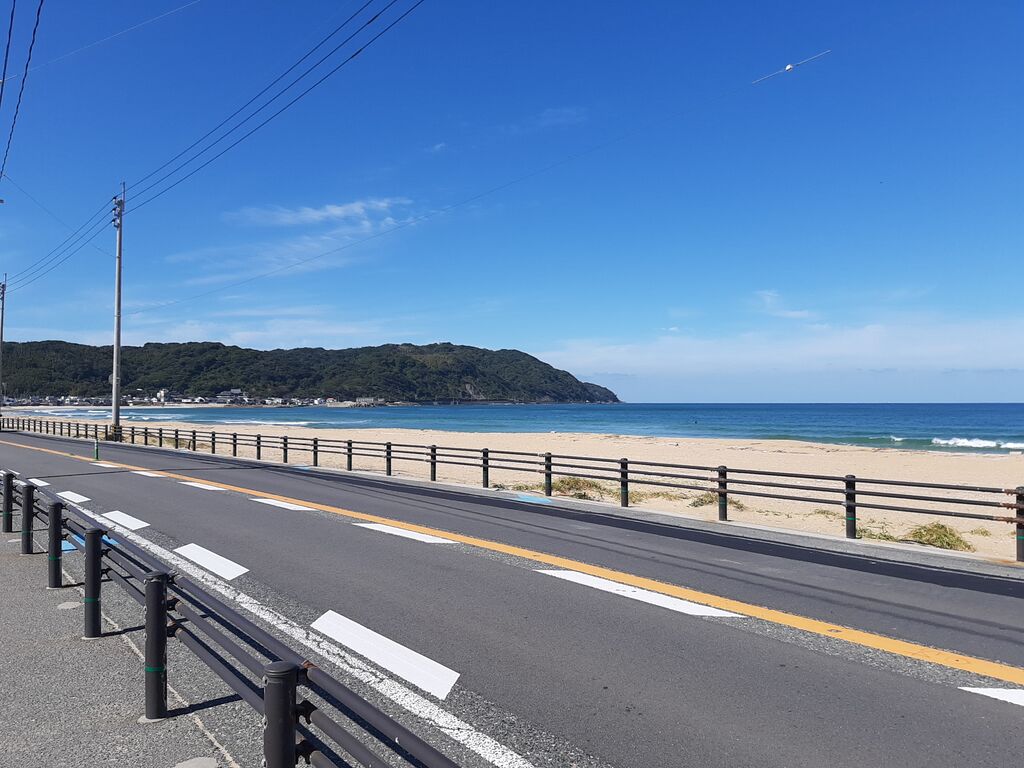
A Leisurely Journey For seniors, it's all about taking it easy, avoiding anything too strenuous, or, perhaps, things I'm simply unable to do as young.
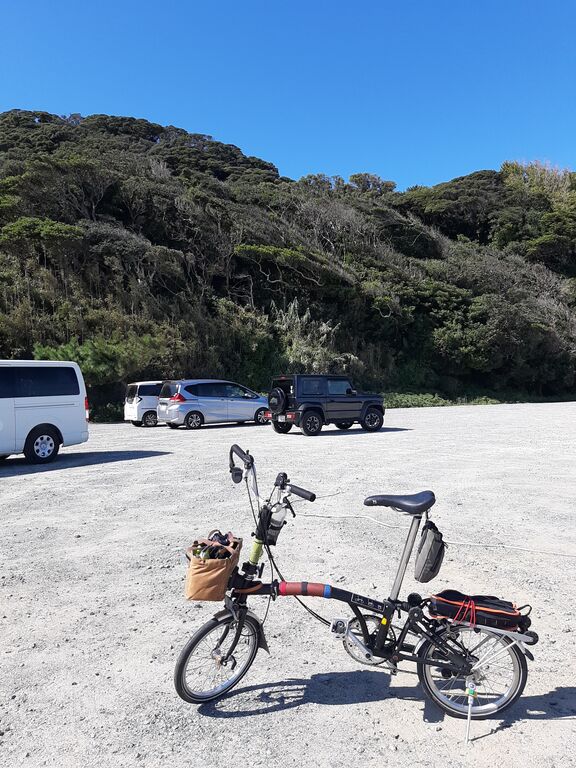
I parked my car at the Shika Umi (sea) Shrine parking lot (free) and leisurely explored the island with my Brompton, "Potakichi."
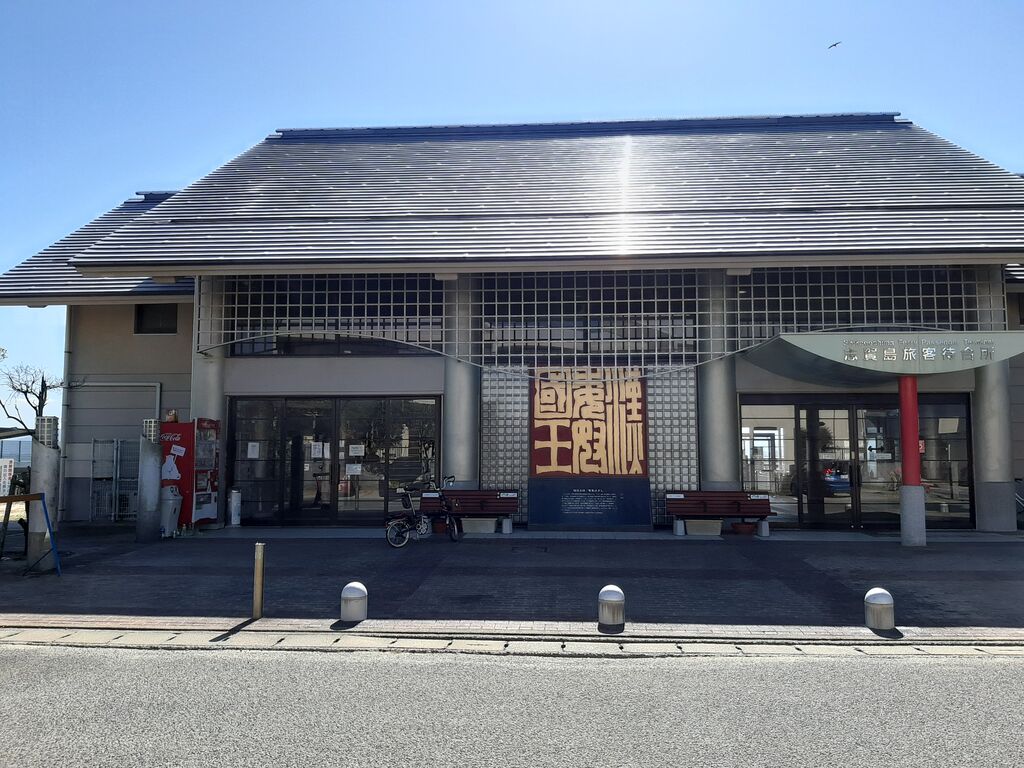
From Fukuoka city, there's a ferry service to Shika-no-shima (although I haven't had the chance to embark on it yet).
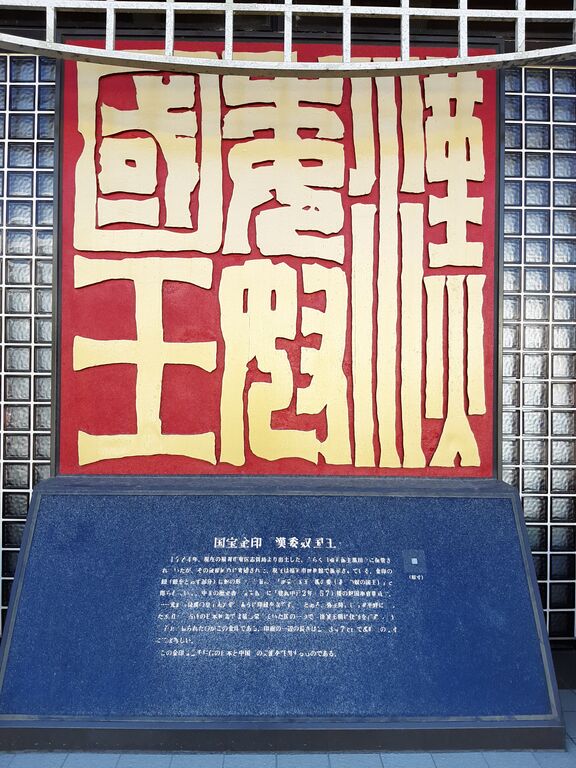
What made Shika-no-shima famous is undoubtedly the "[漢委奴国王印] Golden Seal."
The reading (Kan-no-wa-no-na-no-koku-ou-in) that seems like you're biting your tongue and being covered in blood is recommended by Kuroda Domain's Confucian scholar in the Edo period.
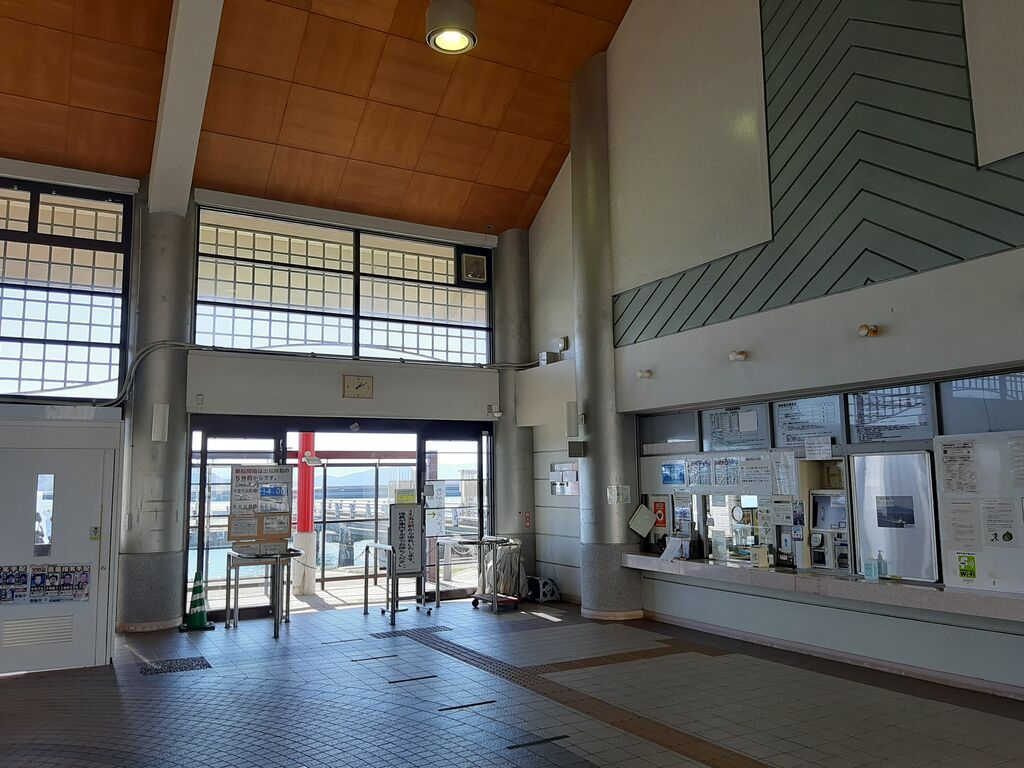
Arriving at the ferry terminal brings that familiar "I'm about to embark on an adventure" feeling.
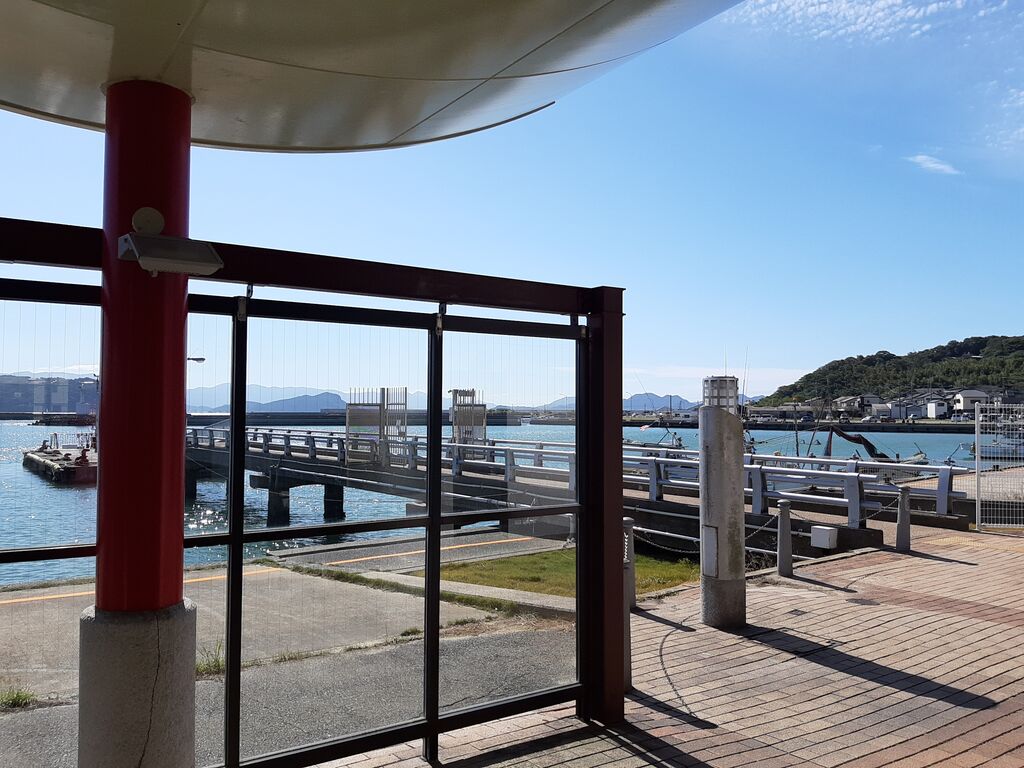
Before hitting the road, I tried to find a spot on the approach to Shika-Umi Shrine for a quick bite.
Alas, I forgot it was a Sunday.
Every place was packed, and some were even calling out for customers!
I went up to the front of the shrine and turned back.
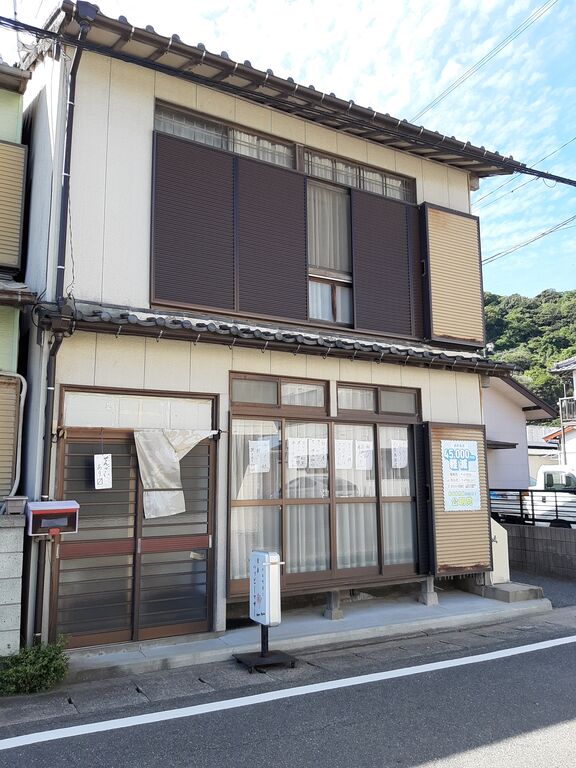
It's just an ordinary private house, and doesn't really have the vibe of a cafe, but there's a signboard that says "Tea House Happy Mother," and handwritten signs are casually stuck to the window glass.
And in a very Showa-style, "Zenzai (sweet red bean soup) Available."
The half-folded noren (shop curtain) caught my attention.
Zenzai... Zenzai...
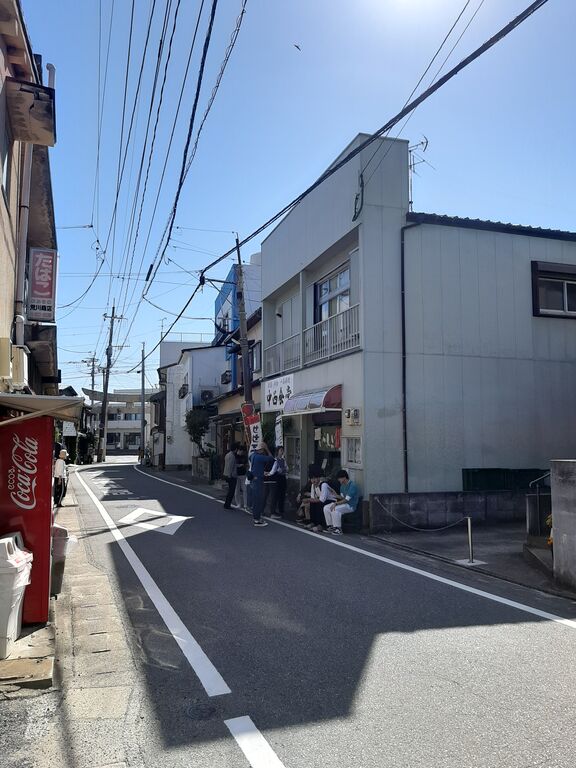
When it comes to lunch on Shika-no-shima, nothing beats the "Sazae (Sazae is a type of sea snail) Don" from Nakanishi-shokudo.
Today, again I have to give it a miss.
I gave up on appeasing my hunger and started my leisurely ride.
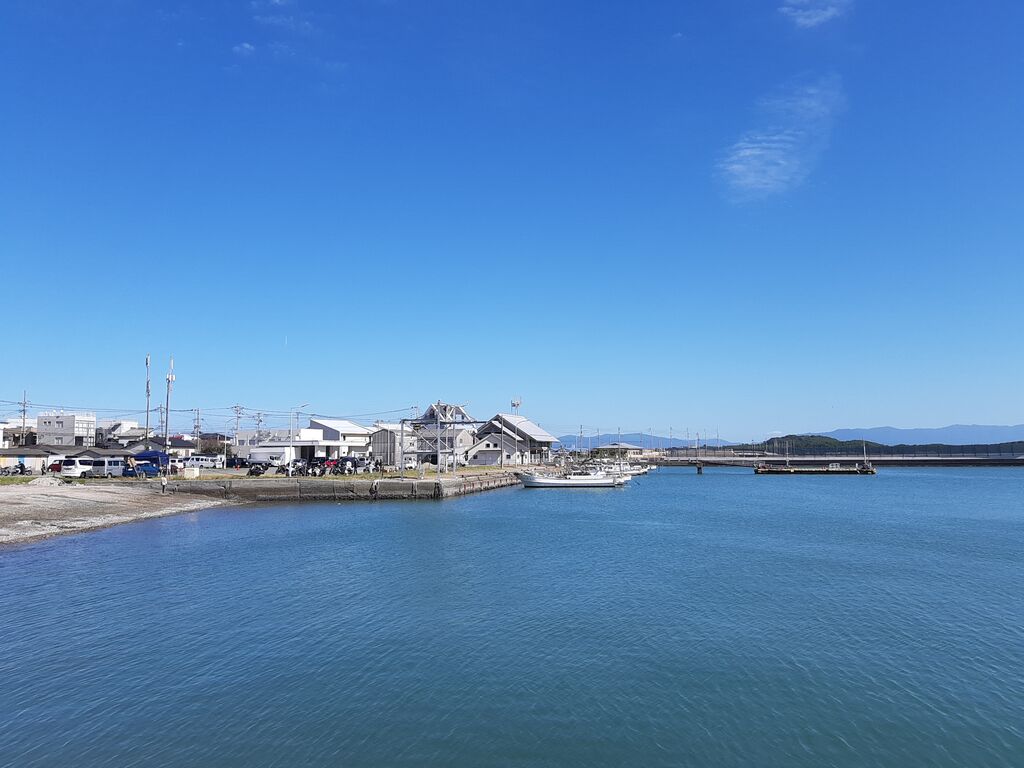
Shika-no-shima Island is also a fishing island.
It's a small island, but it has fishing ports in Shika-no-shima District, the western side of the island in Hiro District, and the northwestern part in Katsuma District, with villages scattered around.
On the east side of the island, except for the Shika-no-shima area, there are rocky shores, and there is no living area.
This time, I started the easy-going pottering, hoping to get a glimpse of these settlements, fishing ports, and if possible, some of the Manyo poem stone monuments scattered around the island.
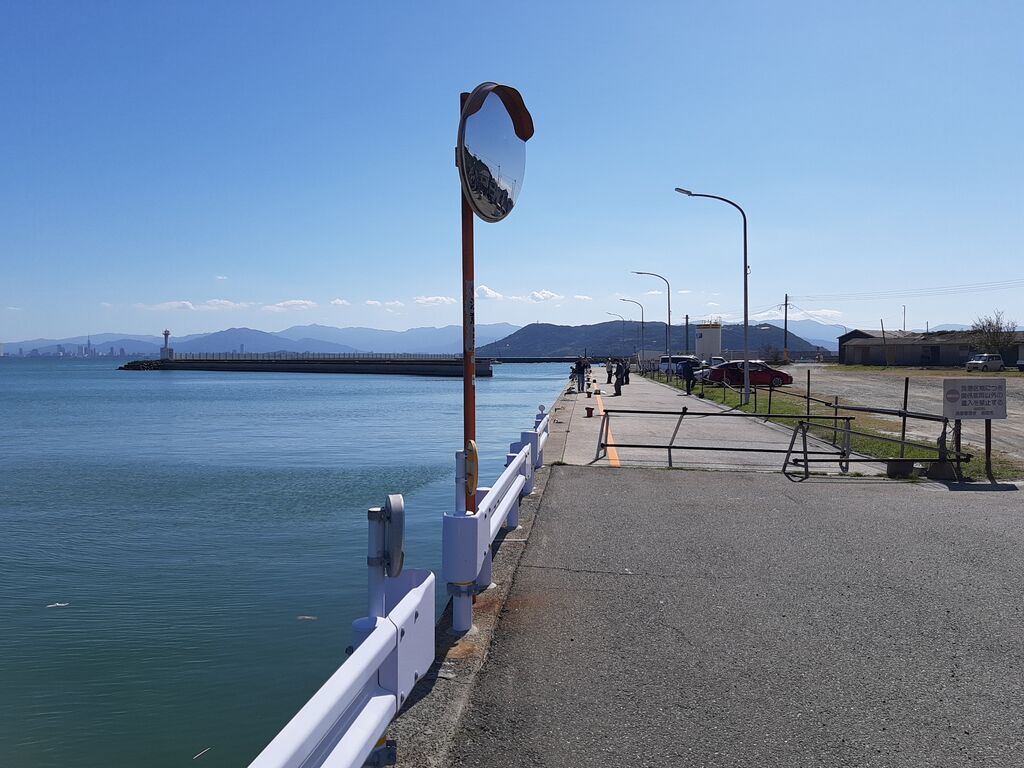
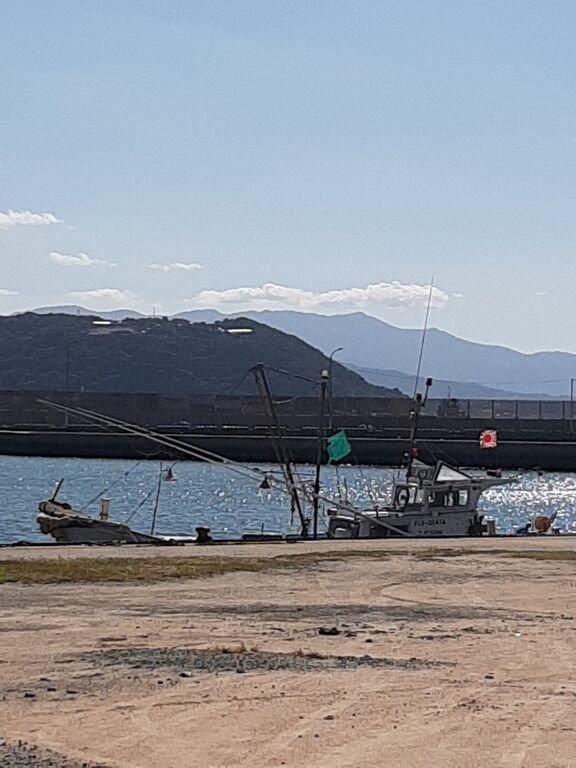
As I cruise by fishing boats with rising sun flags, something catches my eye on the horizon.
On the left, we have Noko-no-shima Island, and the top seems to be reflecting something.
That's Noko-no-shima Island Park!
Right now, the cosmos flowers are in full bloom.
By the way, even back when I didn't have a smartphone, I always carried a small pair of binoculars when going somewhere. (I have several, and now my grandchildren borrow them when they go to concerts.)
While working, I visited various tourist spots in European and Southeast Asian countries.
I vividly remember the landscapes I saw through my naked eyes and binoculars, but I don't have a single recorded photo.
Even though I worked for a company specializing in photogrammetry using multiple sets of stereo photos for three-dimensional analysis, obtaining 3D data, creating maps, and topographical charts, and calculating areas and volumes, I never owned a camera...
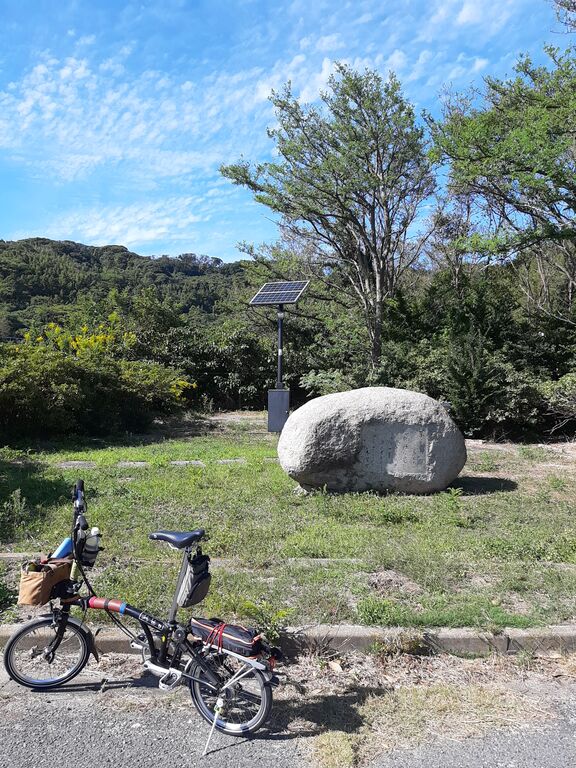
Shika-no-shima holds a special place in the world of Manyoshu (Collection of Ten Thousand Leaves), with numerous famous poems composed here.
Ten Manyo Poem Monuments stand tall across the island, inviting those on a Manyo stroll.
1.
Beyond Chihayaburu,
The cape of resounding bells,
I shall never forget.
Shiga's sovereign deity,
Even if I pass it by. (Book 7-1230)
The cape of resounding bells,
I shall never forget.
Shiga's sovereign deity,
Even if I pass it by. (Book 7-1230)
2.
Mount Shiga's trees fall,
Like the islands of Arashima,
We gaze upon them.
The mountains with stags' horns,
In fond recollection. (Book 16-3862)
Like the islands of Arashima,
We gaze upon them.
The mountains with stags' horns,
In fond recollection. (Book 16-3862)
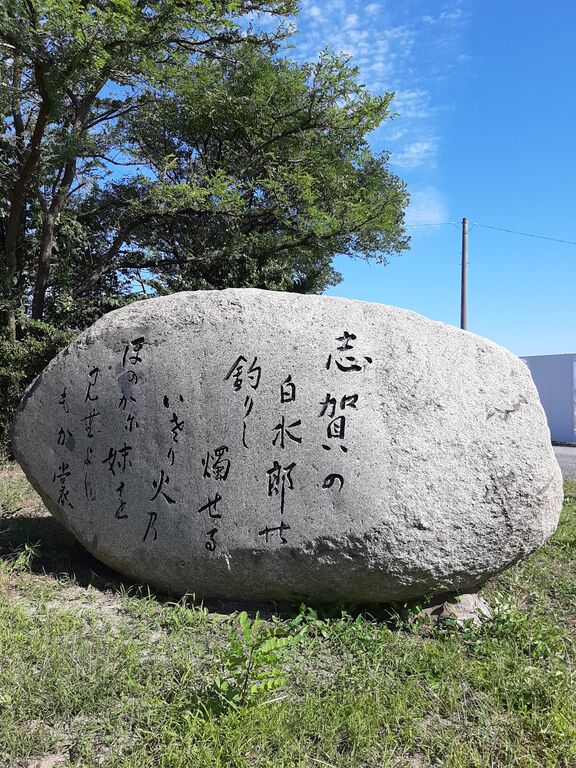
3.
Shiga's White Water Lord,
Fishing by torchlight's glow.
The faintest light may reveal,
My sister in the distance. (Book 12-3170)
Fishing by torchlight's glow.
The faintest light may reveal,
My sister in the distance. (Book 12-3170)
4.
In Shiga's Bay, fishermen row,
At dawn, they ply their oars.
As the morning sun appears,
The sound of their boats is heard. (Book 15-3664)
At dawn, they ply their oars.
As the morning sun appears,
The sound of their boats is heard. (Book 15-3664)
5.
In a large boat, in a small boat,
Bringing them closer to shore.
Even to Shiga's rugged cliffs,
They transport, or so it seems. (Book 15-3869)
Bringing them closer to shore.
Even to Shiga's rugged cliffs,
They transport, or so it seems. (Book 15-3869)
6.
The salt-making smoke of Shiga,
Illuminates the winds,
But does not rise,
It drifts among the mountains. (Book 7-1246)
Illuminates the winds,
But does not rise,
It drifts among the mountains. (Book 7-1246)
7.
In Kasu Bay, the seafaring cries,
Resound like the waves' white spray.
Approaching Shiga's shores, they stand,
Bringing their catch, so they say. (Book 15-3654)
Resound like the waves' white spray.
Approaching Shiga's shores, they stand,
Bringing their catch, so they say. (Book 15-3654)
8.
In Shiga's bay, the seafarers come,
Their families await them with hope.
Brightly lit are the fish they bring,
At the break of day, as they arrive. (Book 15-3653)
Their families await them with hope.
Brightly lit are the fish they bring,
At the break of day, as they arrive. (Book 15-3653)
9.
The birds of the open sea,
And the ships with cormorants,
As they return from Yara's cape,
Do we hear their calls? (Book 16-3867)
And the ships with cormorants,
As they return from Yara's cape,
Do we hear their calls? (Book 16-3867)
10.
Shiga's fishermen, harvesters of seaweed,
Salting and drying their catch,
Their small combs for tidying the harvest,
Unseen by those who watch. (Book 3-278)
Salting and drying their catch,
Their small combs for tidying the harvest,
Unseen by those who watch. (Book 3-278)
As to the monument setting sites, better to leave it fun for visitors.
As I circled the fishing port, I found a sign that read "Nursery for Baby Lobsters and Gazami".
[Note: Gazami is a species of crab].
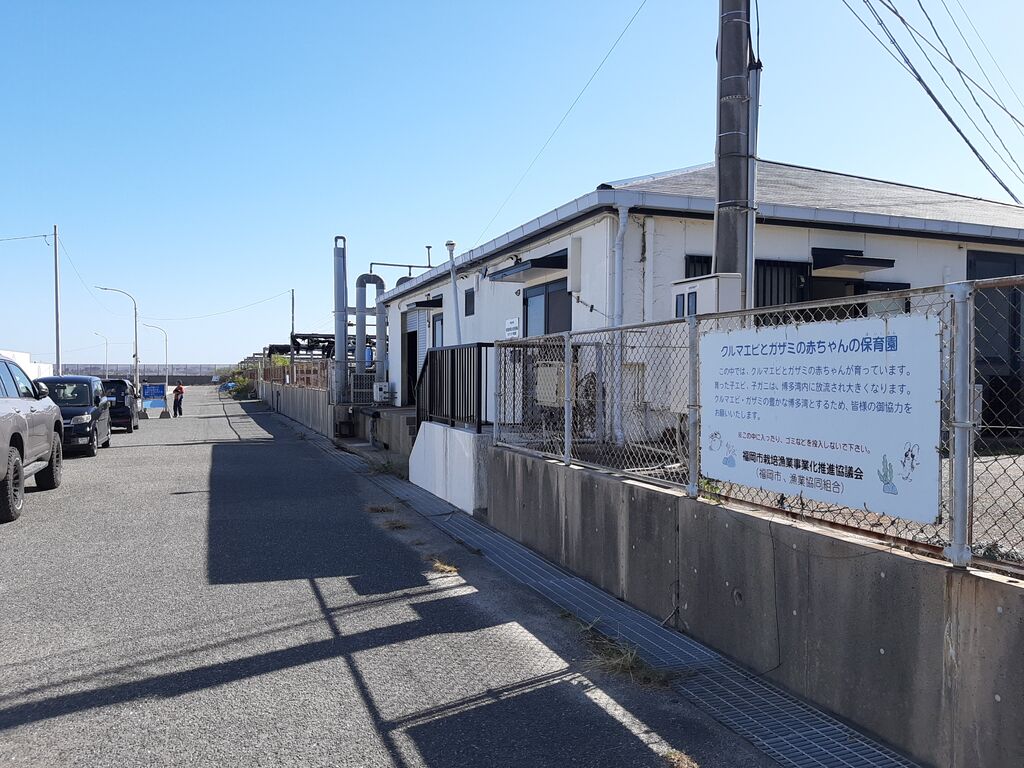
The small Kuruma shrimp and young crabs raised here are released into Hakata Bay and grow bigger, and so on...
Certainly, a nursery it is!
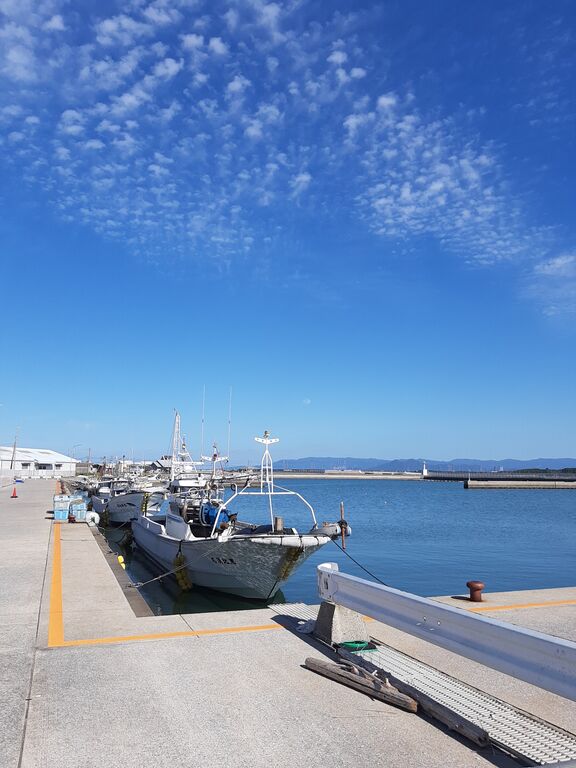
Now, it's time to return to the original path or find the next destination.
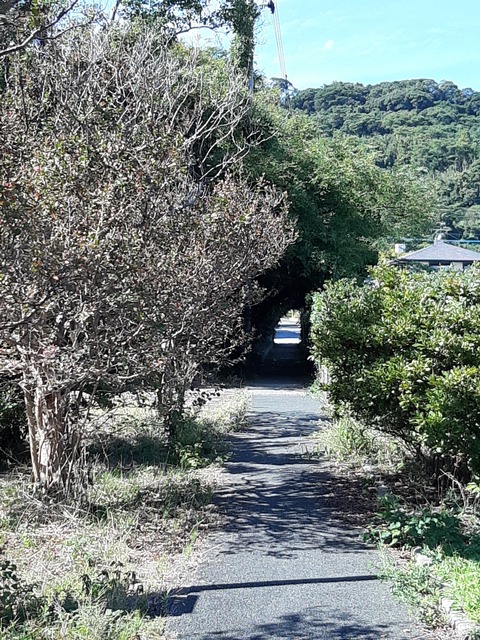
Wondering if I can make it through this shady shortcut, it's surely a shortcut, right?
9th Manyo Monument...
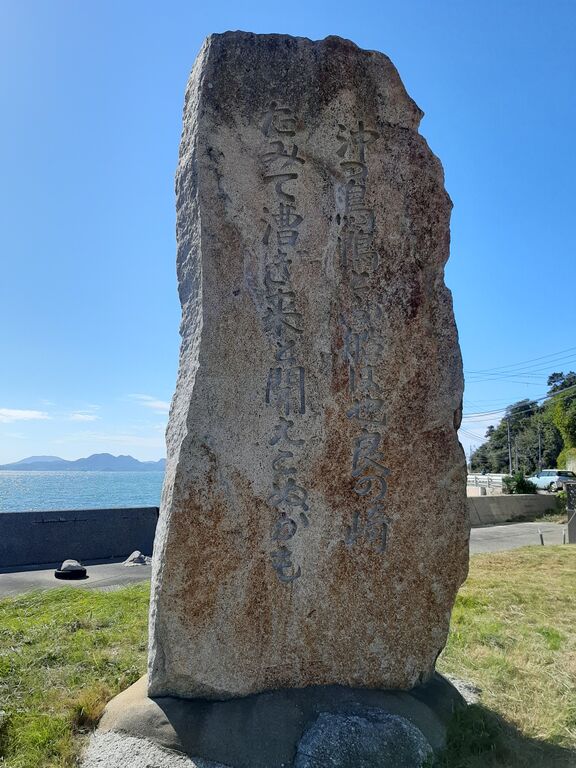
At the northern tip of Noko-no-shima Island, separated by the sea, is called "Yara no Saki (cape)."
The poem reads:
If a boat named "Kamo" carrying a beloved person returns,
oh birds dancing at Yara Cape, please tell me...
Her beloved Arao's boat was named "Kamo".
She kept waiting not knowing Arao had lost his life in the roaring sea to perform his royal duty crossing the sea to Tsushima Island.
Yamanoueno Okura, one of the leading poets in Manyo-syu, by knowing the sad story, composed 10 poems on behalf of herself.
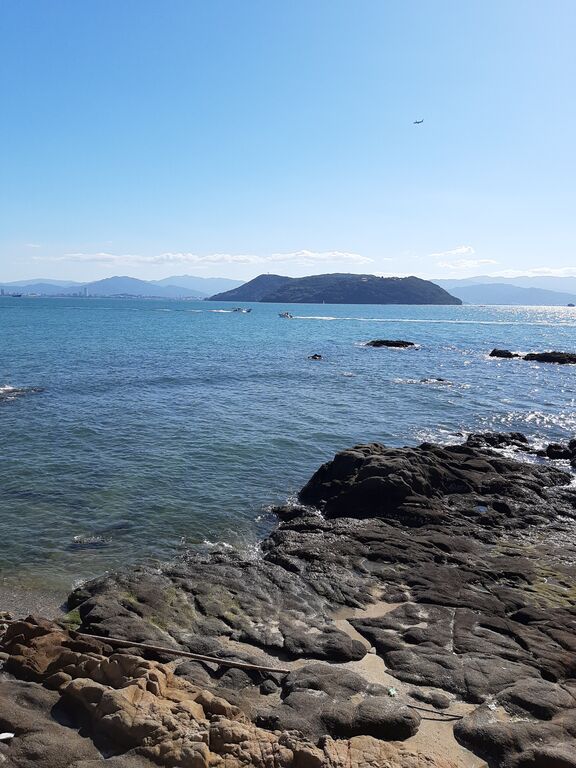
Heading away from the settlement, following the coastal road, we discover the spot where the Kin-In (Golden Seal) was found - Kin-In (Golden Seal) Park.
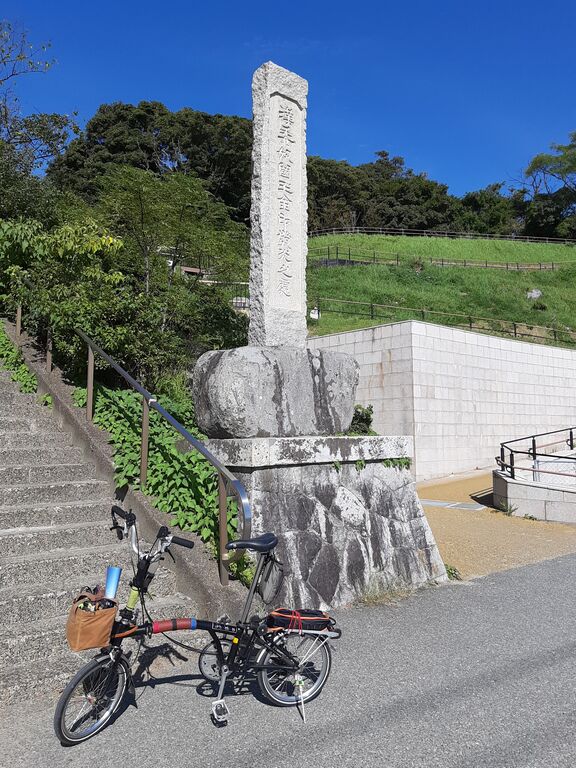
While the park was nicely maintained a few years ago, the replica of the Kin-In (Golden Seal) is a bit hidden at the top.
Let's not exert too much energy here.
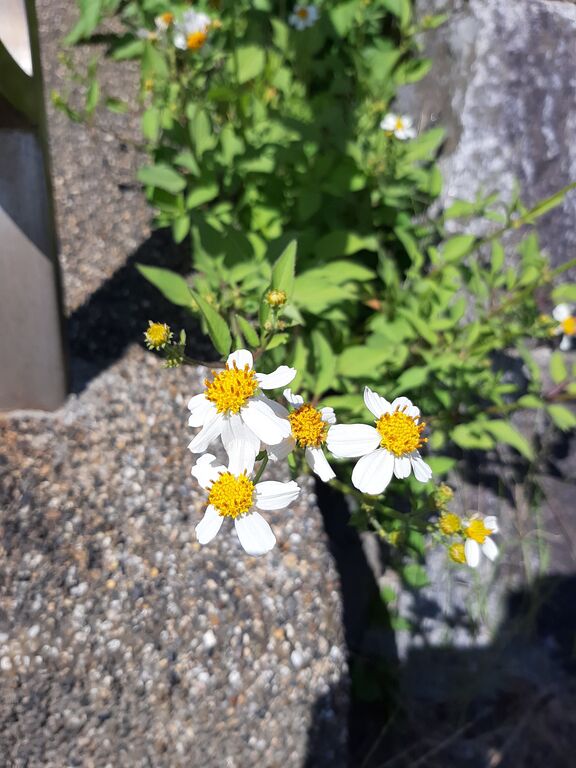
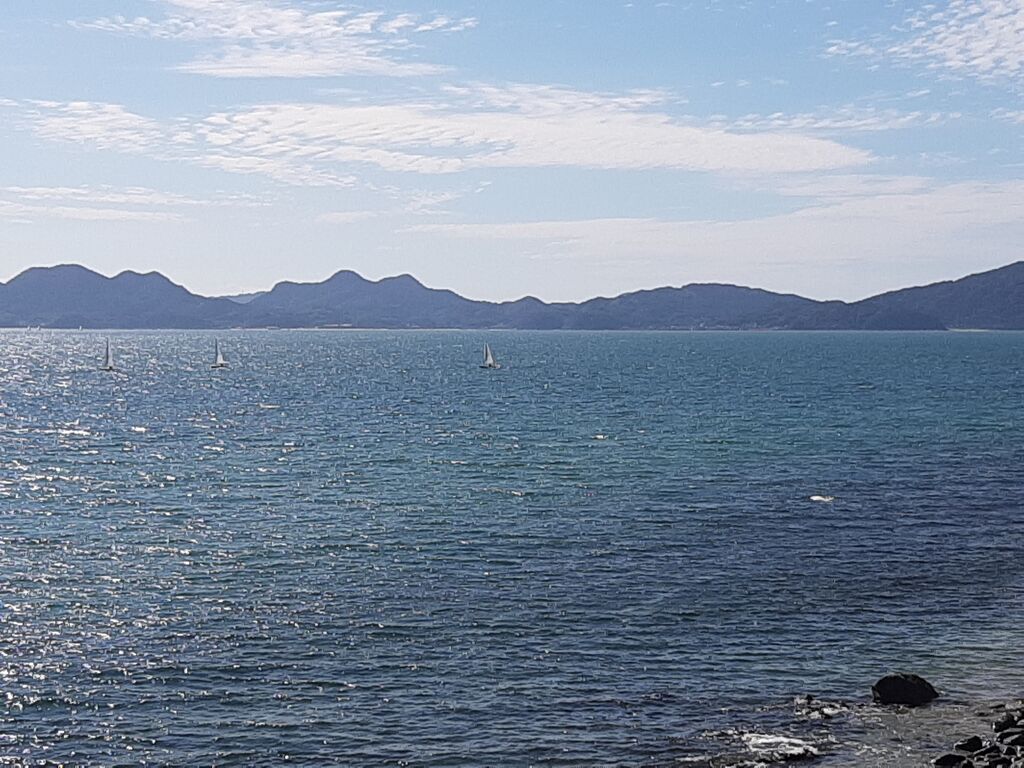
Several yachts with their white sails billowing in the wind...
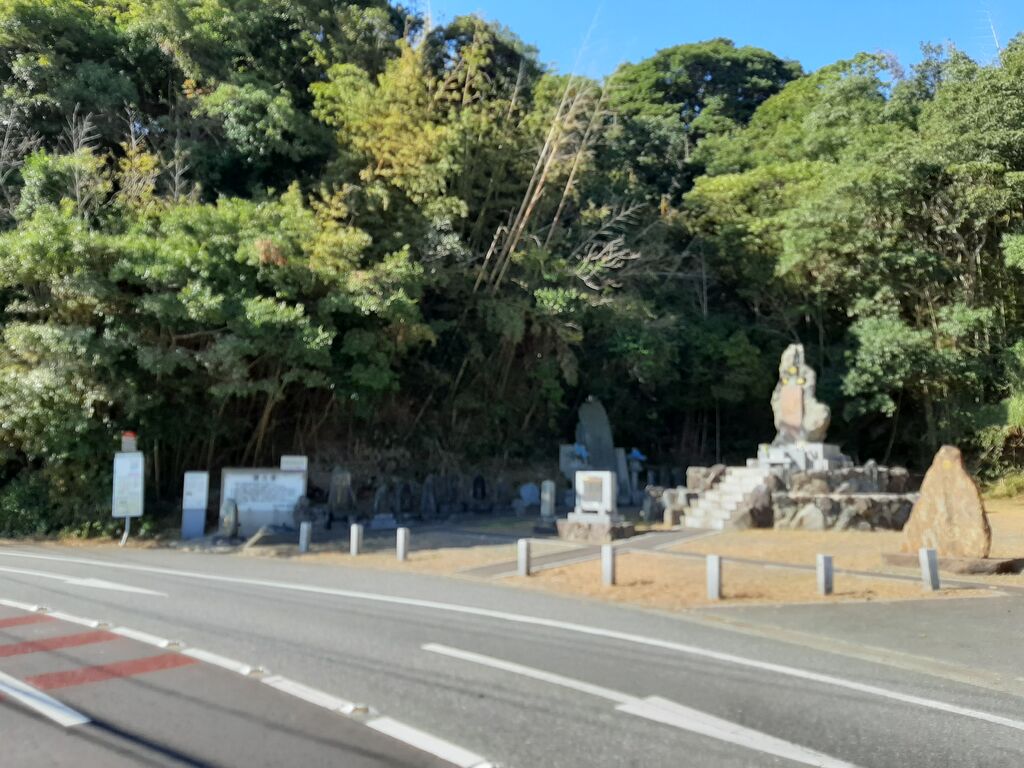
To commemorate the Mongol warriors who died during the Mongol invasion, there's the Mongol Mound just a short way ahead, and a Manyo poem monument lies beyond the road curve...
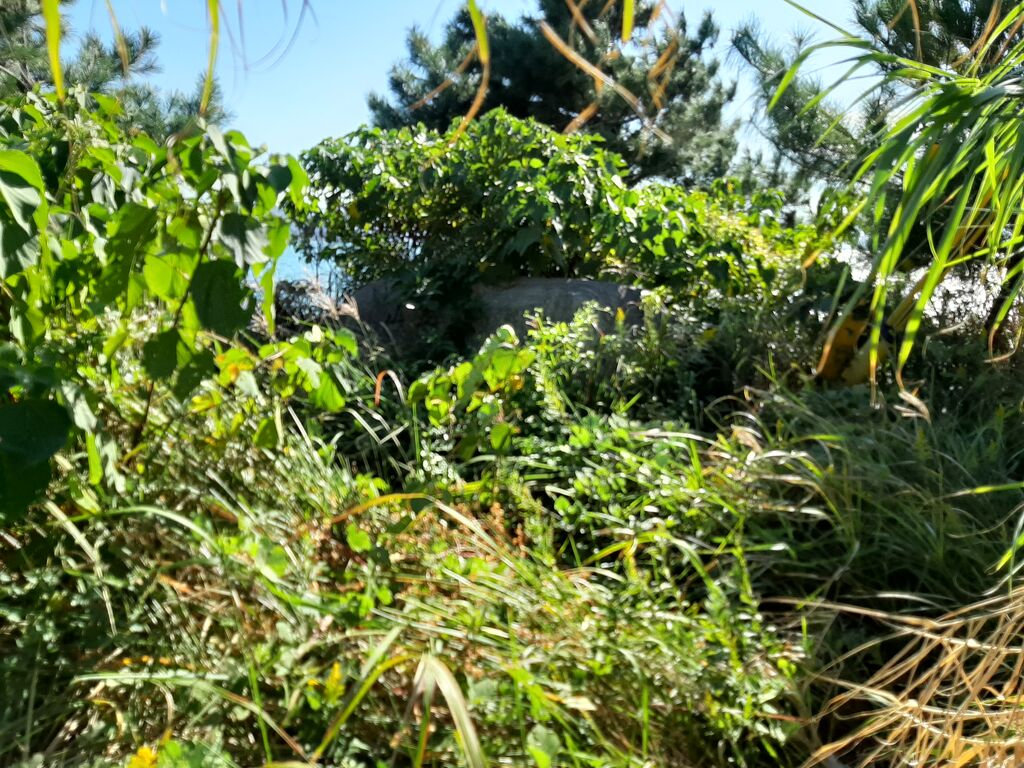
The sixth poem monument is mostly covered by overgrown summer grass, with just a bit peeking out.
Since I have no plans to volunteer for the grass trimming, I'll move on.
I've arrived at Hiro's settlement and fishing port.
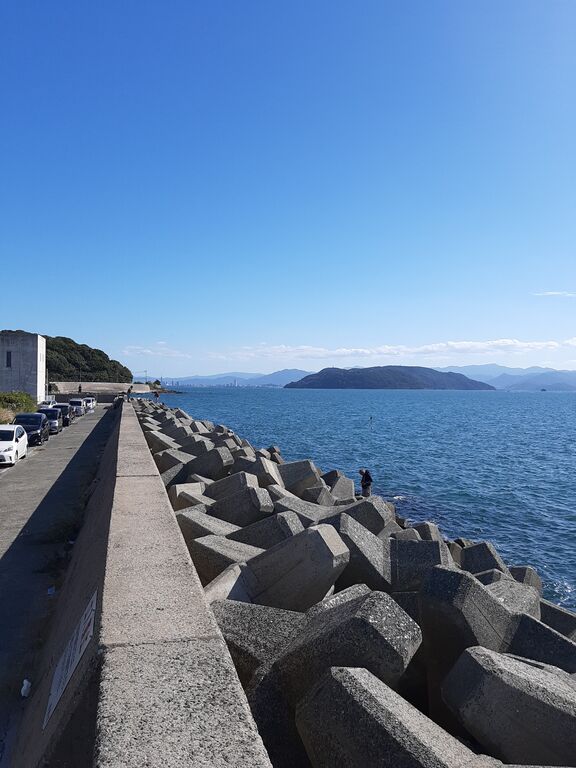
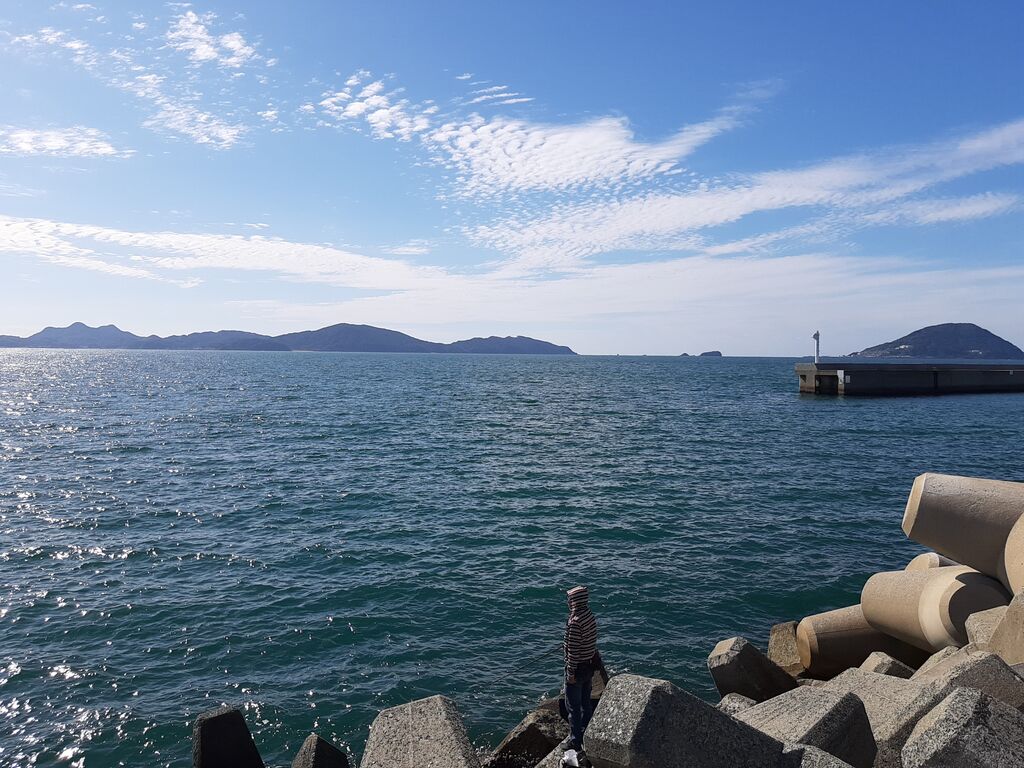
Fishermen are patiently waiting, their fishing rods extended here and there.
Ahead lies the steepest hill on the island.
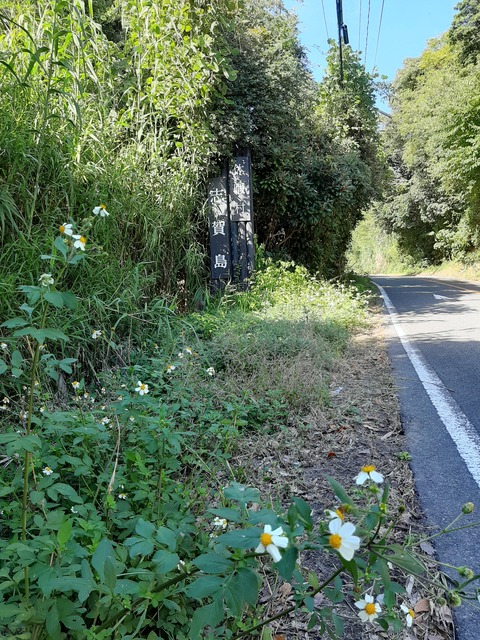
Usually, I'd downshift to the lightest gear, and though it's a pitifully slow pace, I'd huff and puff my way to the top.
But this time, enticed by the charming flowers—or rather, as soon as I saw the "Vacation" sign of the National Vacation Village, I said, "I'm done," and got off my bike.
Once past the highest point of the pass, it's a continuous downhill with warnings about steep slopes.
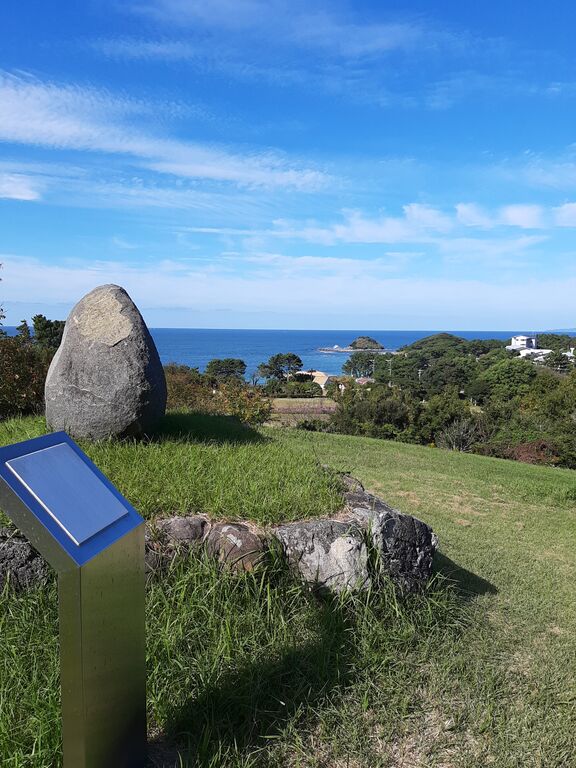
The second poem monument sits on a grassy hill.
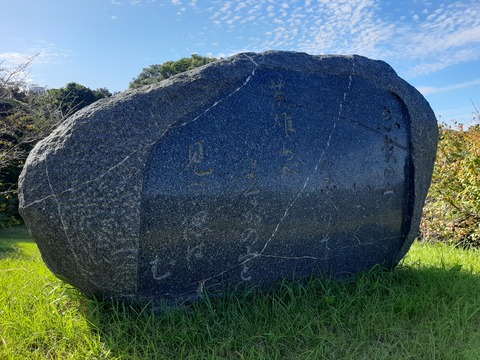
Here, I take a moment to catch my breath and head towards the parking and resting spot in front of the Shika-no-Shima National Vacation Village Hotel.
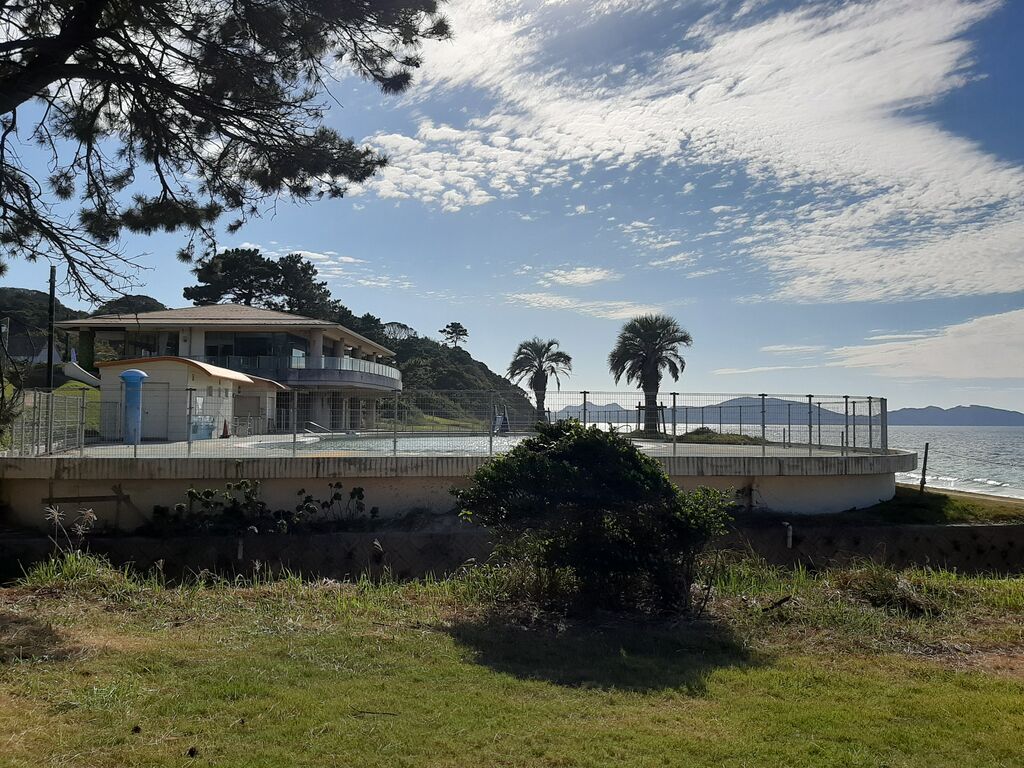
In the shade of the trees, I nibble on the oranges, and persimmons I brought, as well as some dried fruits and a bar, and quench my thirst with a sports drink.
Finally, I feel at ease.
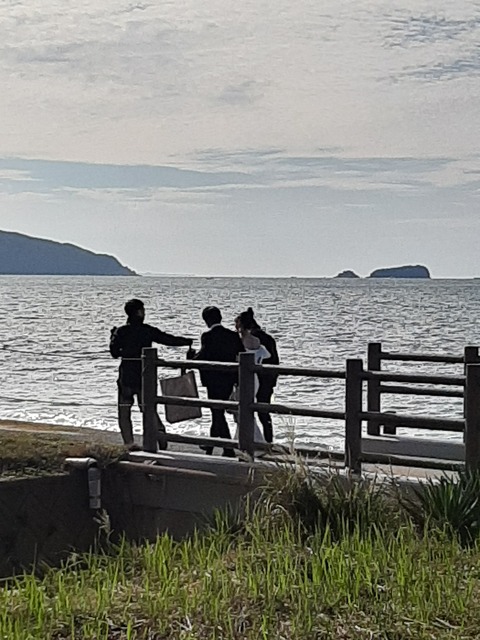
A woman in a wedding dress and her partner, along with some men holding cameras, are they taking commemorative photos?
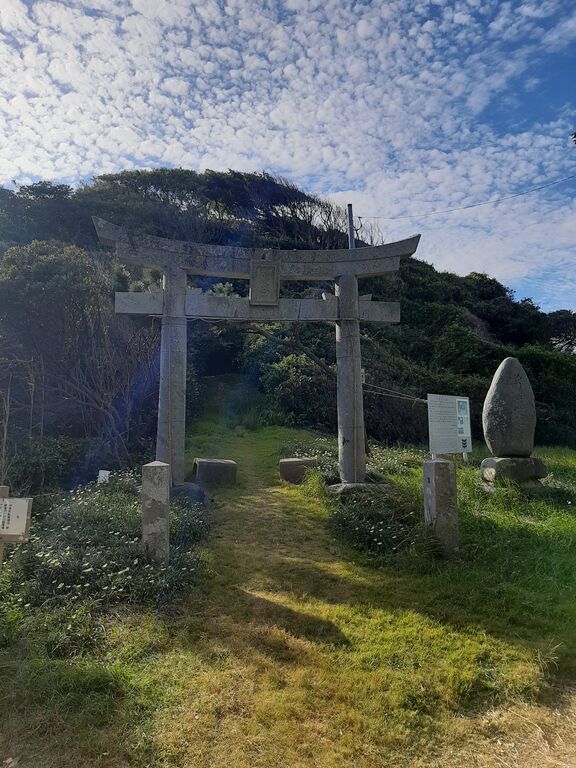
After visiting the Katsuma settlement, I reached the beach.
And there, an ancient tomb was nestled in this remote part of the cape.
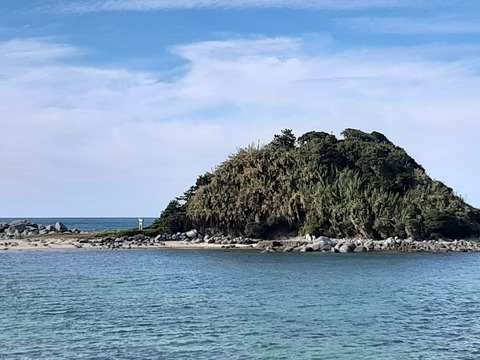
On this tip of the peninsula, a small torii gate is visible on a small island connected to the mainland, and beyond it lies the Shika-Umi (Sea) Shrine, Okitsu Shrine.
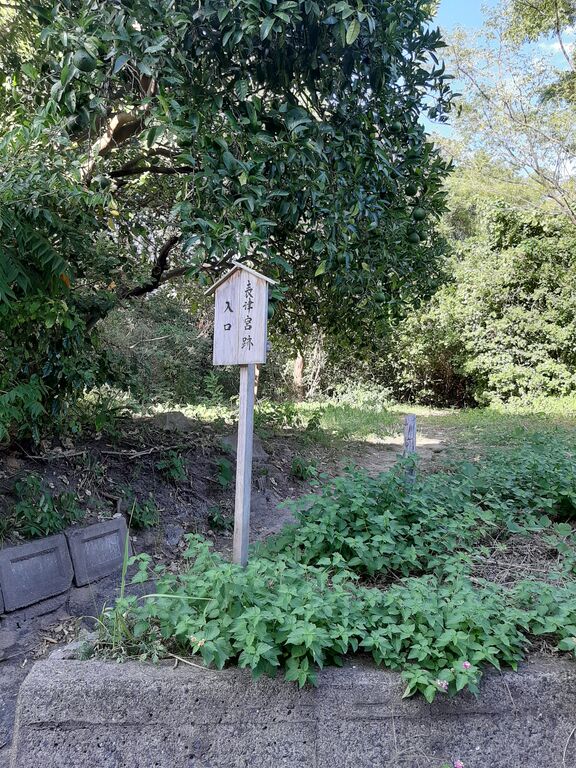
There was a sign for Omotetsu Shrine on the shoulder of Katsuma Road, but I passed it by.
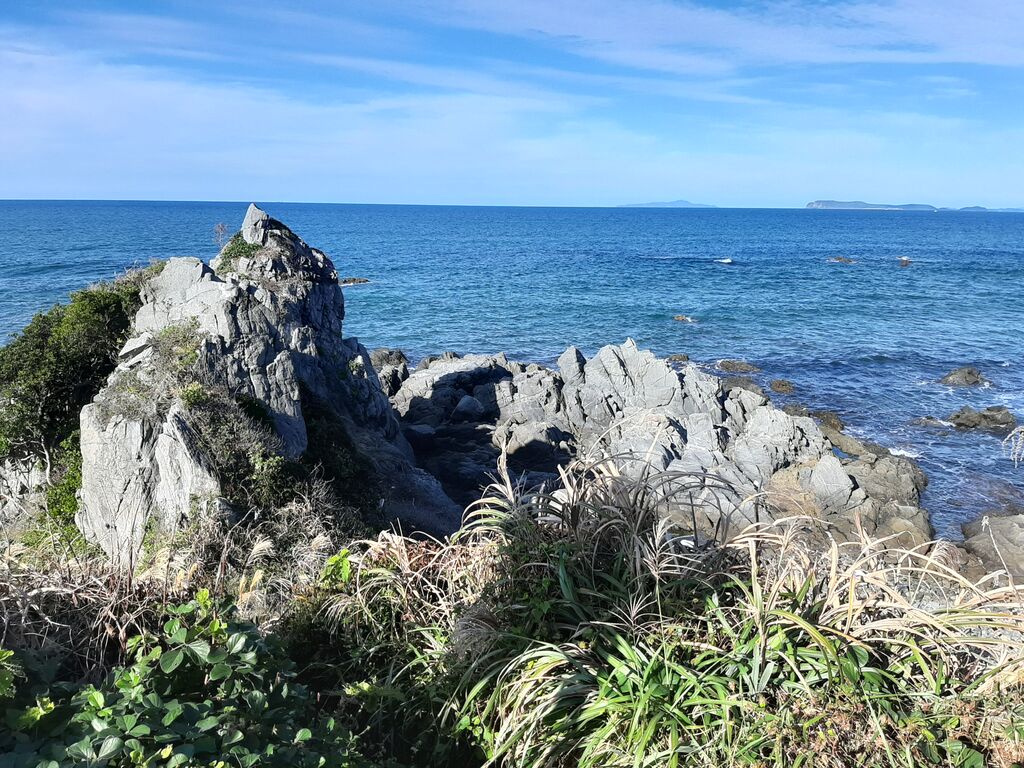
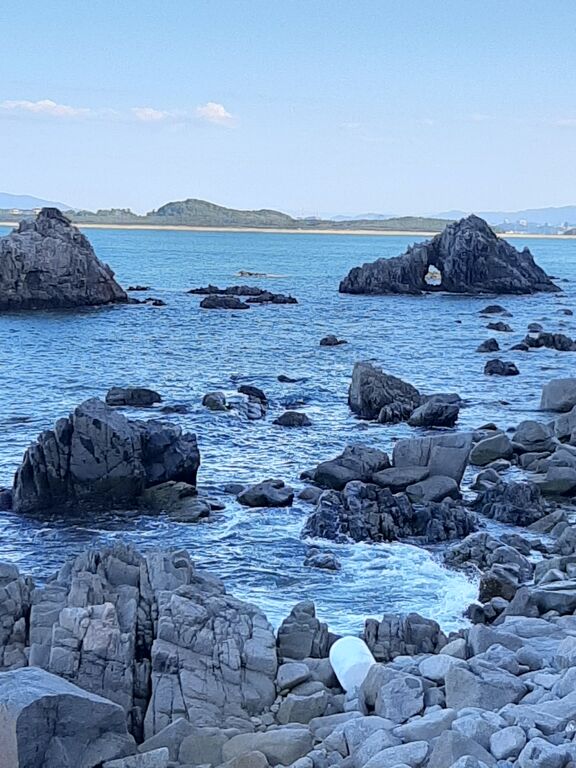
After passing the Katsuma settlement, I loop around the tip of the peninsula, and the scenery changes dramatically, with rocky reefs stretching out.
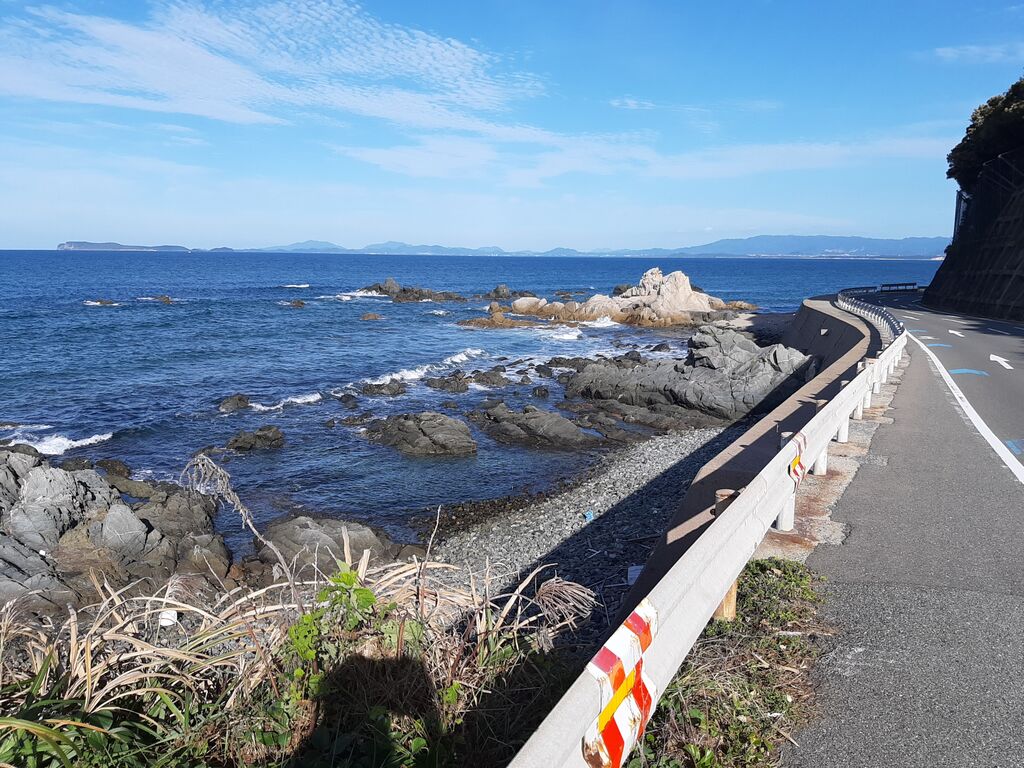
The waves of the Genkai Sea somehow seem robust.

After a while, I came across eroded rocks with open caves due to strong waves.
The island's full circle course is in its final stage.
I've returned to "Tea House Happy Mother."
I can't sense any other visitors.
I gently open the door and step inside.
From the back, a voice responds.
From the back, a voice responds.
A graceful-aged woman, wearing a white headscarf, a style not often seen these days, greets me.
She welcomes me to bring my bike inside.
To her surprise, Brompton "Pota-Kichi" folded into a 60x60x20cm compact size and sat in the corner of the entrance space.
She welcomes me to bring my bike inside.
To her surprise, Brompton "Pota-Kichi" folded into a 60x60x20cm compact size and sat in the corner of the entrance space.
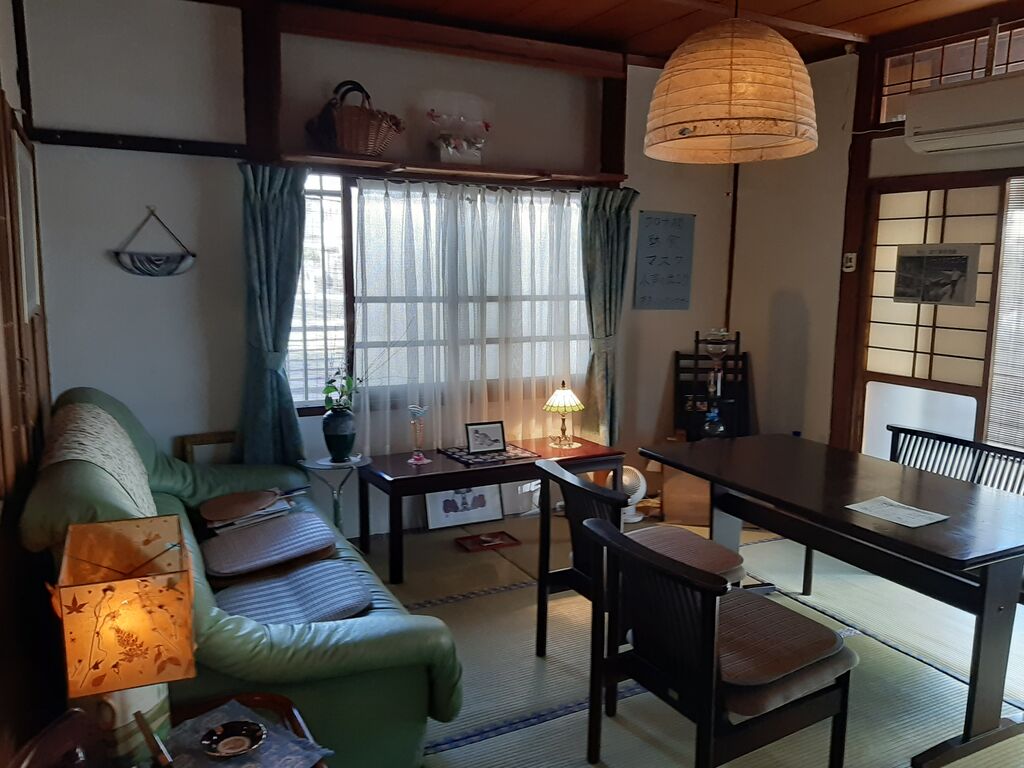
The traditional Japanese room facing the approach was dimly lit, with warm-toned lights illuminating the space.
"Shall we brighten up the room?" she asks, but I prefer to leave it as it is...
Perhaps she sensed my thirst from the bike ride because she asked, "Would you like some water, or would you prefer tea?" I opt for tea.
I've been curious about "Zenzai" for a while, so I request a serving.
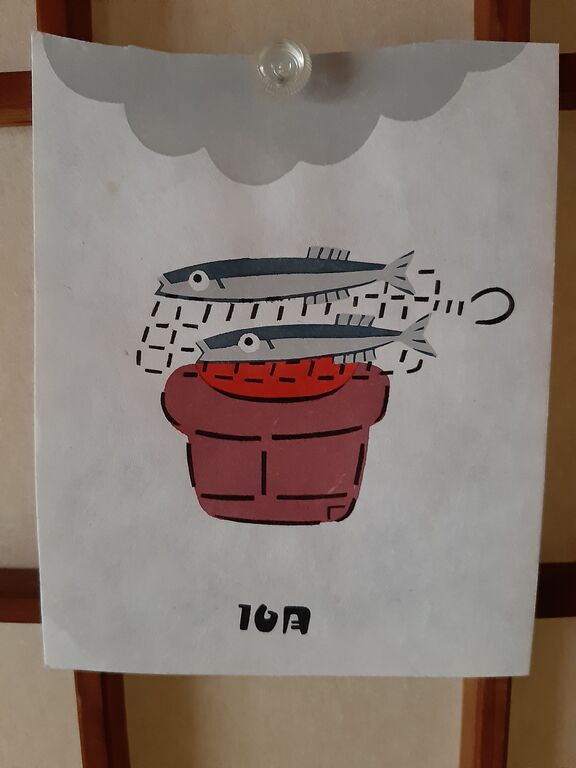
The woman said, "I've been running this place for more than 30 years, serving simple things that I like. For the younger visitors, recommend better to find the other cute Cafe around here..."
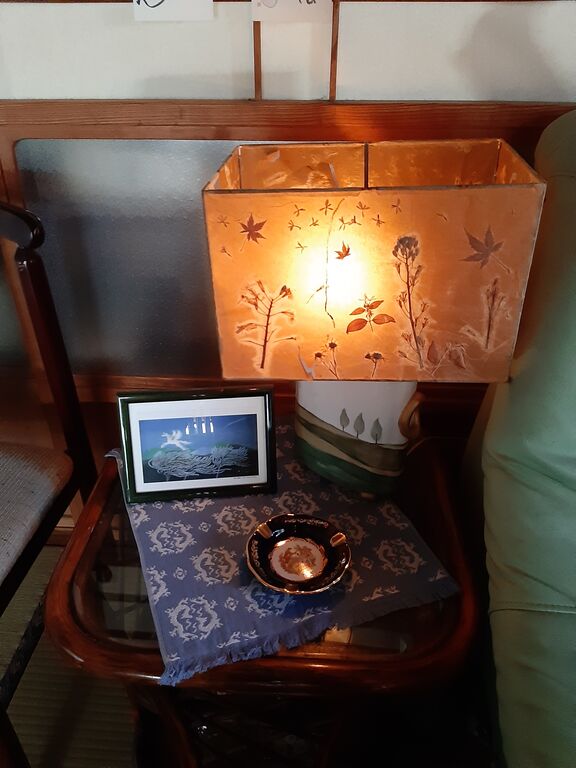
Don't advertise much, but word of mouth has kept the business going.
The clientele seems to be mostly regulars from nearby villages.
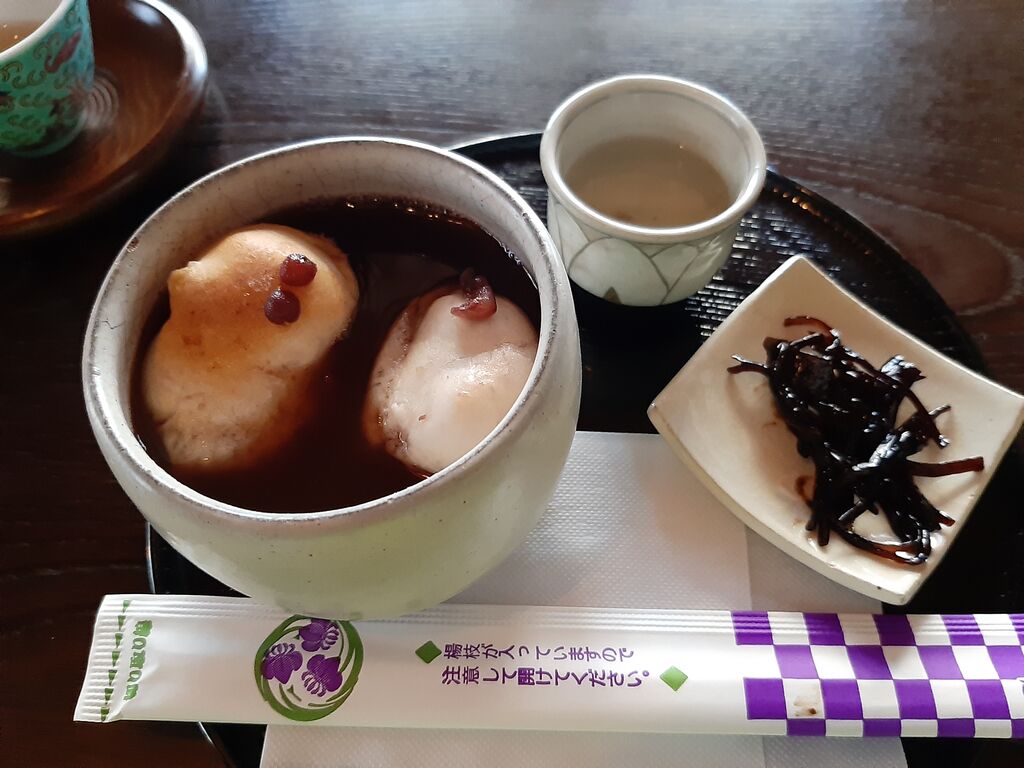
Two mochi cakes, nicely roasted and plump, are inside.
Mmm, delicious!
As I sip the umeboshi (salted dry plum) tea provided, I feel completely satisfied.
Then, she brought me a fragrant coffee (I forgot to take a picture).
After being served, the Happy Mother sits on her knees.
When I return my thanks, I blurt out a casual remark, as usual.
Since my parents were from Matsue, Shimane, we always had Azuki (red bean) Zouni for New Year's, which is essentially Zenzai.
When I casually mentioned this to a friend, they were astonished and said, "What's that?"
And so, I ended up sharing this silly story.
This led to a conversation about how in each of the three districts of Shika-no-shima, there are different ingredients for Zouni (New Year feat), and even the ingredients for cooked rice differ.
I asked her why not take her seat and chat over coffee?
She brought her coffee cup and coffee in a server and sat in front of me.
It turns out, we were both born in the same year of the Showa era, and we reminisced about various things.
- In the Shika-no-shima District, they use either sawara (mackerel) or buri (yellowtail) for Zouni and cooked rice.
- In the Hiro District, they use sazae (turban shell).
- In the Katsuma District, they use chicken.
Additionally, once every two years, the Shin-ko (God's procession) Festival is held at night.
It seems that the island's fishermen were reluctant to go before the gods with sunburned and salt-crusted faces, which is why it was held at night.
During the festival, Shinshu (Nagano Pref.) Azumino apples are sold at the stalls, which is said to be due to the ancient connection between the fishermen of Shika-no-shima and the Azumi tribe.
Mother also shares stories of her favourite special folding fans, souvenirs from Kabuki performances, and hand towels with actor names.
For those years, 10 different foreign country visitors came to her place. For the memory and good token of Japan, she presented them from some of her collections.
I explained that giving and receiving fans stories in Noh's play "Hanjo" and tales related to fans in "The Tale of Genji."
When she was young, Mother commuted to Hakata by ferry boat.
• At the time, there were delicious coffee shops in Hakata that offered morning sets. She looked forward to having coffee there
• The master of the shop, who smoked a lot, had an exceptional taste in coffee brewed with a cloth filter.
In pursuit of that taste, she opened the shop in 2001 and has been making coffee ever since
Furthermore, we discuss the abnormality of parent-child relationships that lead to extreme cases of elder abuse.
• Fathers come to the park with their children, sitting on the bench, staring at their smartphone screens. Their fingers move, but they don't look at their children, even when the children bring a stuffed animal to their shoulder or face. They push it away with their hand, engrossed in their smartphone.
"What do you think?"
I'm at a loss for words when asked.
Is it that something essential, something foundational, is missing or lost, which is causing such a significant issue?
The conversation gradually shifts to religion and philosophy.
We also talk about music and memories of records.
I even touched on how the Chinese zodiac represents the rhythm of life, and so on.
Before I know it, the business hours have long passed.
I should return soon...


Comments
Post a Comment