A Day at the Asiya Air Base Festival 2023
It's been more than 60 years now.
Back in the day, there was a late-night radio program where they had a reading time. I used to get drawn into the skilful storytelling of the readers, imagining my own visuals while listening to the stories they narrated one after another.
Among the memorable stories, there was one known as "The Samurai of the Skies," about Saburou Sakai, who was called the Zero Fighter Ace. I used to listen to his stories based on his real experiences with excitement.
Once, he got injured in an aerial battle, and without any medical attention, he had to return. His bleeding was severe, and he risked dying or losing consciousness. So, he decided to put the wounded part above his heart and continued flying upside down for a long time. He barely made it back. That was the story.
Since then, whenever I see aerobatic flying at airshows like the one in Perth or the Ashiya Air Base Air Festival, I'm reminded of that scene from "The Samurai of the Skies."
The Ashiya Air Base is an educational institution specialising in aircraft education and training. Those who graduate from here can pursue elite courses, such as overseas study programs and domestic assignments with military units.
During the Tohoku Earthquake, the Blue Impulse aerobatic team happened to be staying at the Ashiya Air Base, and since then, they have been participating in the Ashiya Air Base Air Festival every year, displaying impressive squadron flying skills.
It's like a world of debts and human connections in the world of the military.
At the Ashiya Air Base Air Festival, you can explore areas within the base that are usually off-limits.
You can also catch a glimpse of various training activities, purchase Self-Defense Force merchandise, and enjoy unique snacks at food stalls.
Last year, while I was cycling there, I heard a loud noise overhead and thought, "I'm late...!"
I joined the people gathering on a bridge along the way and had a different experience of watching the Blue Impulse team's amazing aerobatics from inside the base.
This year, I decided to watch from that bridge, the "Shimazu Bridge," right from the start.
I prepared a folding chair for viewing and was waiting before the flight started.
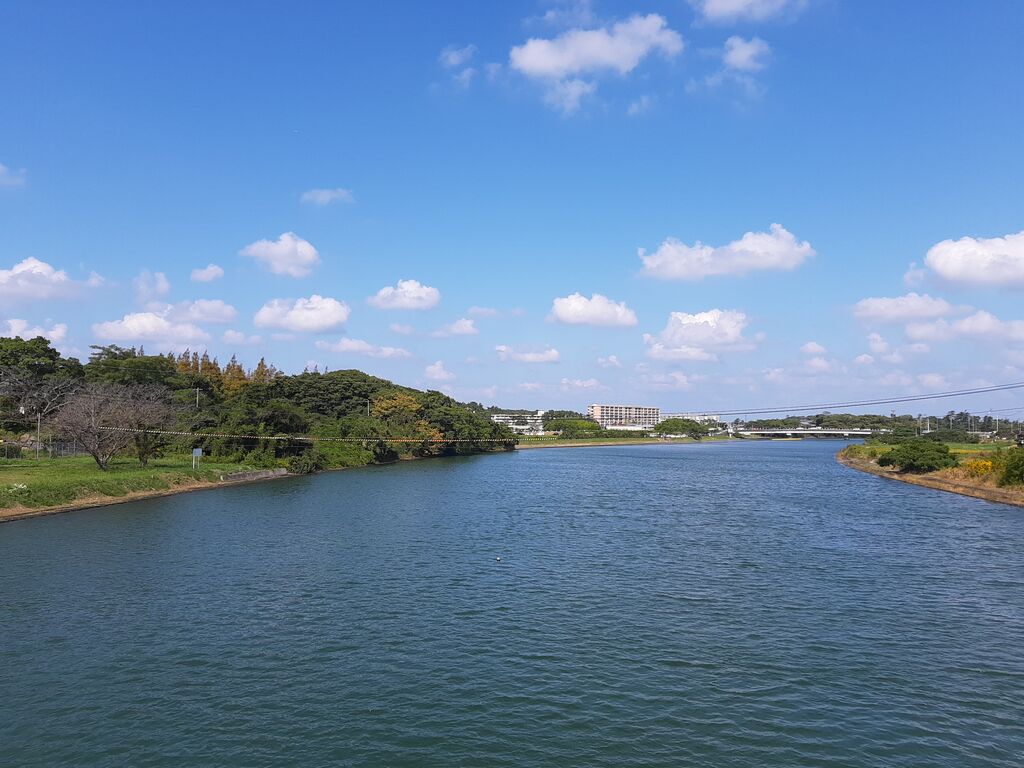
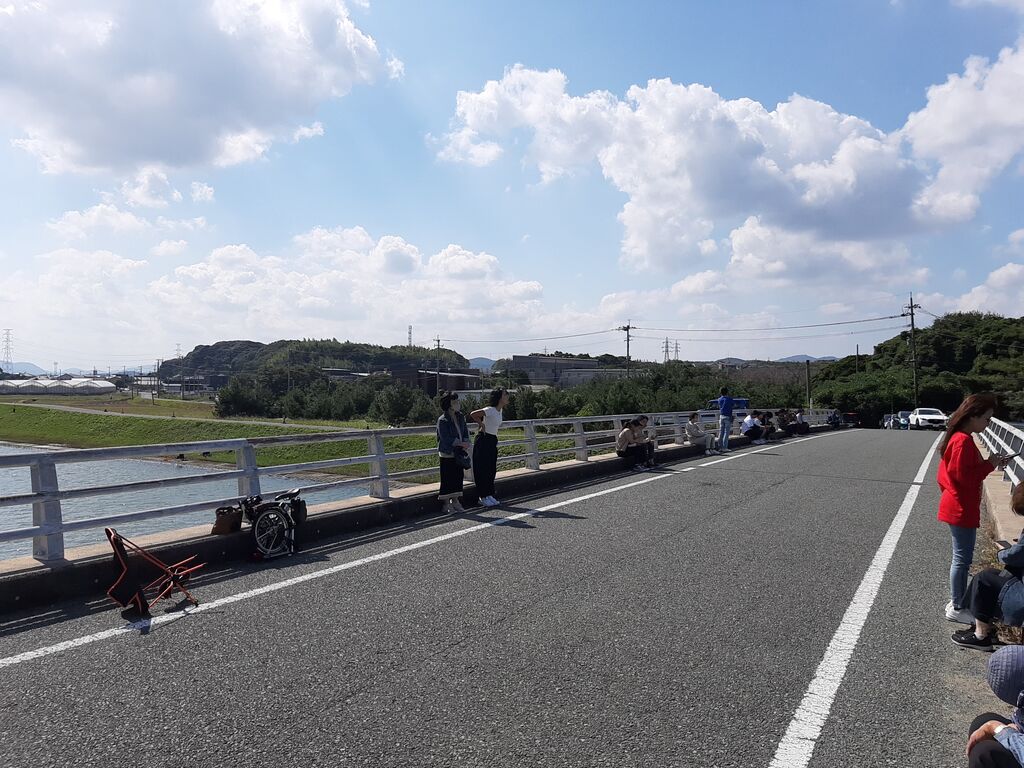
Around 11:20, I heard the jet engines near the base runway.
Finally, it's beginning.
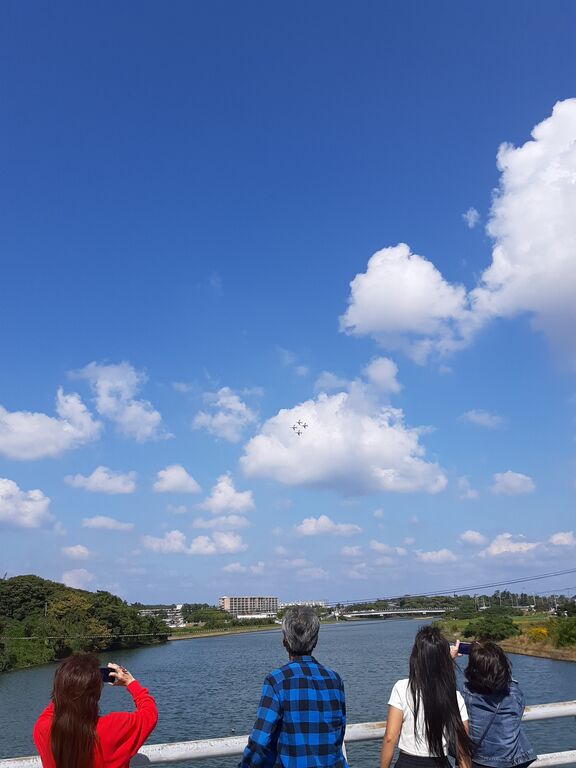
Since I mainly focused on shooting videos with my smartphone, I only have a few snap photos.
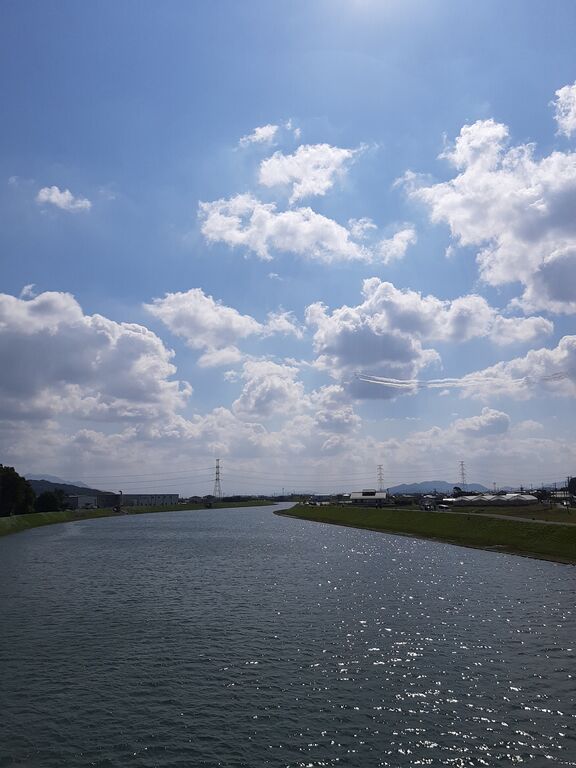
In the video, I captured everything from the graceful heart shape to the arrow piercing it, but in the photos I took afterwards, the heart shape looked jagged due to the strong wind.
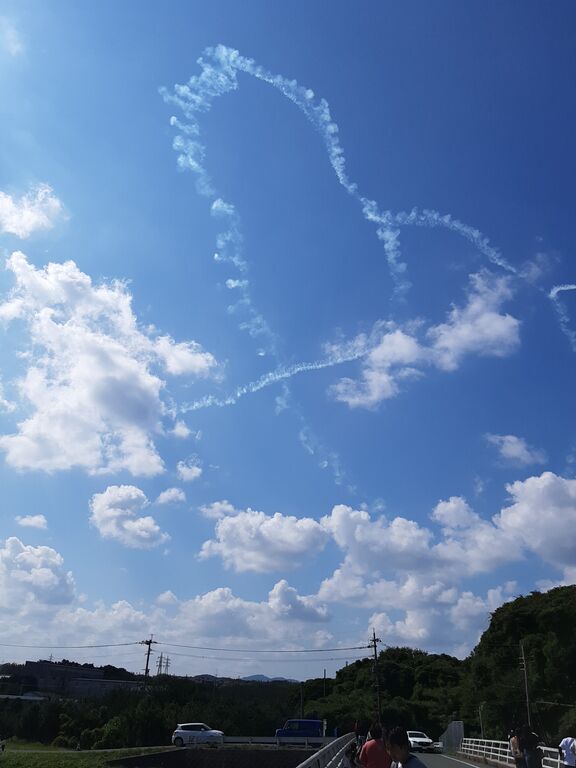
What was that?
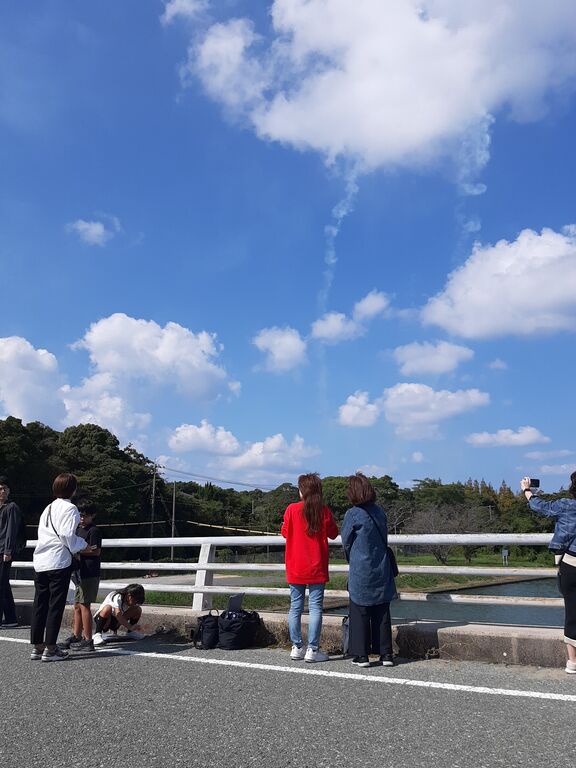
In the squadron flying videos, it's impressive, but in the photos...
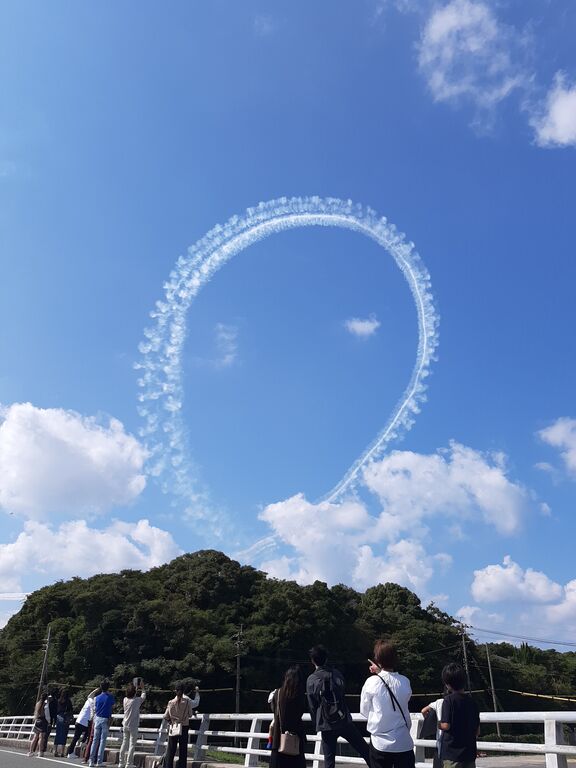
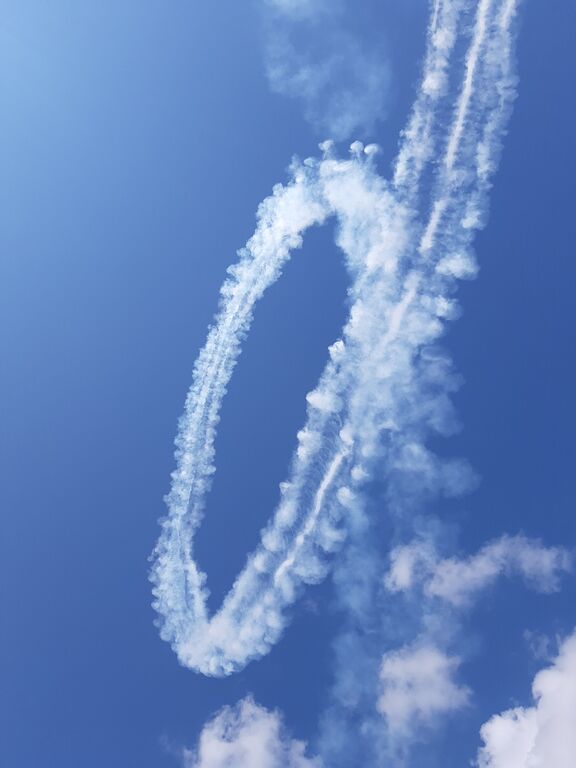
In the end, one by one, the Blue Impulse planes slowed down and passed over our heads in a landing configuration. People clapped as they passed by during the last aircraft's passage.
In the blink of an eye, the exciting time had passed.
There is a hillside area on the east side of the base, home to the "Maruyama and Shimazu Ancient Burial Mounds."
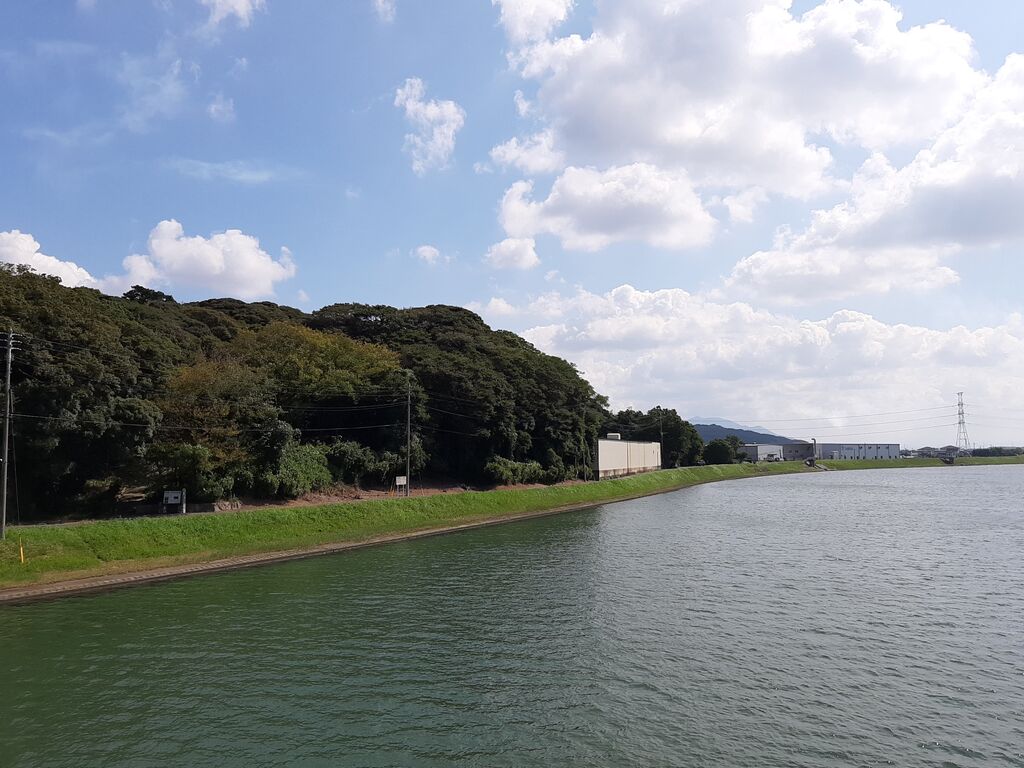
There are various small burial mounds, including keyhole-shaped and circular mounds, constructed from the 4th to 5th century, and compactly arranged here.
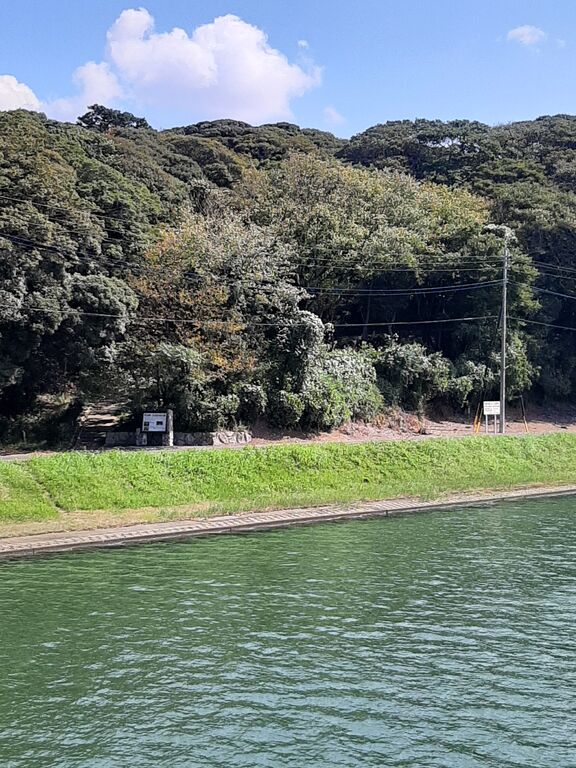
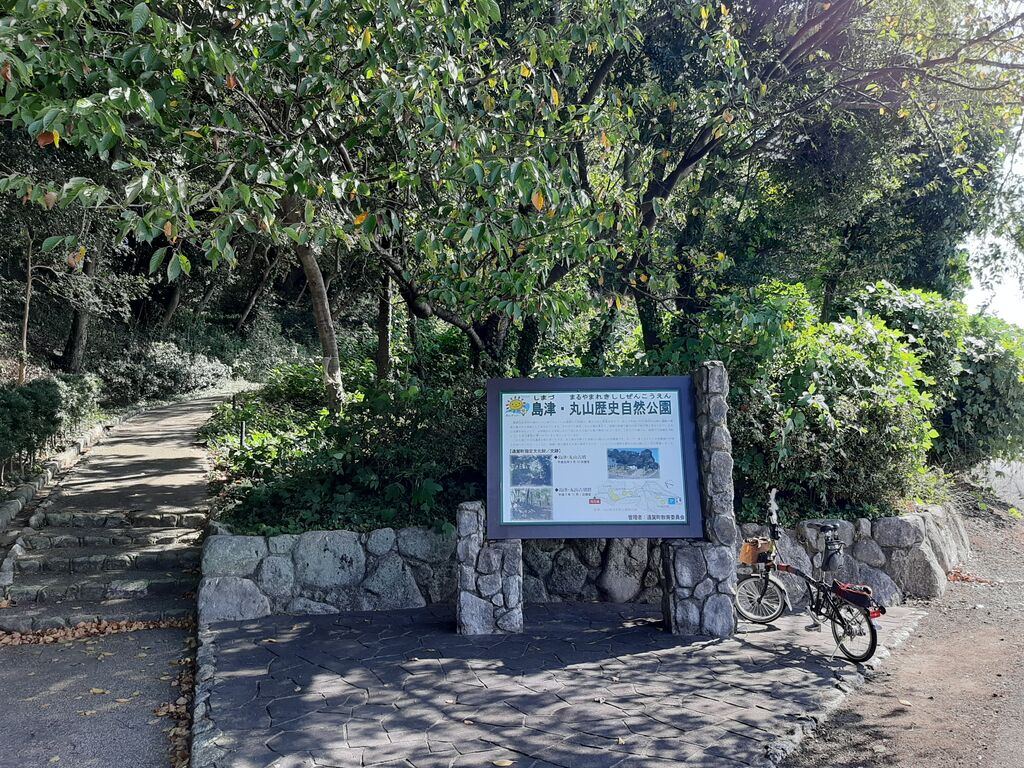
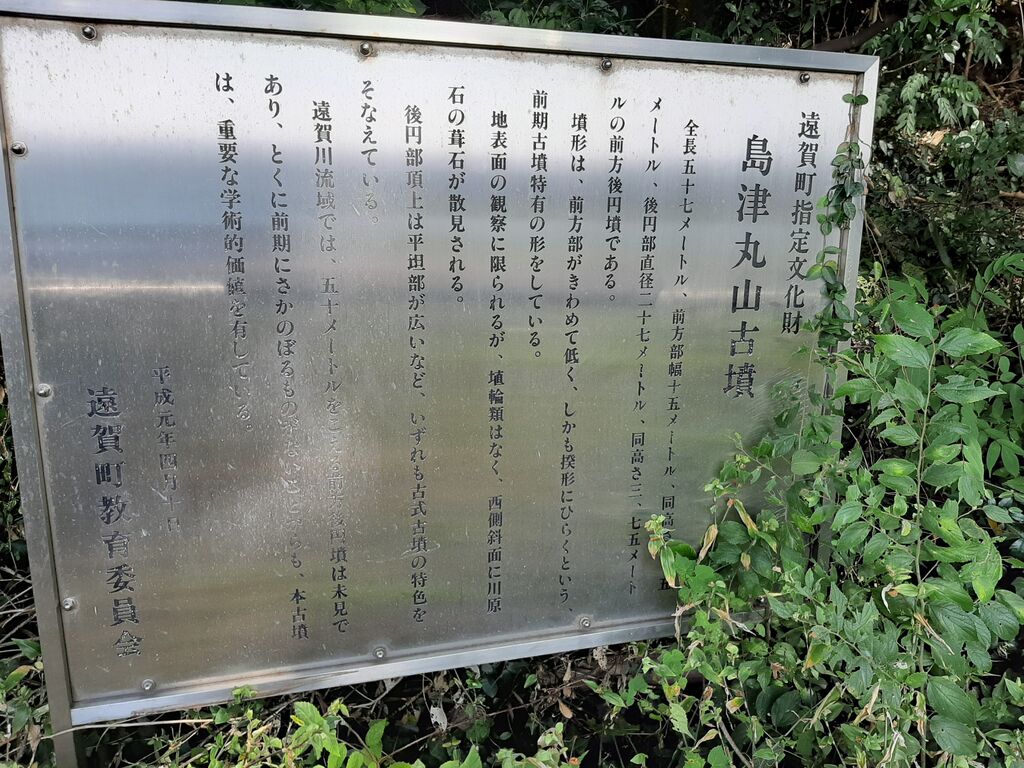
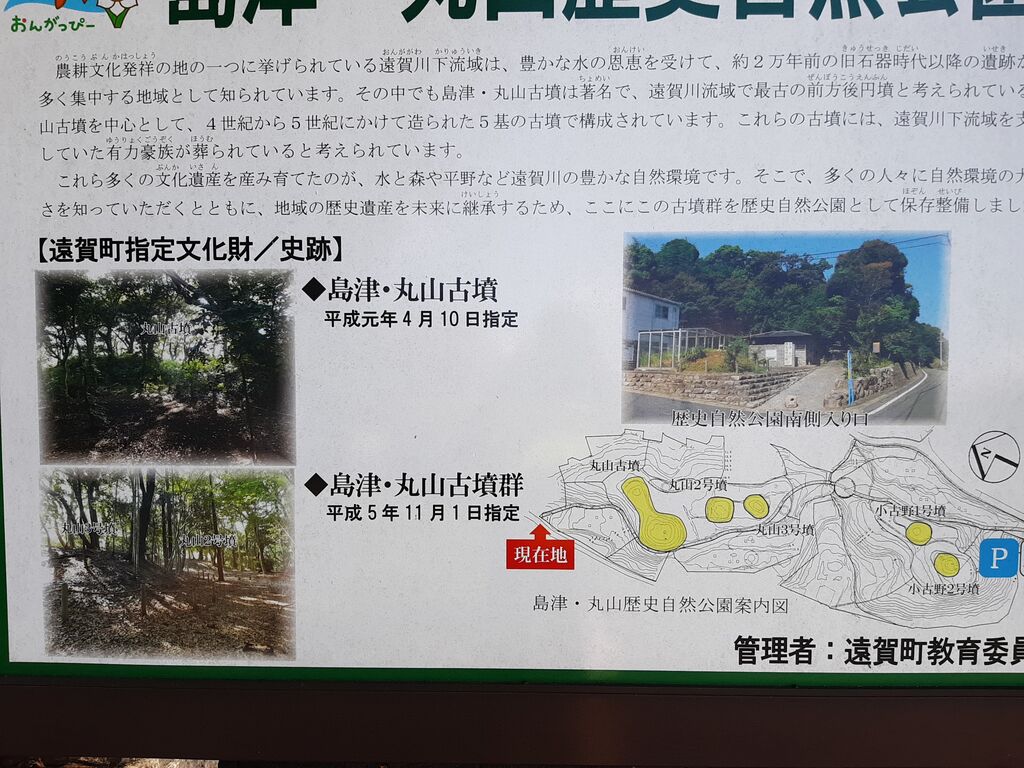
Today, I'll skip the ancient burial mounds.
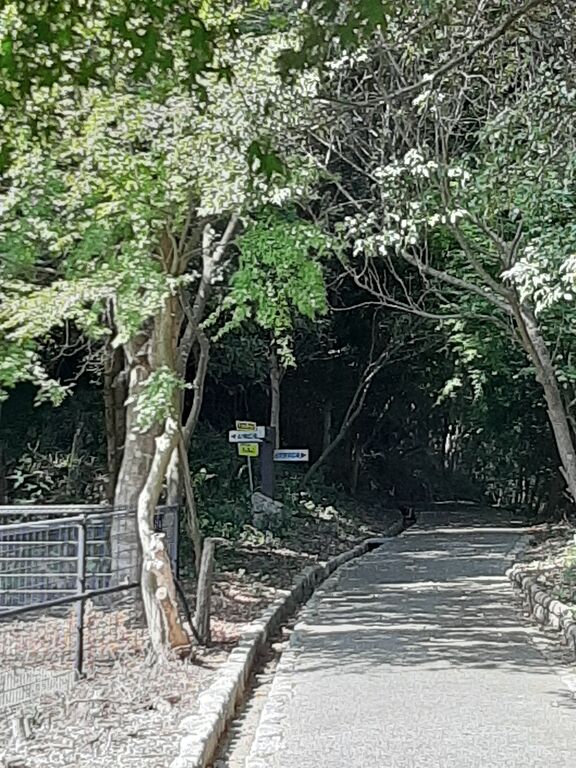
On the east side, there are public restrooms and the entrance to a park.
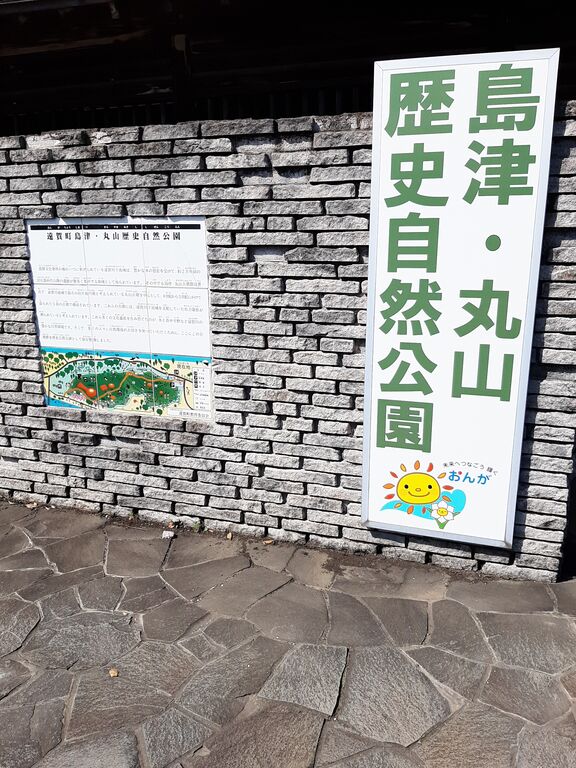
Additionally, they have on display a replica of a stone chamber from an ancient burial mound that was lost due to urban development.

The size may be small, but there are quite a few impressive burial mounds lined up here.
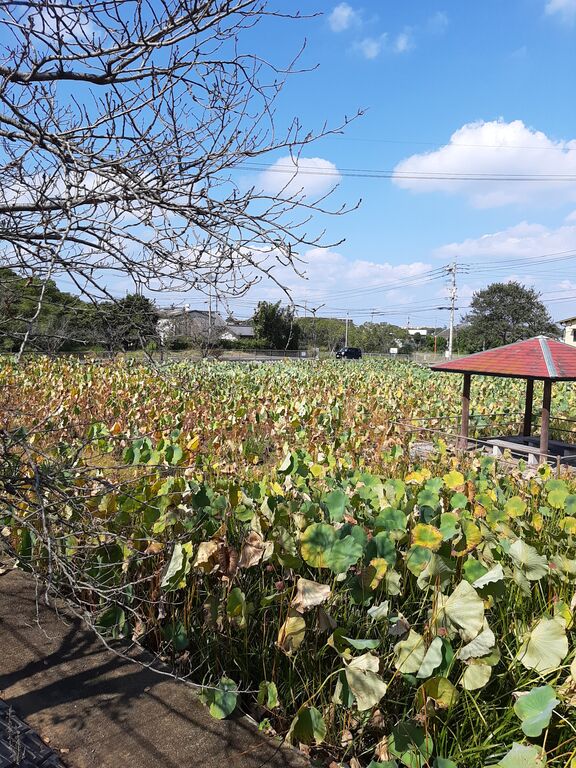
In the northeastern hillside area, there is a lotus pond covered with withered lotus leaves.
Lotus is a seasonal word for summer, and broken lotus is one for autumn, in the world of Haiku (short poem).
Even when they wither in the water during winter, they still have their charm.
I head toward Ashiya town along a small road I often take, and even in such places, I find flowers.
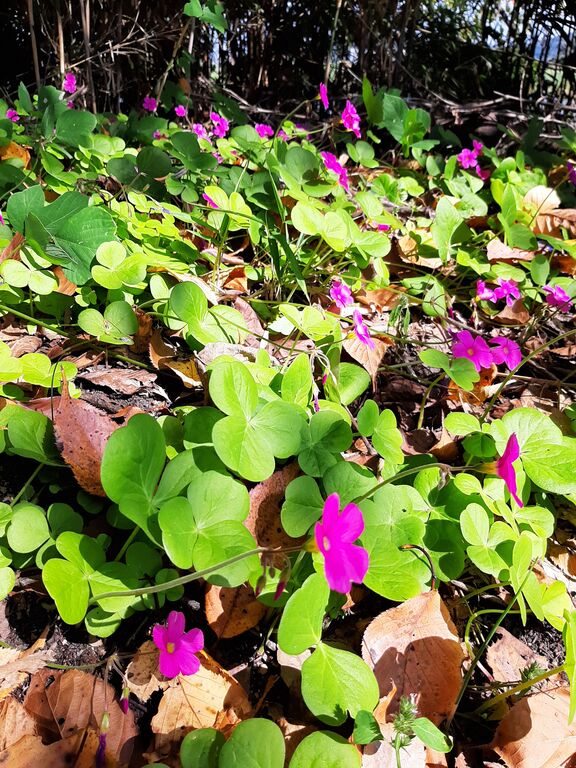
It makes me happy to come across something unexpected.
Huh? Why is this here? I wonder when I find something that seems out of place.
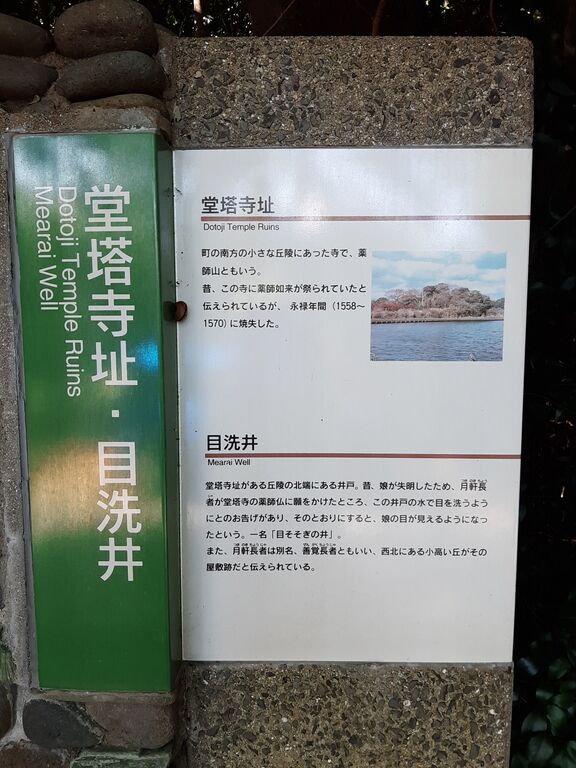
Me-arai-i (eye washing well) Well is located here, and if you go up this way and then down a bit, you'll find it.
Legend has it that when the daughter of a wealthy man named Tsukinoki fell ill, she was told in a divine message to wash her eyes with the water, and she was cured.
By the way, the Tsukinoki family's mansion is said to have been located on a small hill to the northwest of here.
Long ago, it is said that one of the ancient official roads, the "Saikaido," passed nearby because it was said that the Saikaido Station House was excavated in the area where you go down from Okagaki to the foot of Jyo-Yama (Castle Mountain.)
Ref.:
When small dots connect faintly, even if they are thin, they form lines, expanding into a world of dreams, I suppose.
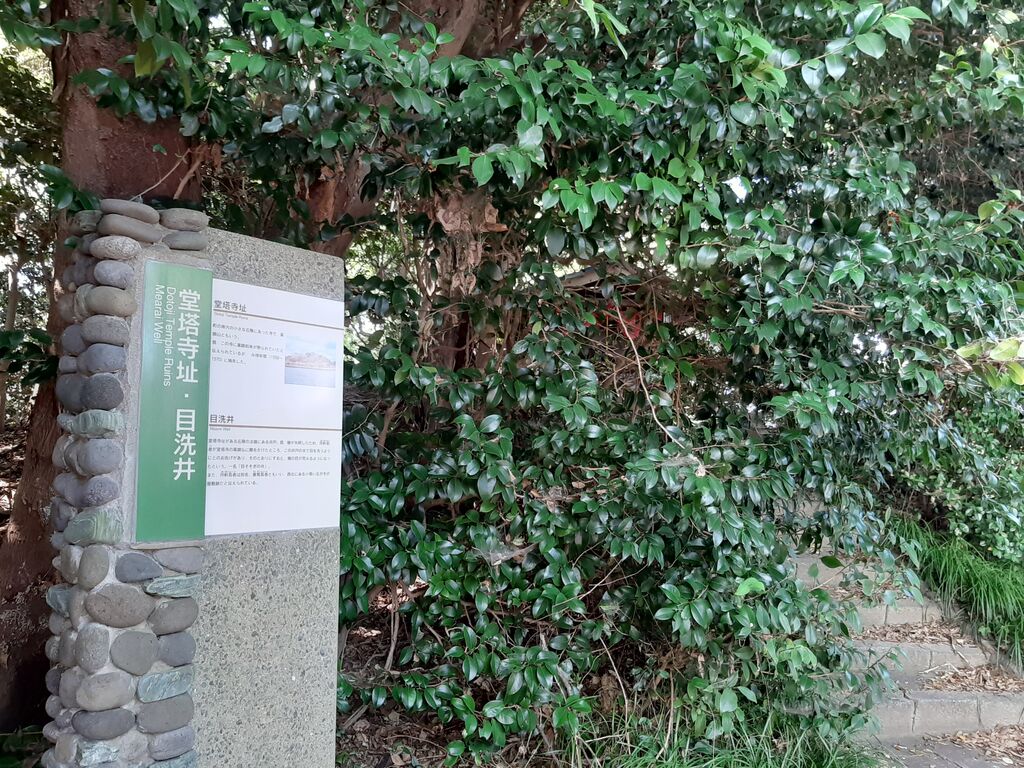
On the day of the major festival, if you're lucky... you end up at OTTIMO.
The street in front was bustling with festivalgoers, and I had to push walk "Potakichi".
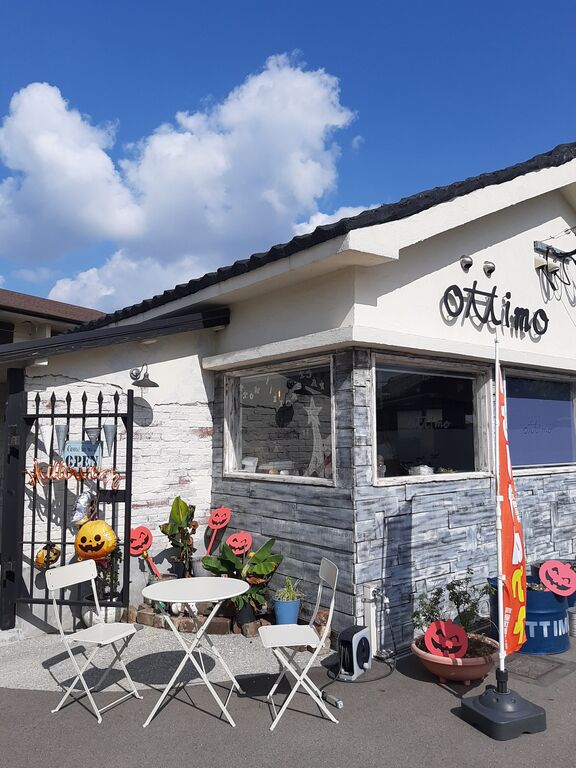
A few tables are set up outside the store, and on the other side of the door, there are several people...
I tried my luck and said, "I'm alone..." and they said, "OK."
I ordered the VIP burger I had before and a Halloween drink.
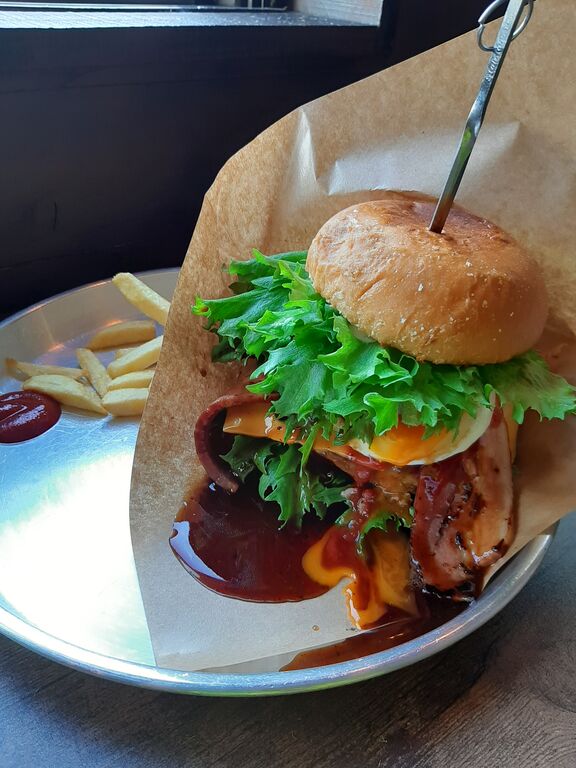
It's huge! I'm almost embarrassed at how big it is.
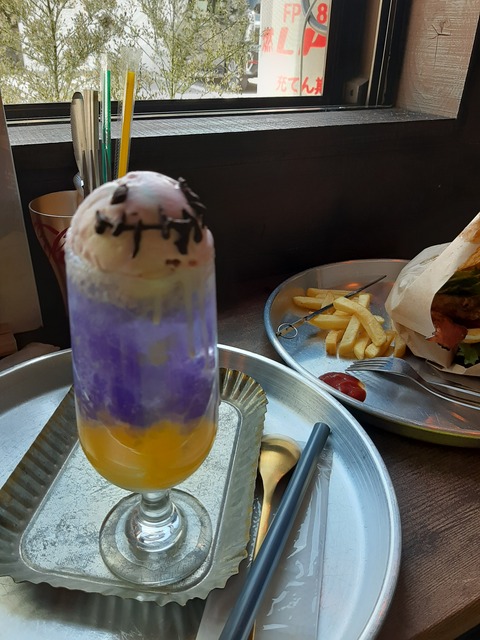
It's a bit embarrassing to have the Bloody Old Bastard receive it.
A Halloween drink for October.
The counter seat was a good choice!
Some people eat elegantly with a knife and fork, but here, it's all about taking a big bite.
My hands are sticky, and my mouth is too, so I used napkins like crazy.
Satisfied!!!
I cycled all the way to the front gate of the base.
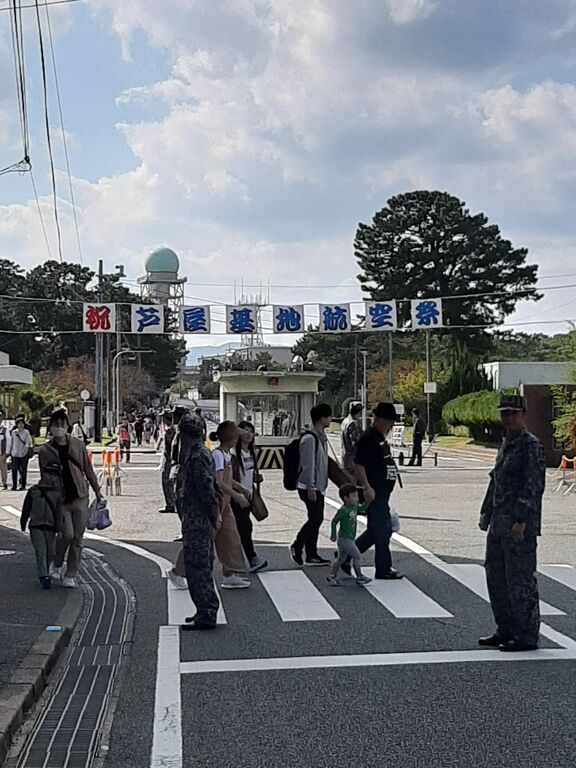
♪ Just listening to the melody of "Hotaru no Hikari" (Auld Lang Syne) makes me think better not to stay and that I should go home.
Why is that?
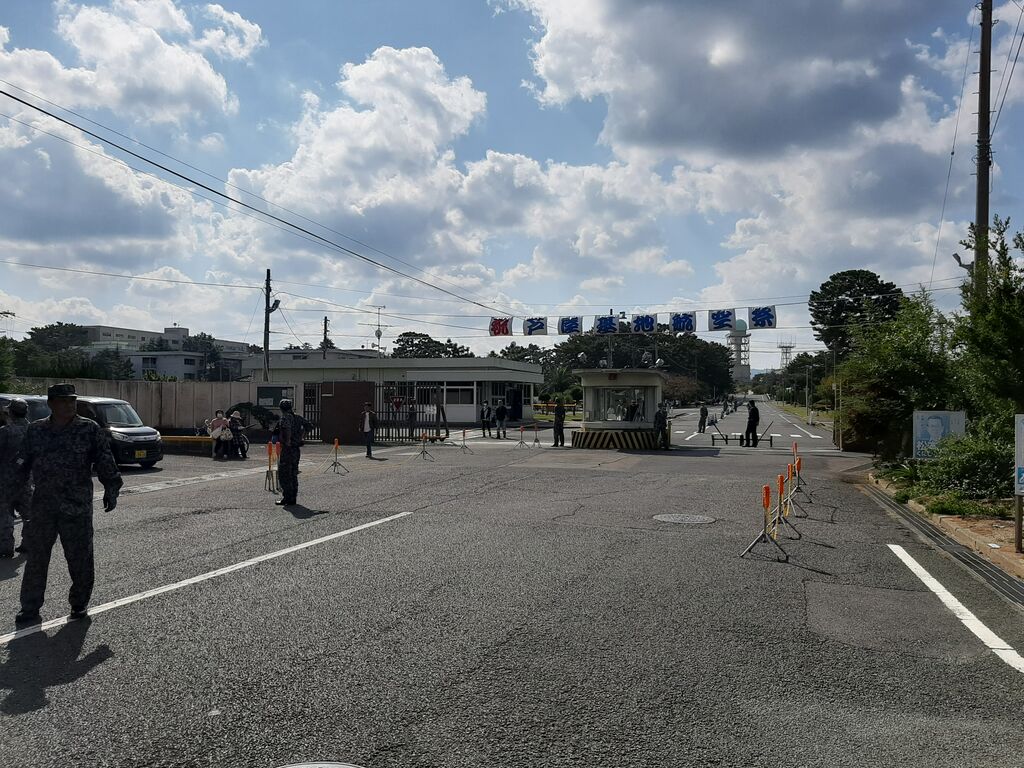
Let's detour and visit the Emperor Jim-mu - the First Ten-noh (emperor) Shrine.
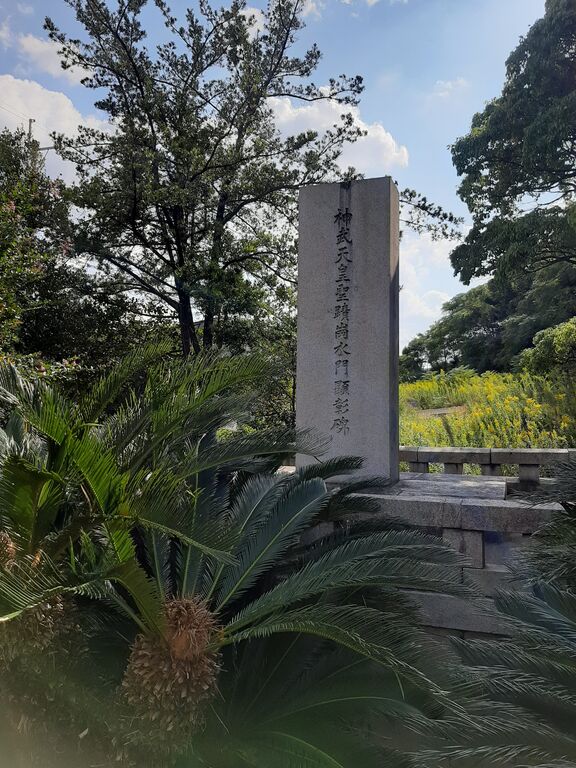
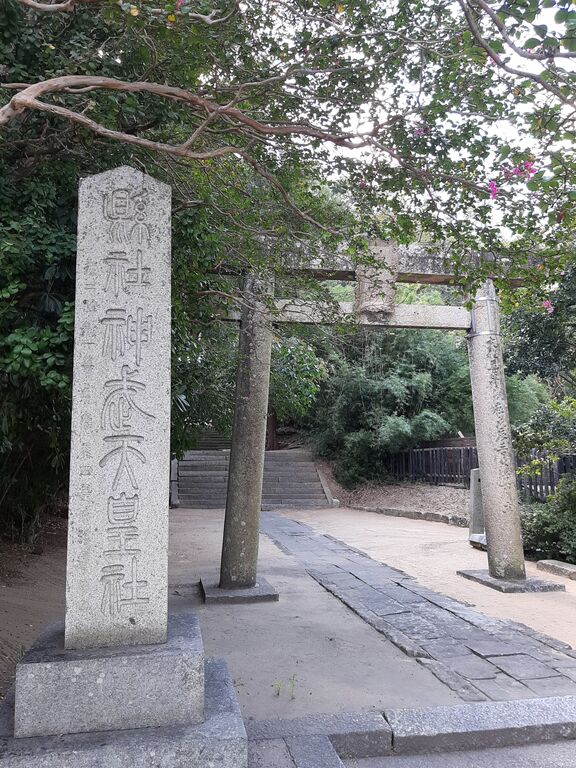
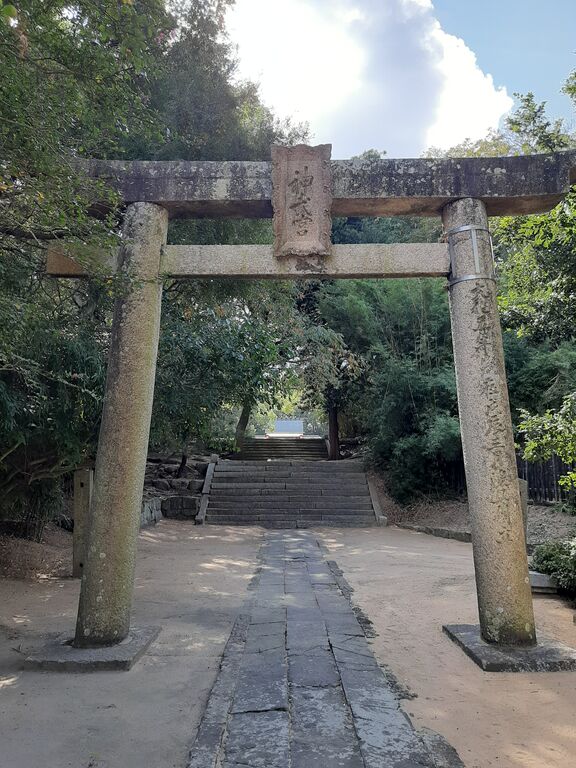
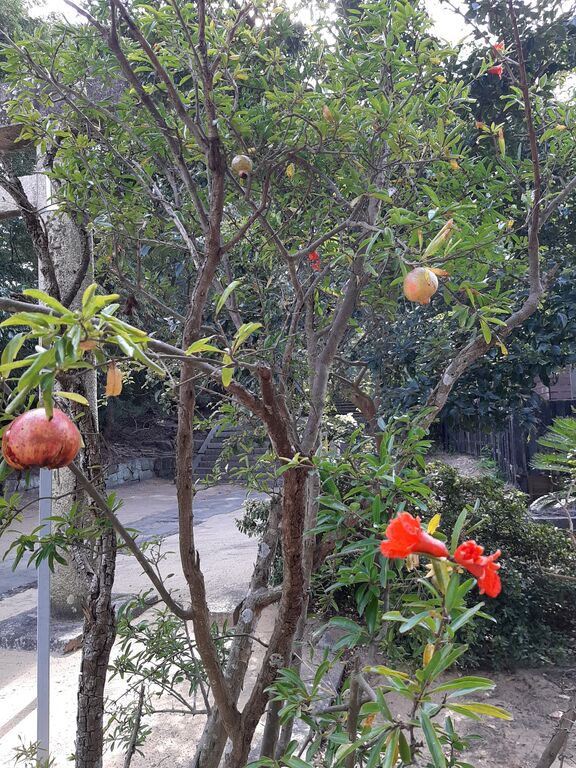
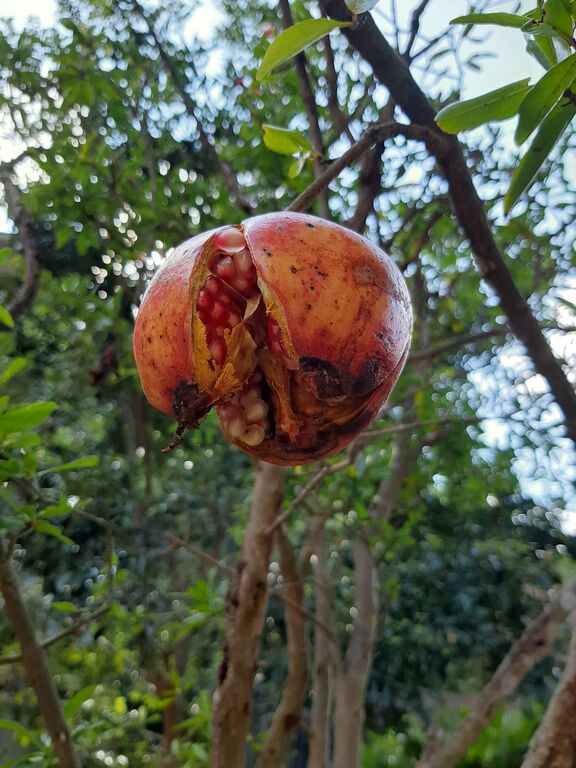
Next to the torii gate, pomegranates were growing.
It is said that golden eagles used to accompany Emperor Jim-mu during the eastward expedition, but today, there is a modern guide, a radar, waiting behind the shrine.
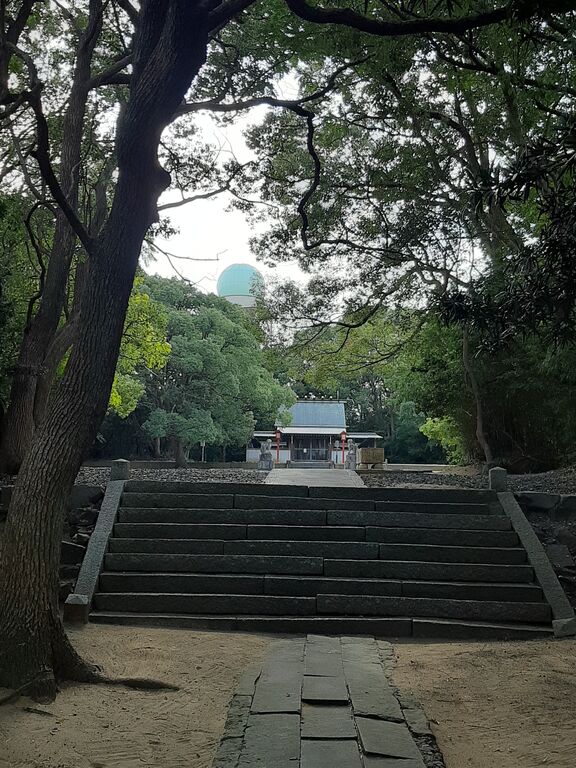
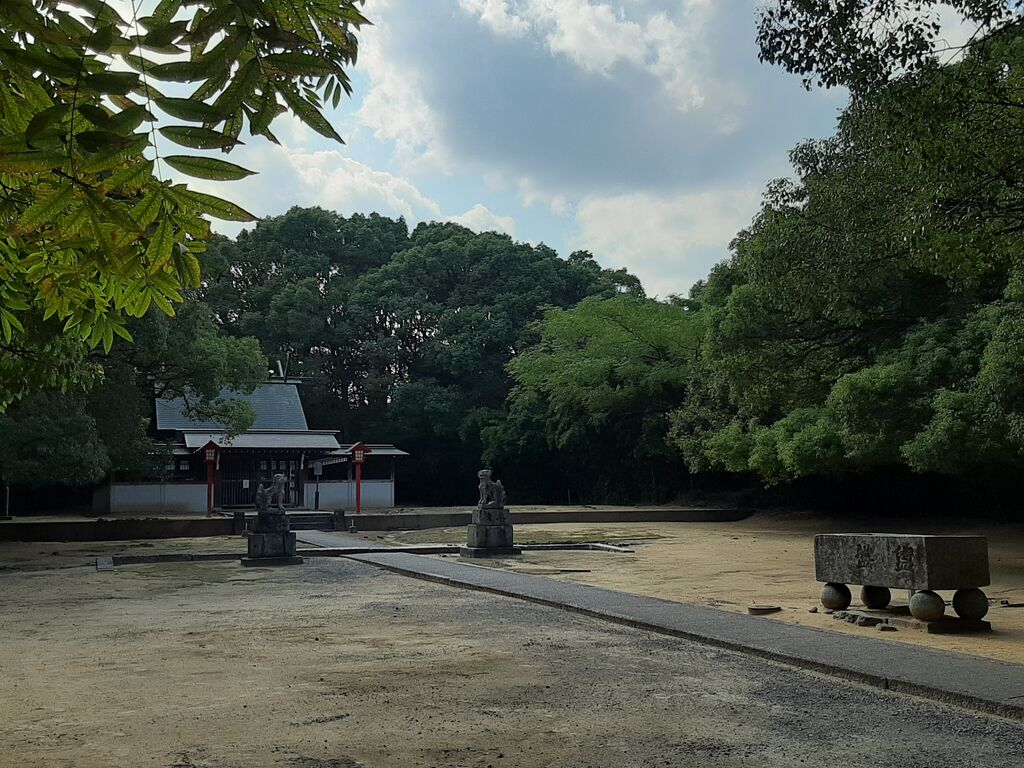
This shrine has something peculiar about it.
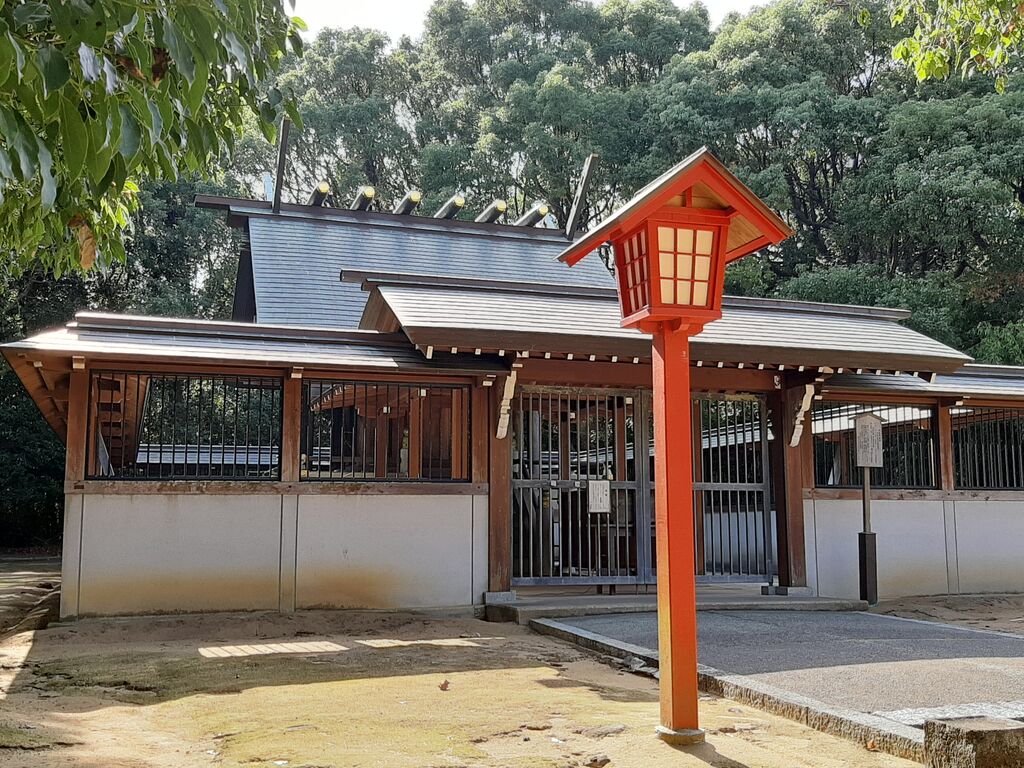
As mentioned in this information board, the main shrine was destroyed by an air raid by US Forces in June 1945, the enshrined object is at Oka-Minato Shrine.
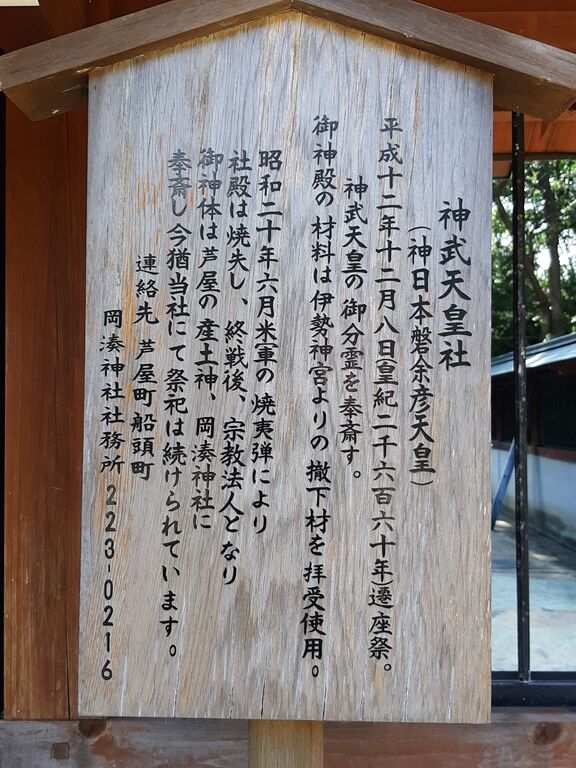
Therefore, there is a main hall, but no main shrine.
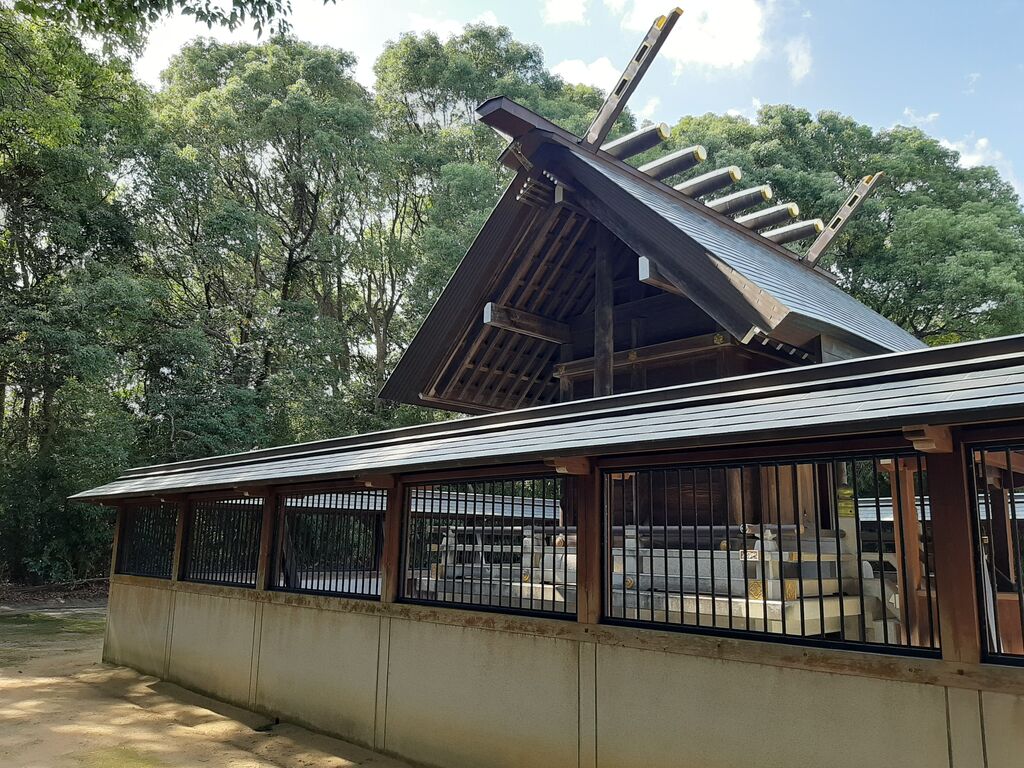
And the distinctive feature of shrine architecture, the "chi-gi" (ridgepole), is also here.
The Chigi here is called "uchi-sogi," and it is the type where the upper part of the Chigi, which intersects at both ends of the ridgepole placed on the roof, becomes horizontal.
Usually, uchi-sogi is used when enshrining a goddess, so why is it here at the Emperor Jimmu Shrine?
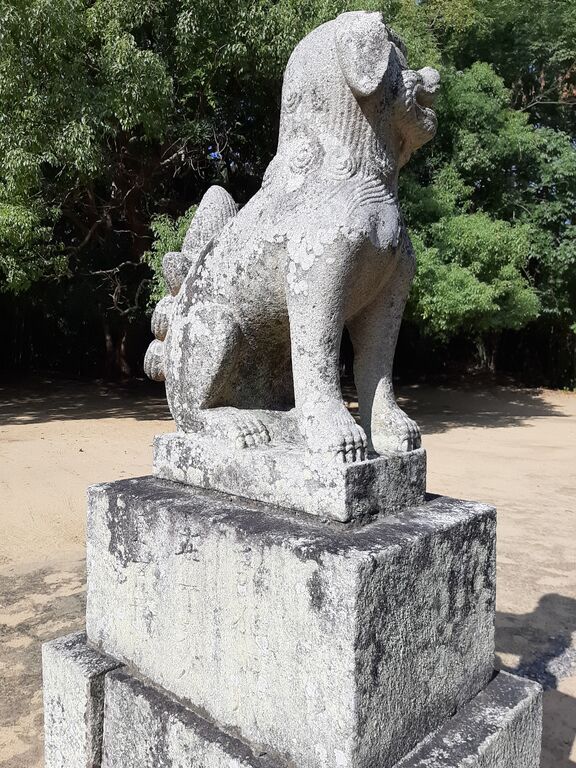
Reading the fading age of the guardian dogs, it's written as Kou-ka 4 (1847).
Back then, it must have been a shrine with a formal structure.
Now, let's start making our way back...
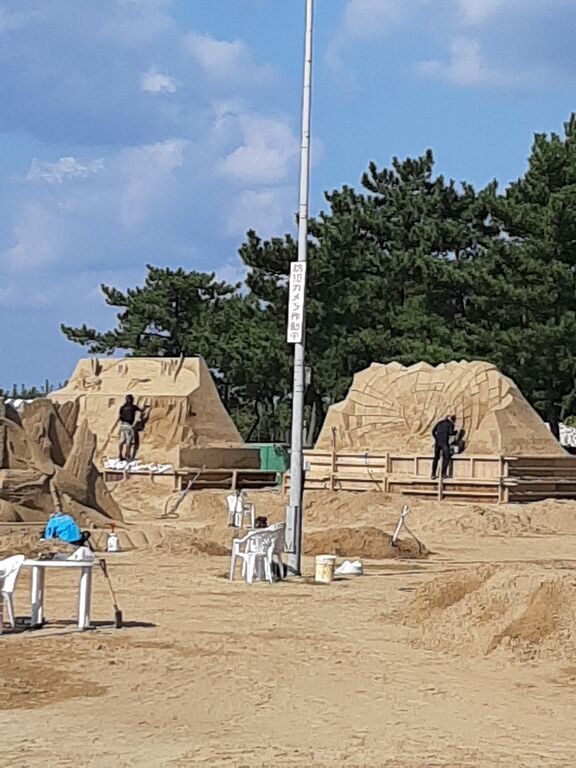
At the plaza next to the park pool, they're preparing for the "Sand Sculpture Exhibition" on the day of the big festival.
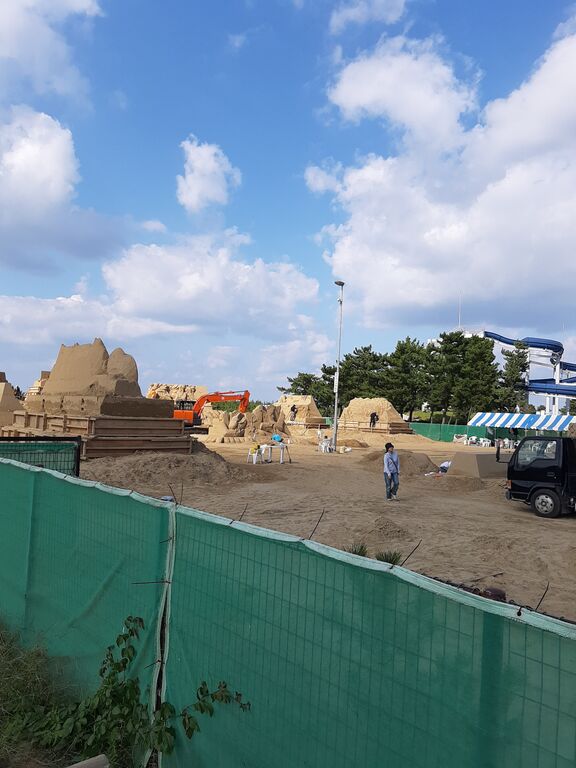
I wonder what theme they'll use to create it this year.
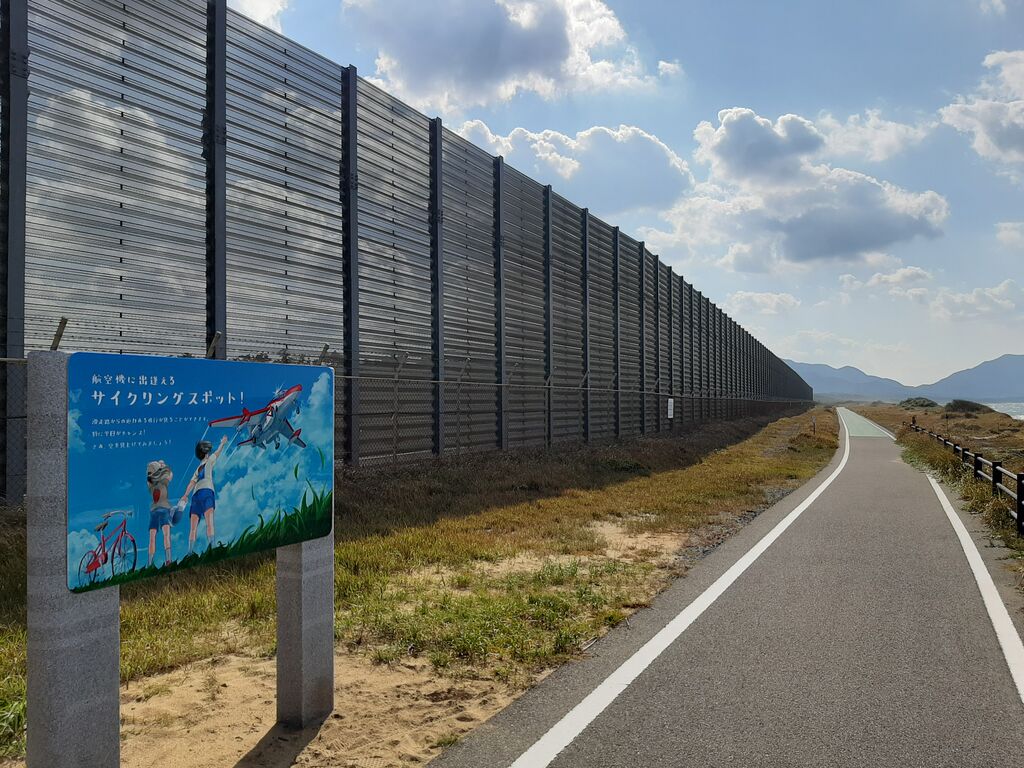
Along the bike path by the sandy beach, there was a strong headwind waiting for me.
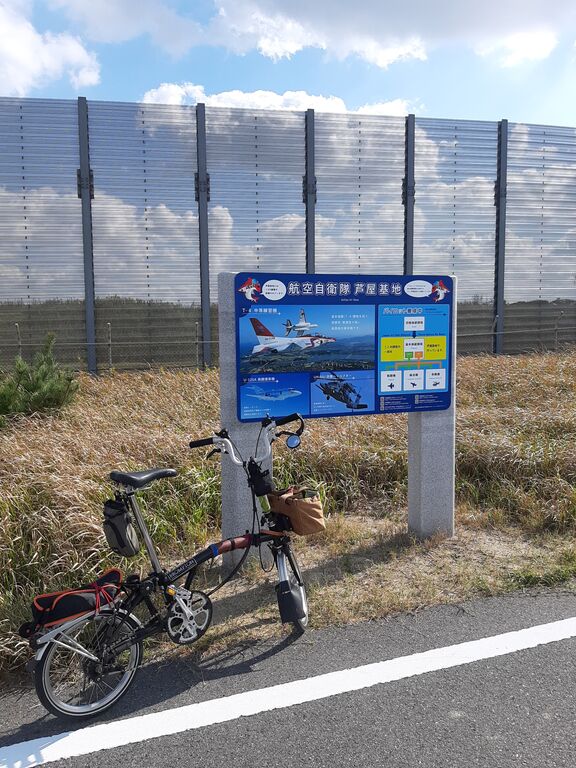
Bicycles, they're supposed to roll along on their own, right? I thought so, but apparently, it means they only roll as much as you pedal yourself.
If you shift to a higher gear, you can cover more distance, but it's reckless when there's a headwind. On the other hand, if you go for easy gear, it's certainly easier, but you won't cover much distance with each pedal.
Isn't there a route with nothing but tailwinds and downhill stretches?
When I finally reached the top of the last hill and took a break while admiring the view, a gentleman on a Brompton bike briskly rode up to me and struck up a conversation.
Lo and behold, it's a P-type handlebar! You can't get these from the factory now.
Furthermore, various customizations have been made, and it's now in full sports mode.
The chainring has been changed to a 44, perfect for hill climbs.
Just by making changes from the standard setup, even for city riding, it handles much better.
It's even said that in areas with many hills, you should change it without hesitation.
Sadly, my "Potakichi," purchased 10 years ago, is of an older model, with a chainring and pedal crank integrated, and the bottom bracket is of the old standard.
To install the genuine 44 chainrings, I would have to replace everything, and I've been having trouble deciding.
After taking a commemorative photo, I told him to go ahead.
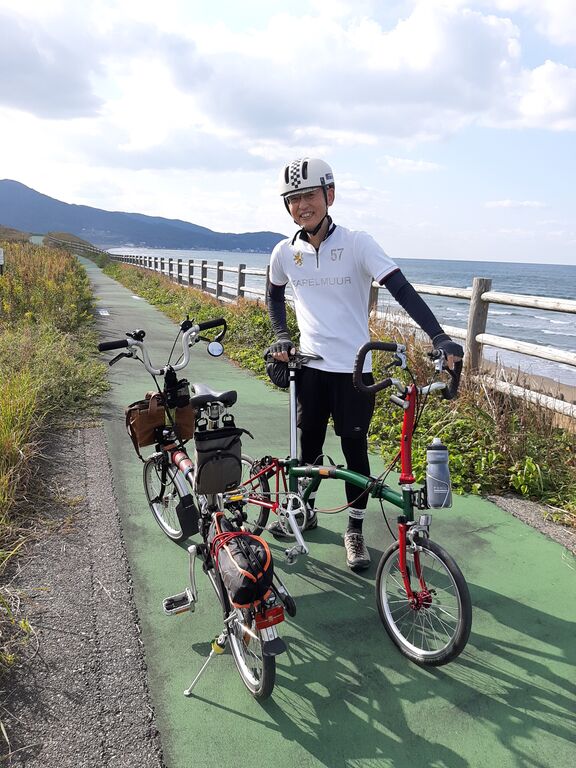
He easily rode ahead, as if he were riding on flat ground, and I followed along, murmuring "44, 44, 44" while watching him.
When I reached the resting place, "Hokuto-Shchi-Sei (Big Dipper)", I heard a loud noise!
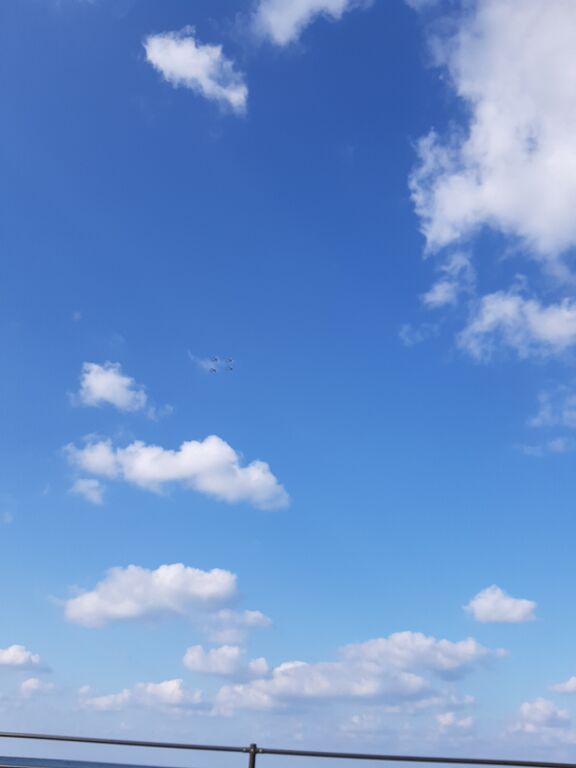
I looked up, and I could see the formation flying.
From around here, my quadriceps started to twitch.
I wonder if I can make it back properly.
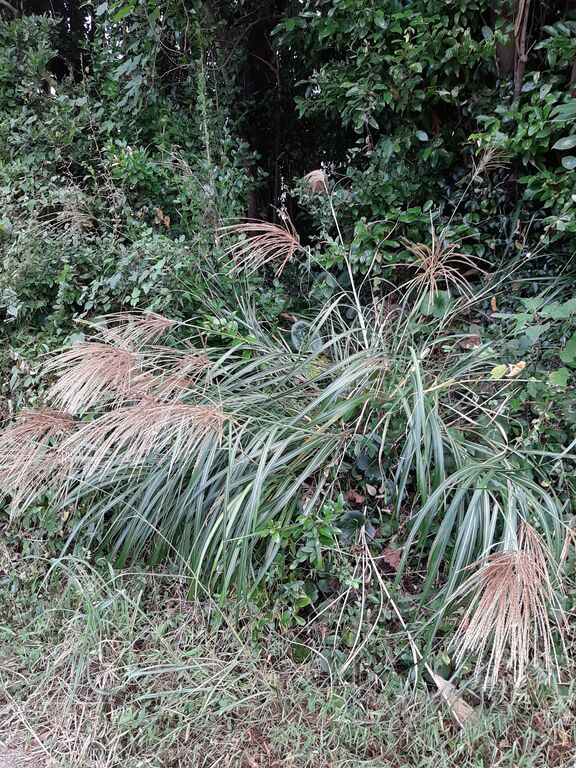
The pampas grass is bearing spikes.
It really is autumn.


Comments
Post a Comment