Ai-no-Shima (Shingu Town, Fukuoka) - Round Pottering : Ai-no-Shima Tumulus Group (Part 2)
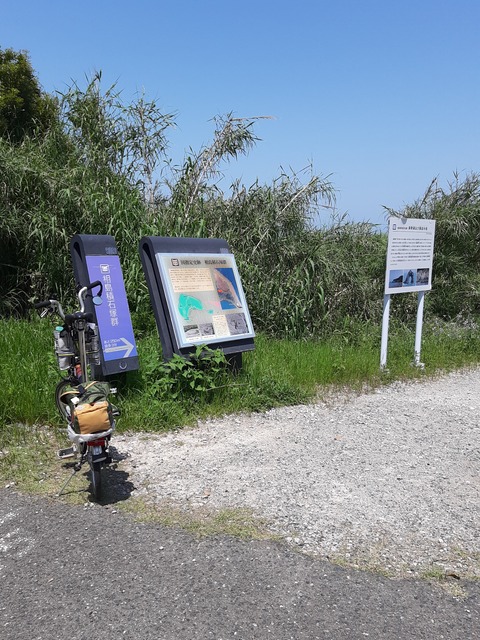
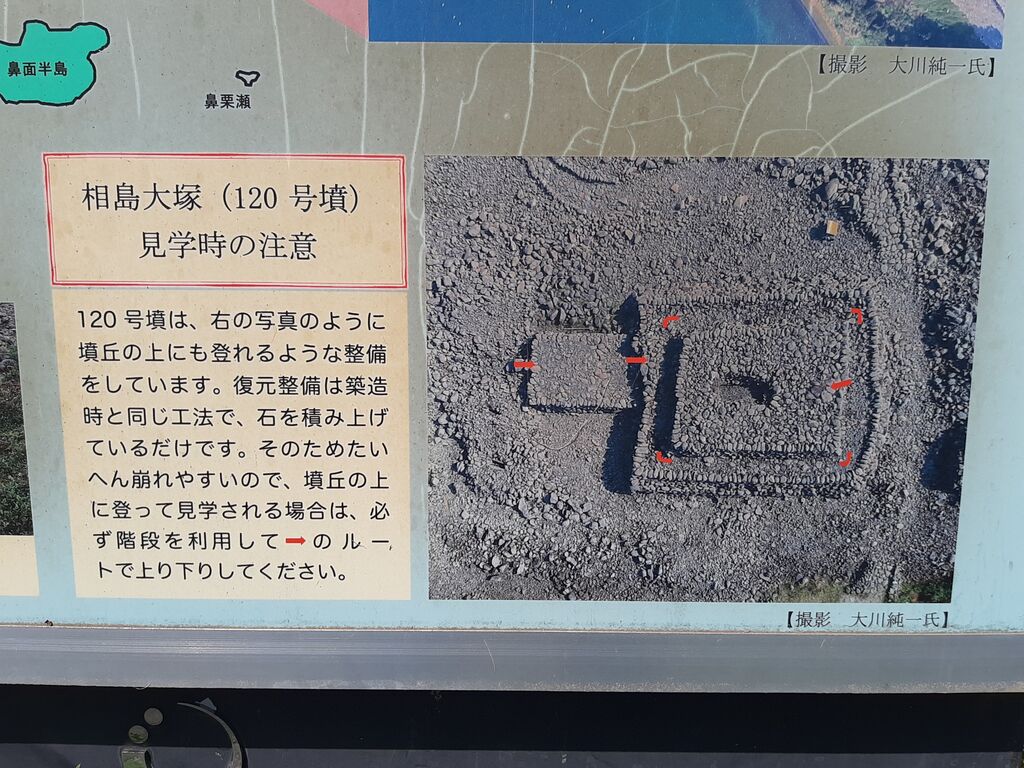
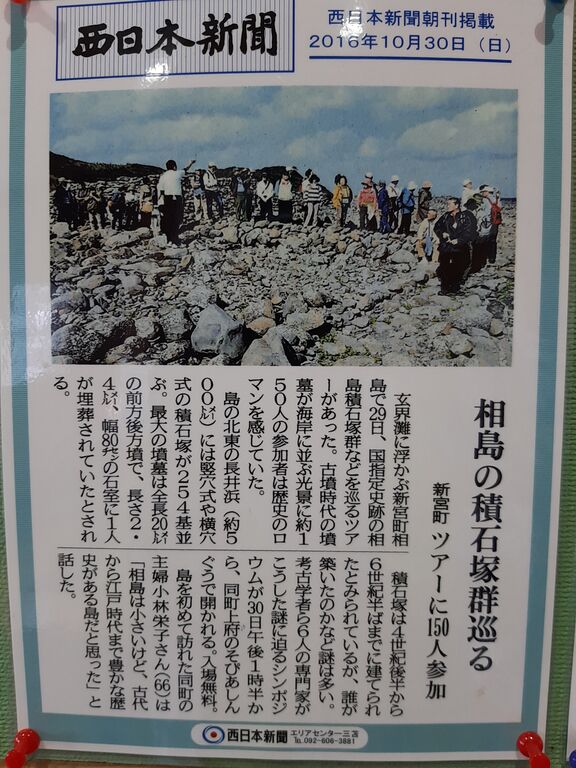
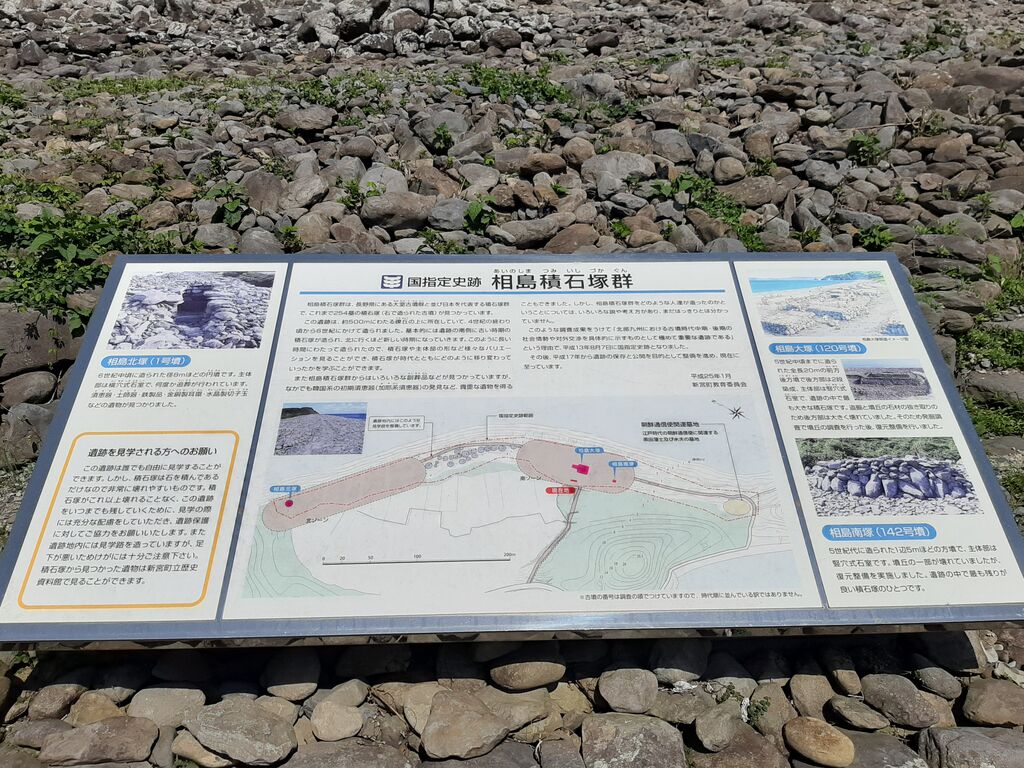
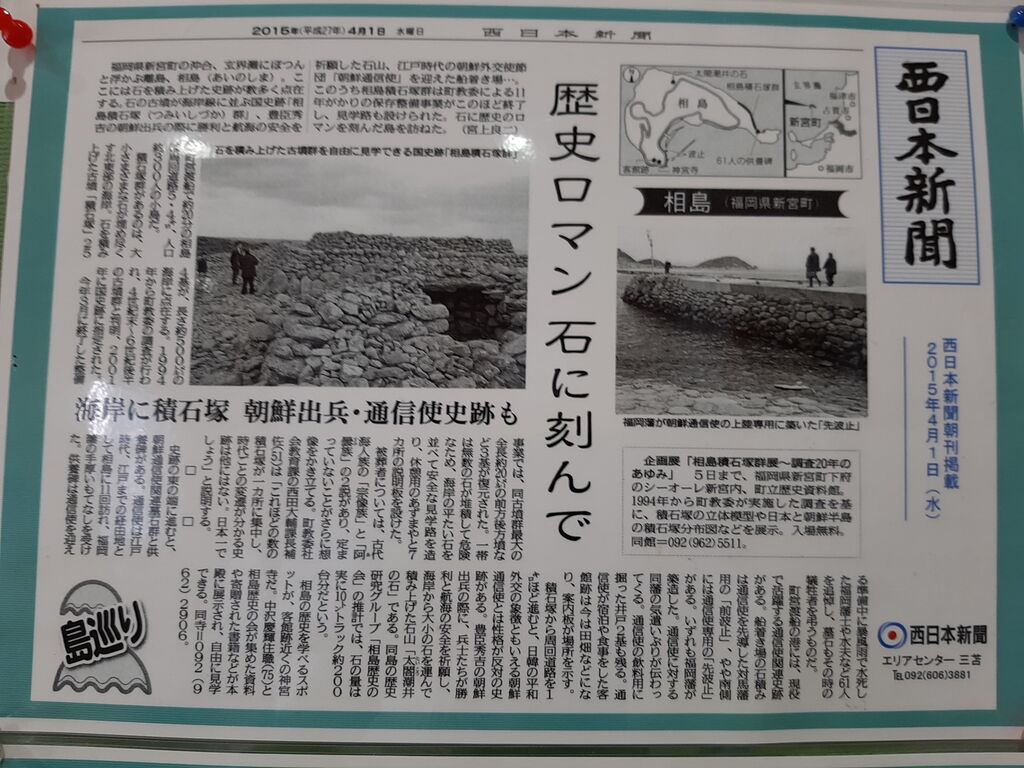
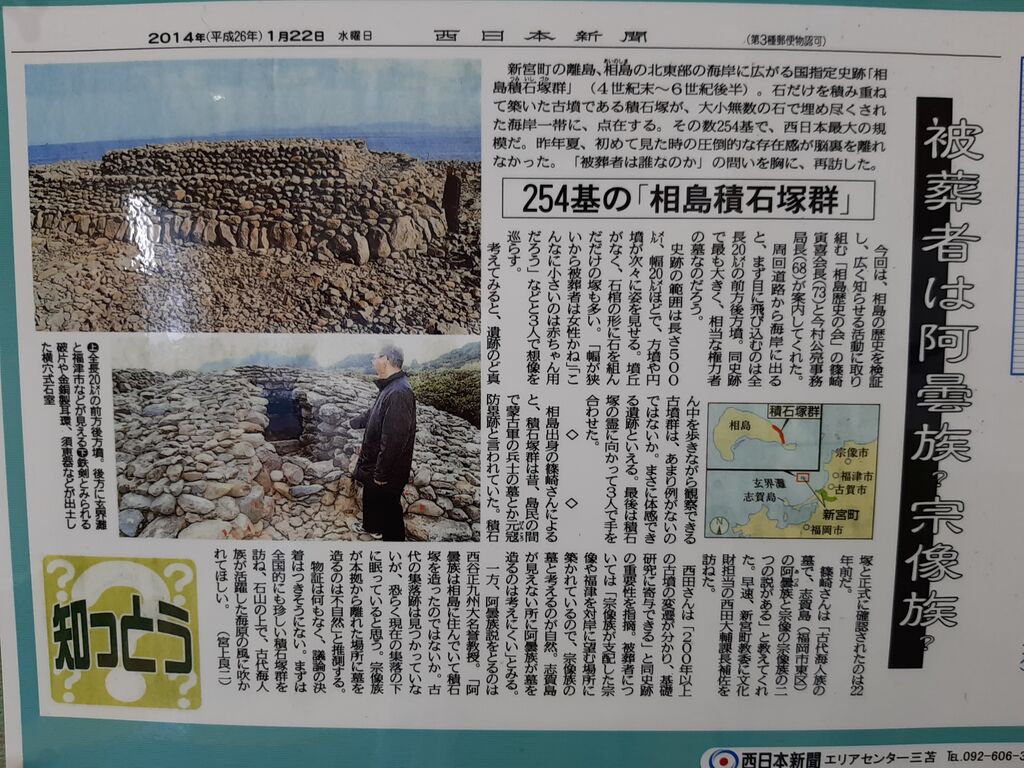
In this section, I've compiled photos of brochures, newspaper articles found on the wall of the information centre, and on-site signs as a memo.
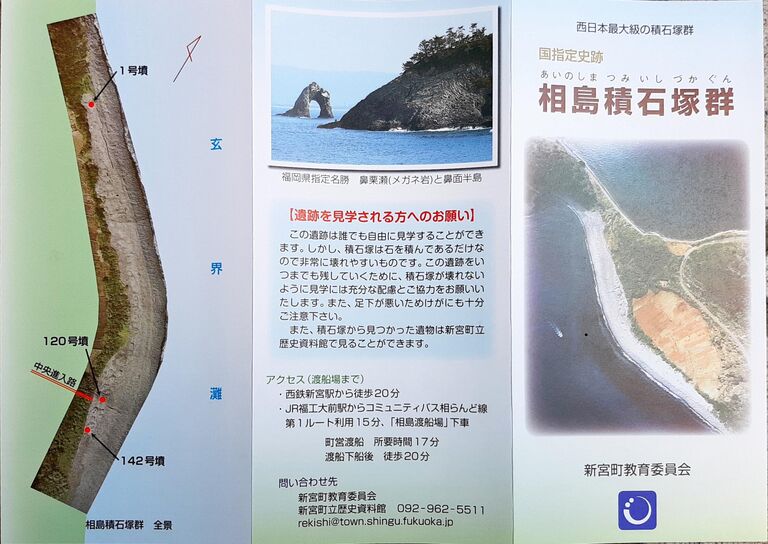
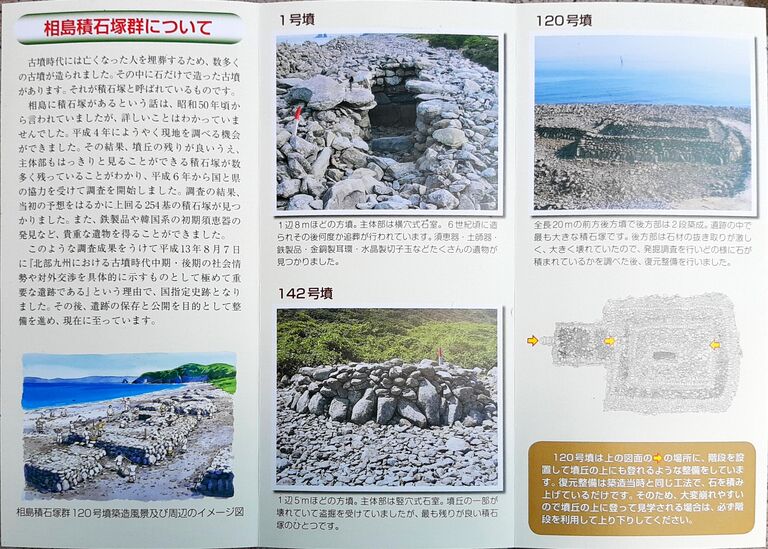
When I first saw the tomb made only of stones stacked on top of each other, I was shocked because it was so different from the ones I'd seen in Kansai and Nara, and it didn't seem as well-maintained at the time.
However, the two-tiered stone mound right in front of the entrance overlaps with my memories.
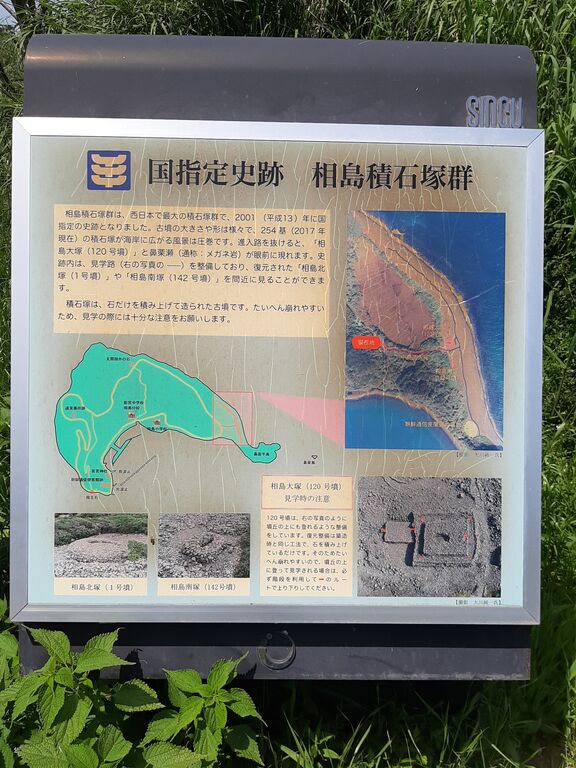
The largest two-tiered tumulus with a clear square front and the rear square structure is called the Ai-no-Shima Otsuka.
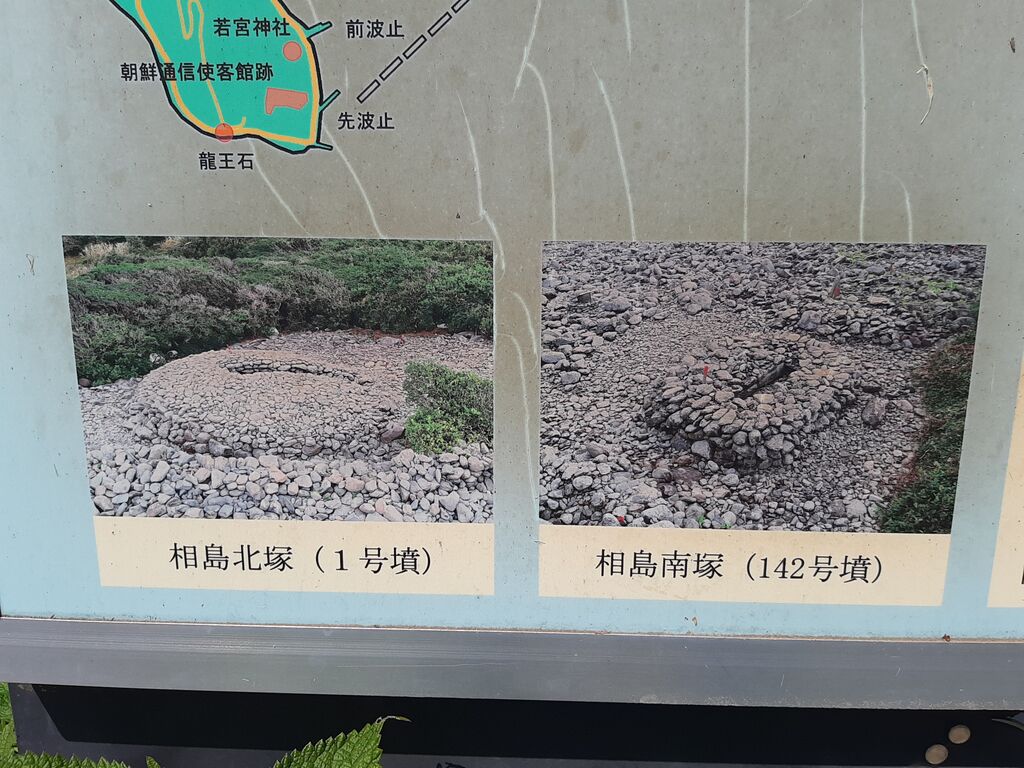
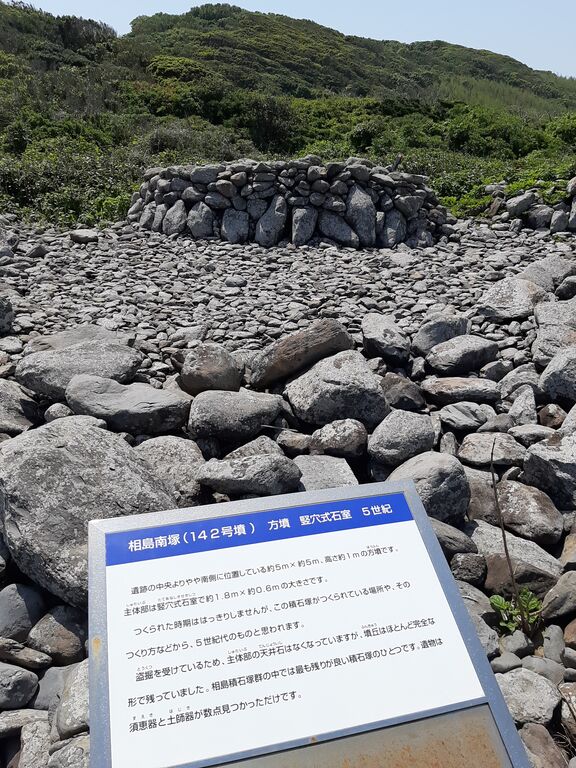
Decided to tour the Ai-no-Shima Southern Tumulus, the Korean envoy-related burial ground, Hana-Guri-Se, and Hana-Dura Peninsula this time, although the path is difficult to walk due to the large and small rocks scattered on the tour road.
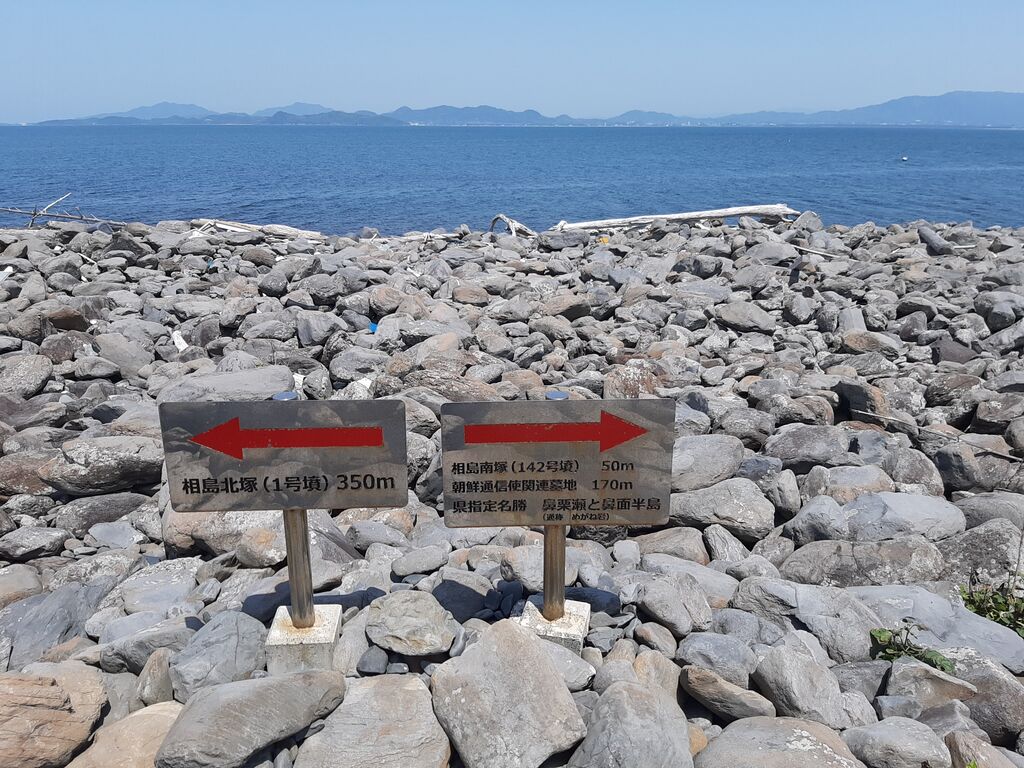
In the gaps between the rocks, Hamahirugao and Hamaendo flowers bloom, providing a sense of relief.
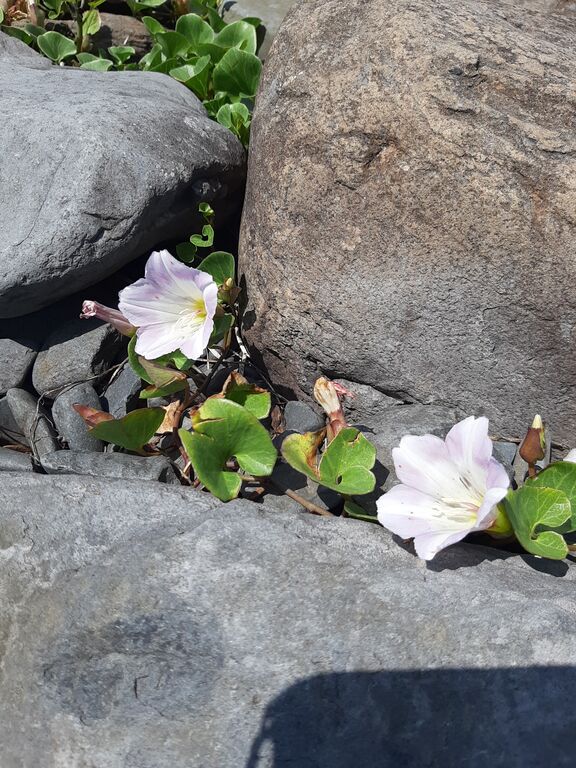
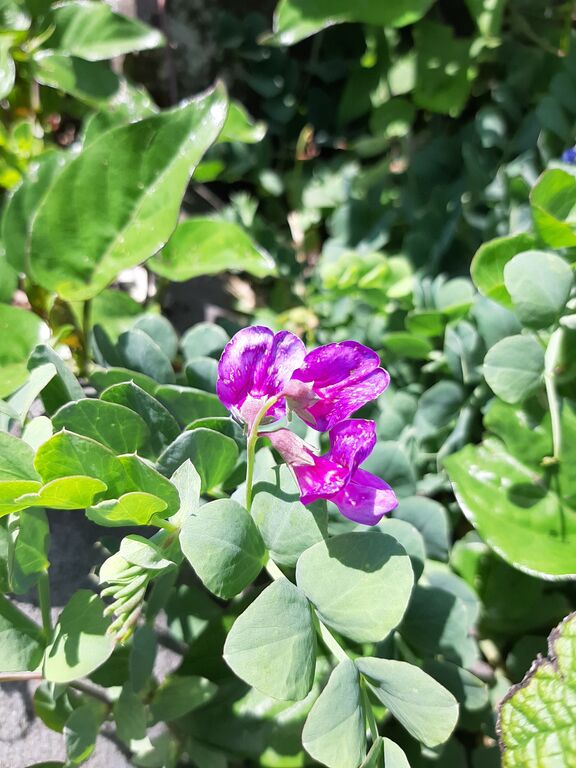
However, the uneven and rocky path is difficult for older people like me, and it takes time to find a stable, large rock to step on and move forward.
I kept thinking about who might have been buried here, during the many small breaks I took.
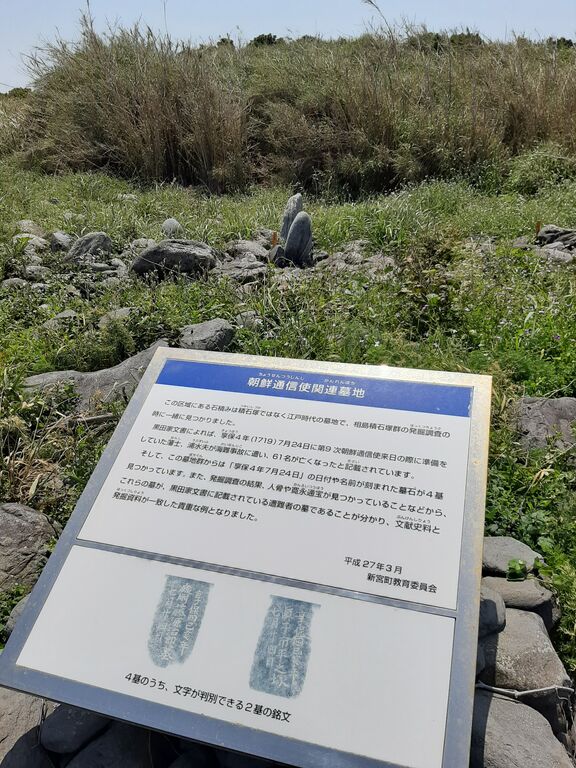
According to old documents, 61 Fukuoka Kuroda clan samurai and Ura-shima sailors who were heading to the island for the reception and preparation of the Korean envoy's arrival died in a marine accident.
Grave markers with names from the Kyoho era have been found, leading to the identification of this place as a Korean envoy-related burial ground.
Naturally, this burial ground is not in the form of a tumulus stack of stones.
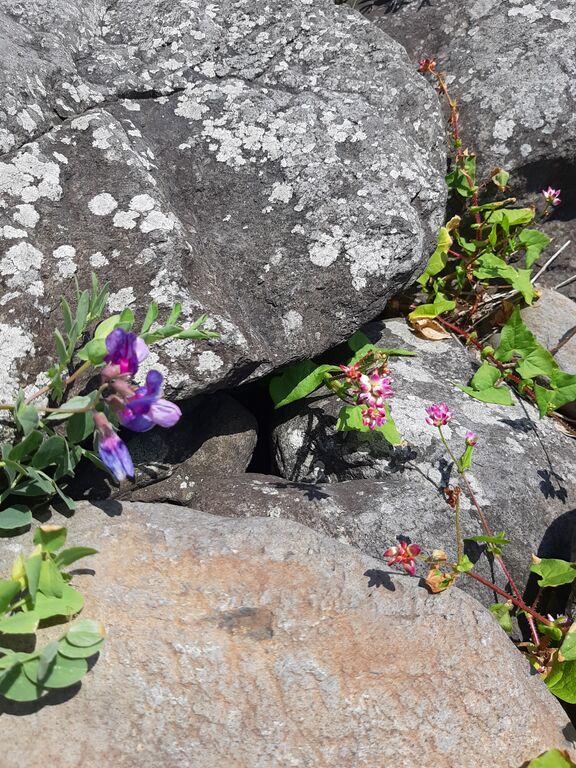
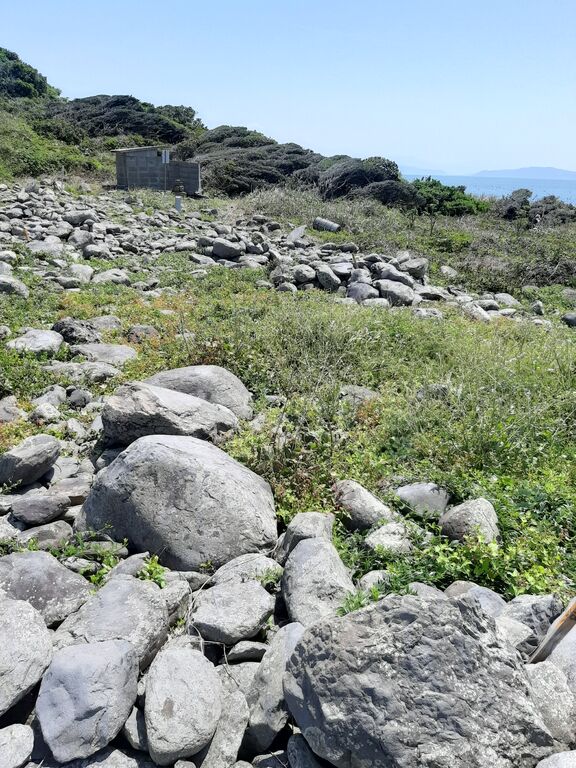
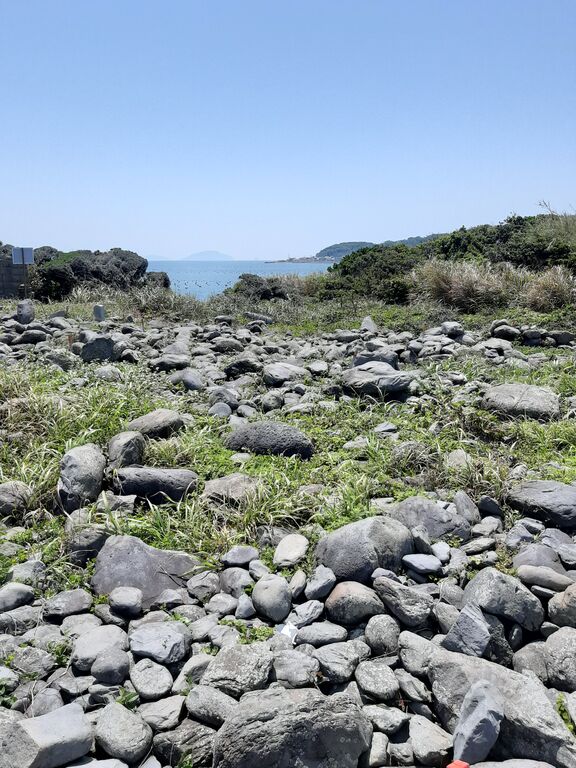
Okay, let's head towards the peninsula now.
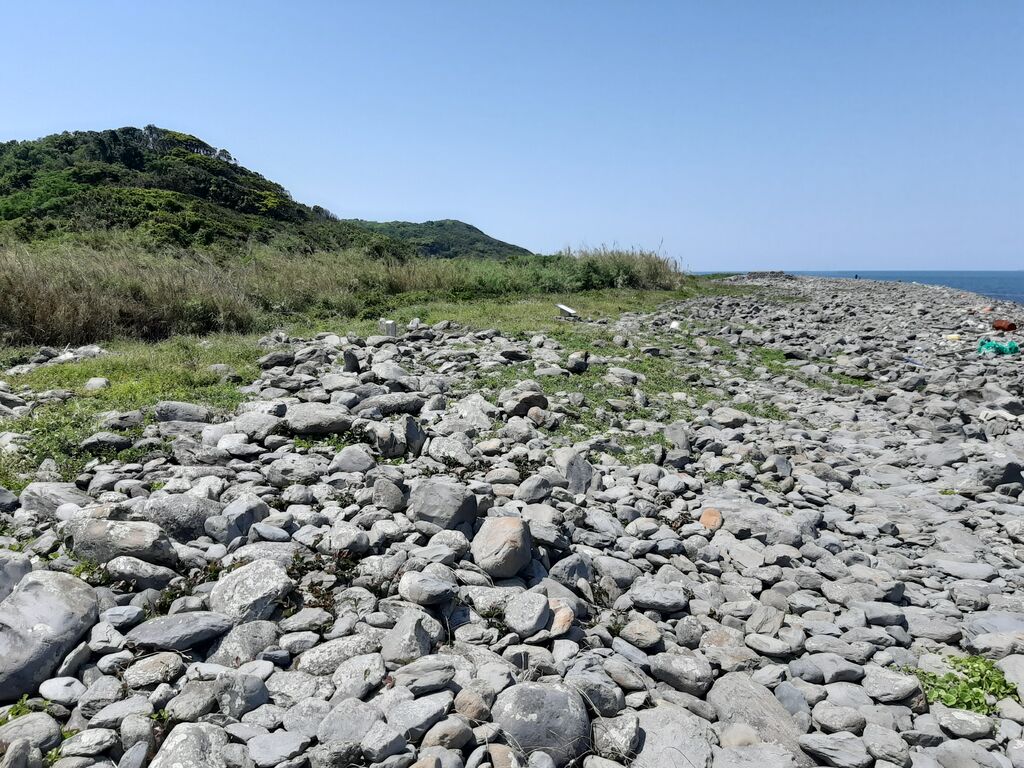
Until now, the path had been paved with stones to make it flat and easy to walk on.
But from here on, the path remains untouched, making it difficult to walk.
It's so difficult that even the cats are not here (lol).
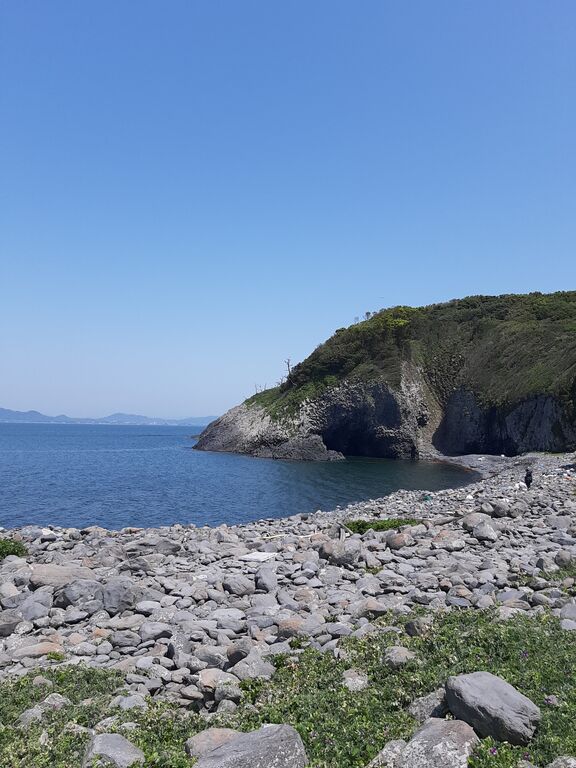
I've stumbled many times between the stones, tripping and struggling to maintain my balance, realizing that my core strength is weakening.
The signpost at the entrance reads: Hana-Guri-Se & Hana-Dura Peninsula
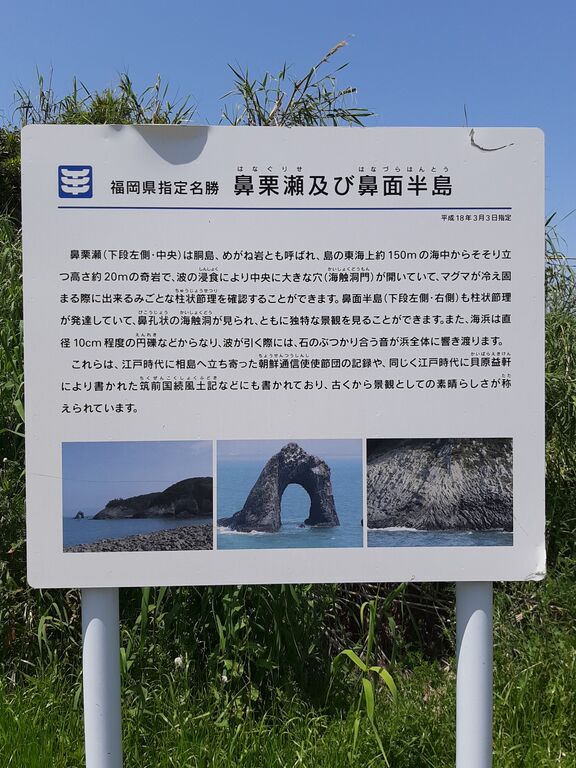
I might have been better off just admiring the view from afar.
But the view that I worked hard to reach is exceptional.
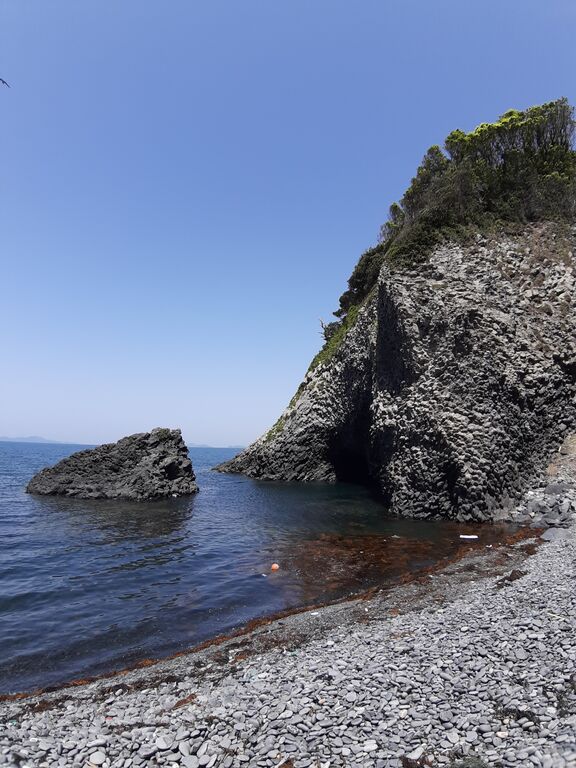
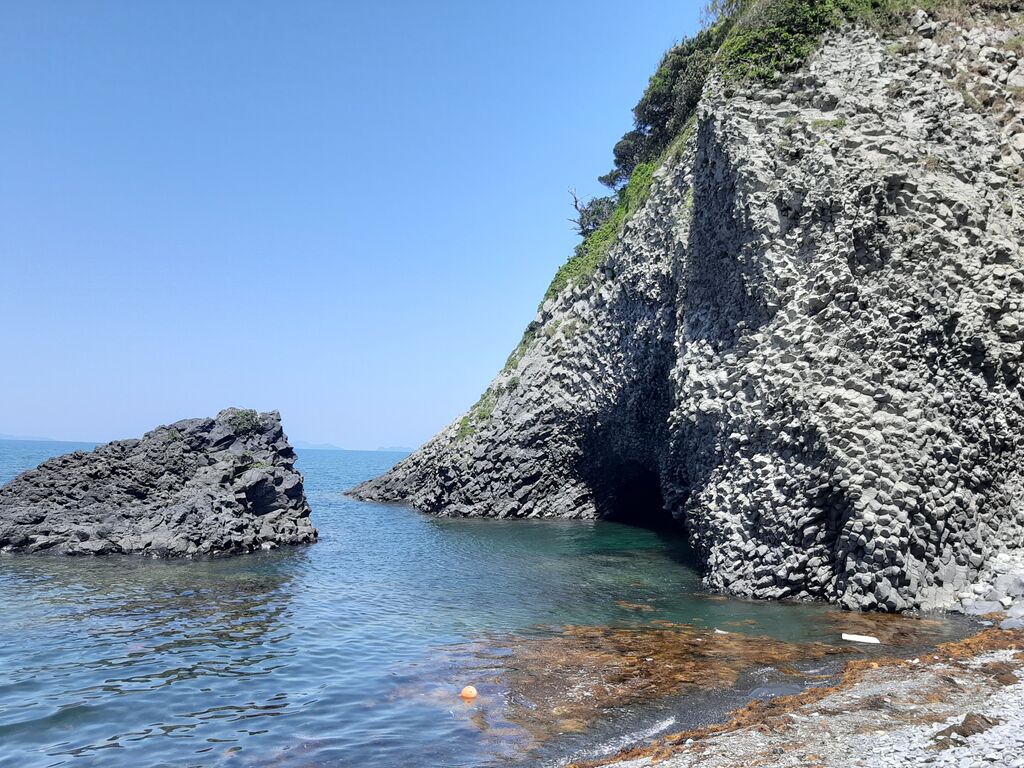
Although I managed to get here somehow, I couldn't see the Hana-Guri-Se (Glasses Rock).
In the pictures, you can't be sure, but there were polystyrene containers and trash scattered around the rocks with Korean and Chinese writing on them.
Since a professional photographer with a big bag was taking pictures near the rocks, I didn't want to disturb him, so I gave up going further.
The journey back was also a struggle.
When I finally returned to the original path, I couldn't help but smile bitterly as the road that I had complained so much about on the way there now seemed like a paved road.
When I finally returned to the original path, I couldn't help but smile bitterly as the road that I had complained so much about on the way there now seemed like a paved road.
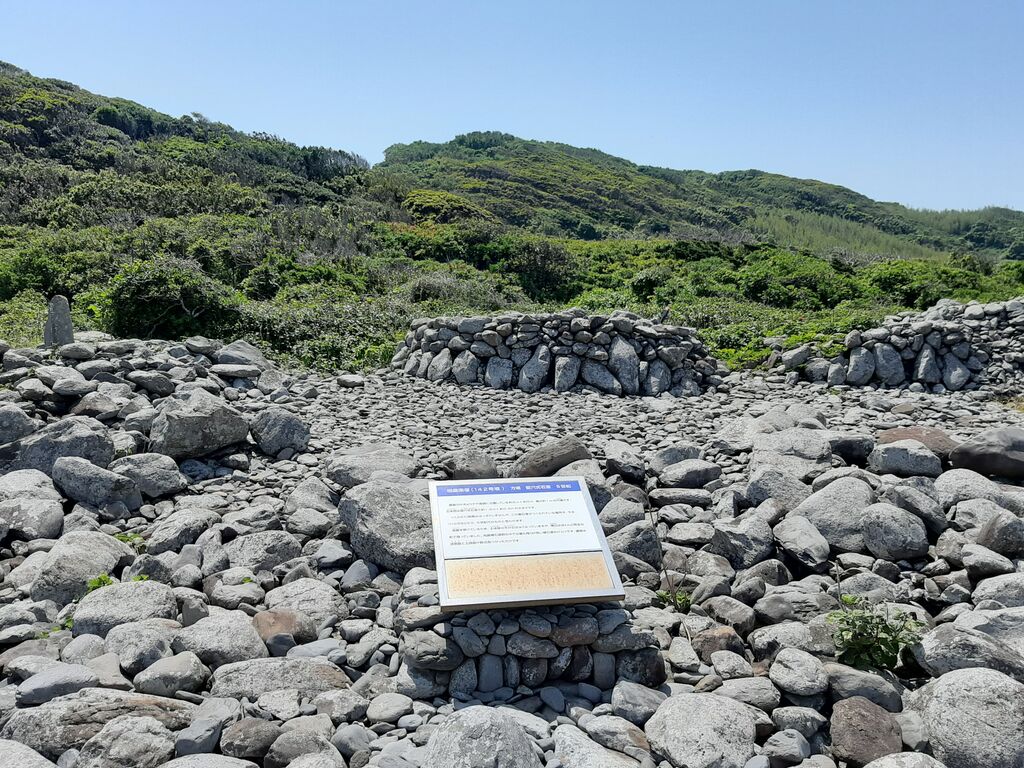
The stone-stacked tombs here are beautifully restored.
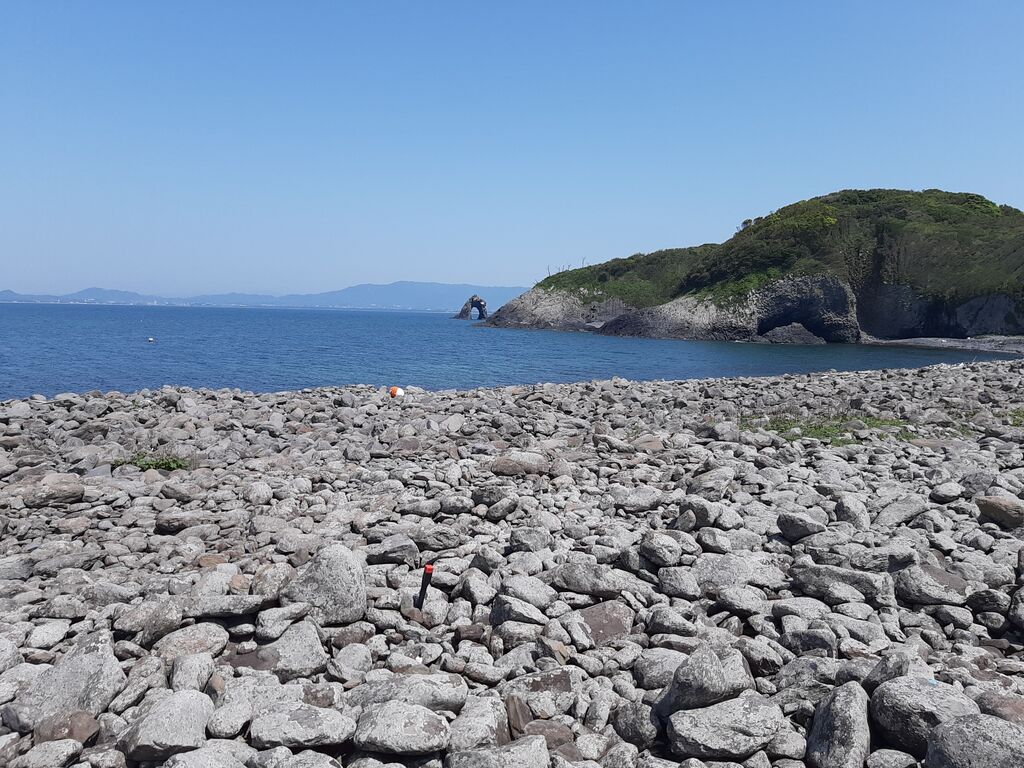
Amazingly, I walked all the way there.
You can see Hana-Guri-se (Glasses Rock) in the distance.
I'm back at the entrance to the tomb group, standing in front of the Ai-no-Shima Otsuka (large mound).
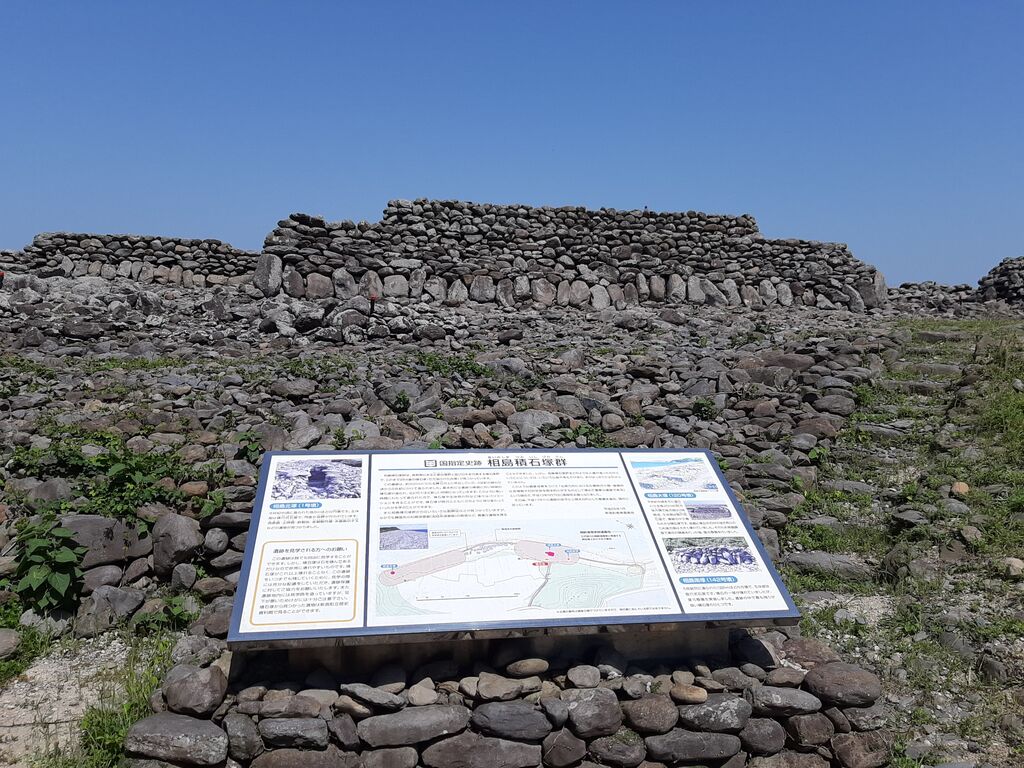
The view from the front is truly impressive.
I had a chat with S-san, who was wearing work clothes and seemed to be searching for something from the top of the Ai-no-Shima Otsuka.
He was looking at various places because one of the numbered, red-painted, wooden stakes that had been driven in during the excavation could no longer be found due to the collapse of the stone wall and other reasons.
He was using drone photos to investigate.
The path that is now the entrance to the visiting area was not there before the excavation. It was created later.
The original Nagai-Hama entrance/exit was said to be near the burial ground related to the Korean envoy.
When the Ai-no-Shima Otsuka was first discovered, it was thought to be two humpback tombs, but further investigation and research revealed that it was a two-tiered front-rear square tomb, which has now been restored to its present form.
Although this kind of stone stack tomb is rare in Japan, I wonder if there are any elsewhere?"
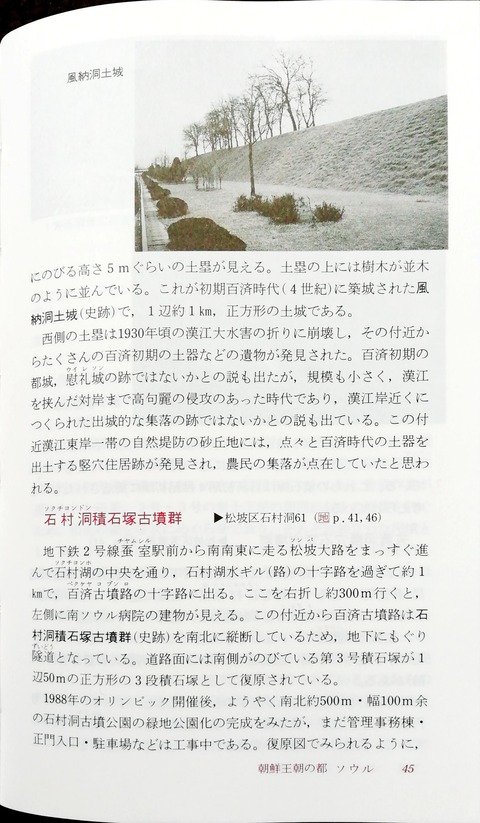
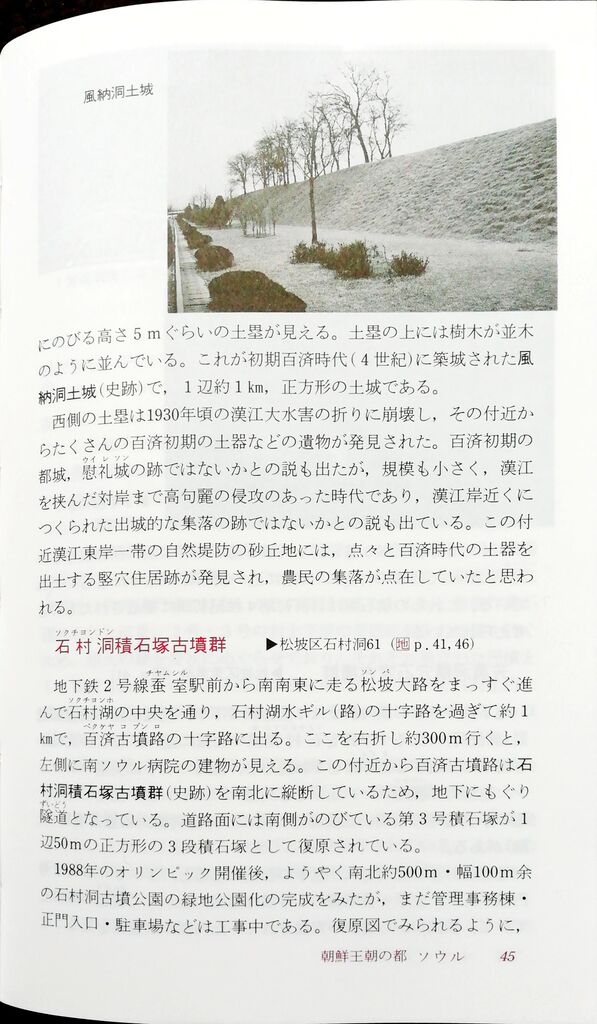
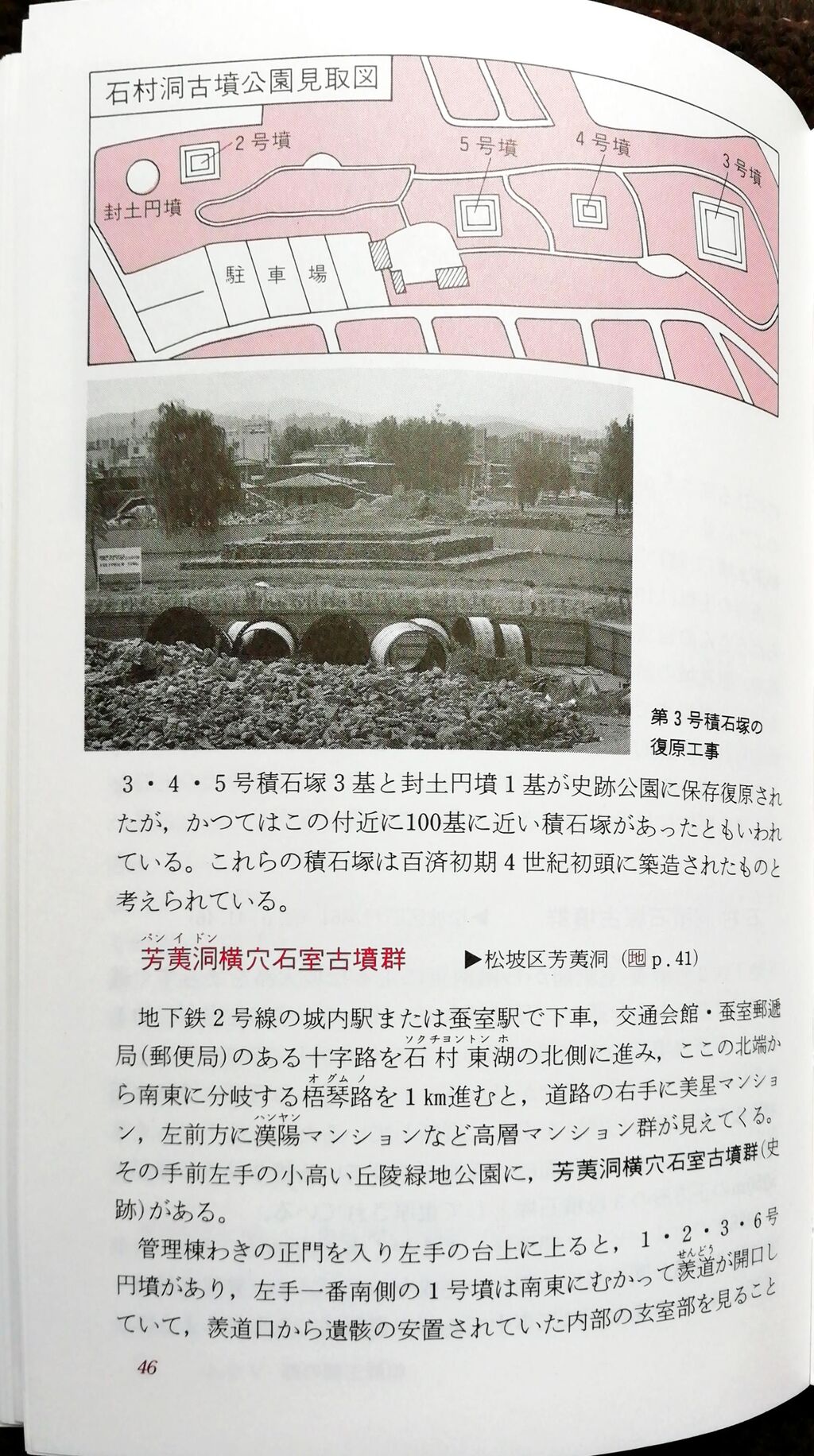
Before beginning the restoration survey work, it was reported that a larger two-tiered front-rear square burial mound was discovered in the suburbs of Seoul, Korea.
This may suggest that the structure of the ancient burial mounds in Korea and Japan may be related.
The identity of the buried individuals is also in question.
It is believed that they may have been from the sea people tribe, but were they from the Munakata tribe, based in Munakata, or the Azumi tribe based in Shikano-Shima Island?

Researchers of cultural properties in Shingu Town have noted that the rocks from Ai-no-Shima and Nagai-Hama were used in Miyajitake Shrine and other places closely related to Munakata Clan.
Additionally, a large number of tombs were built on the Nagai-Hama beach, which is on the opposite side of Ai-no-Shima, where the sun sets with a golden glow along the extension of the current "Path of Light."

This leads to the assumption that the sea people tribe of the Munakata area was responsible for the tombs.
Whereas scholars on the Fukuoka side argue that the ancestral spirits of the Azumi Seafarer Tribe were enshrined on the island of Ai-no-Shima, which is located in the direction where the sun rises from Shikano-Shima Island.
The burial mounds in the Shinbaru Nuyama group, as well as the Miyajidake tomb located in the inner sanctuary of Miyajidake Shrine, are in the shape of a front-square mound & a rear-circular mound or circular mound.
In contrast, the stone-stacked burial mound group in Ai-no-Shima is in the shape of a front-square mound & a rear-square mound.
It's unclear what the differences in the form and appearance of these burial mounds mean to an amateur like me.
However, while it may not be appropriate to focus too much on the living area in the current centre or residential area of Ai-no-Shima -
it seems more appropriate to believe that the ancestral spirits of those who came from the peninsula and settled in Japan long ago are enshrined on the "Path of Light," which is visited twice a year and is a miraculous event that reminds us of our homeland.
This idea seems to fit somehow.
Oh, right!
This idea seems to fit somehow.
Oh, right!
I forgot something important!
I was looking forward to doing some chair lifts and even brought along some bulky equipment on my bike but ended up not doing it.
The uphill bike ride and stumbling on the rocky path made my stomach exceeds the hunger limit.
I had to stop and set up the portable chairs and consume the food and drinks brought.
Took the front bag off the bike and went back to the stone-stacked ancient tomb group to find a random spot but couldn't find a place to relax as the rocky area was full of gaps and narrow metal poles that made it impossible to sit comfortably.
However, I found a rock that served as a backrest and another flat rock where I could stretch my legs.
The stone chair lift was not bad!
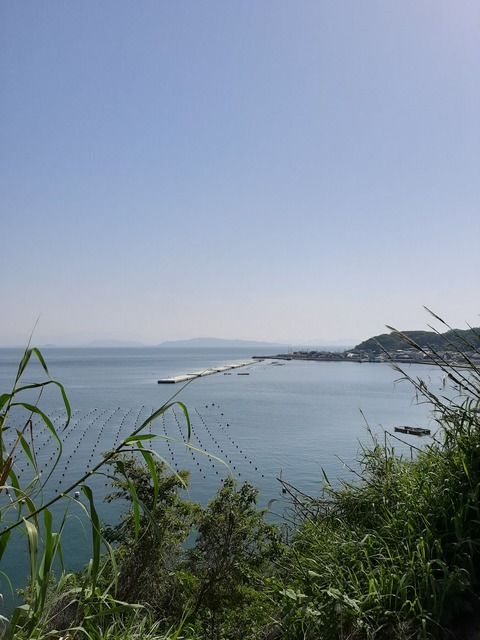
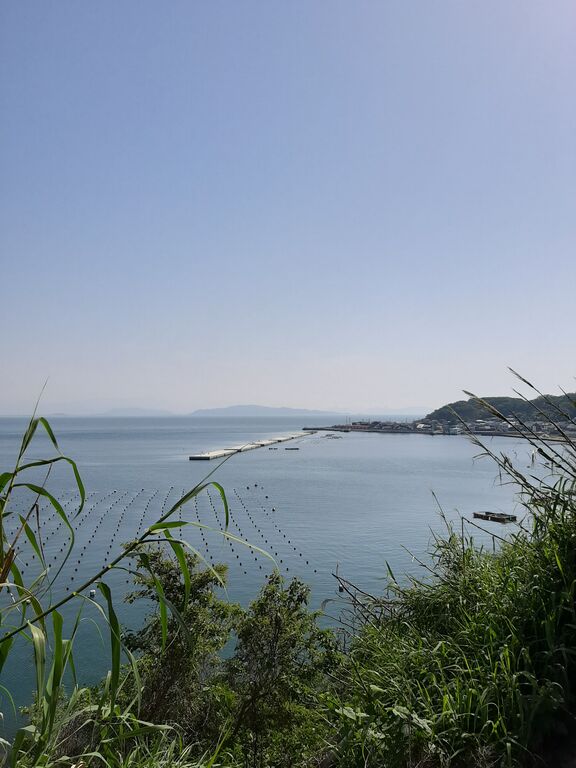
My lunch of convenience store rice balls, curry-flavoured fish cake, tai-chikuwa, mini doughnuts, and roasted tea was meagre but felt happy listening to the pleasant sea breeze and waves hitting the shore while gazing at Miyaji Beach, Miyajitake, and Tsuyazaki across the sea.
Now that we've had our fill of the stone-stacked ancient tomb group, let's end our cycling tour.
Found a signpost.
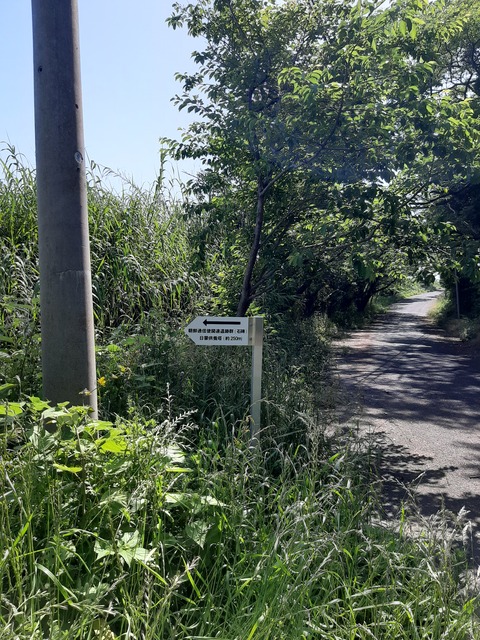
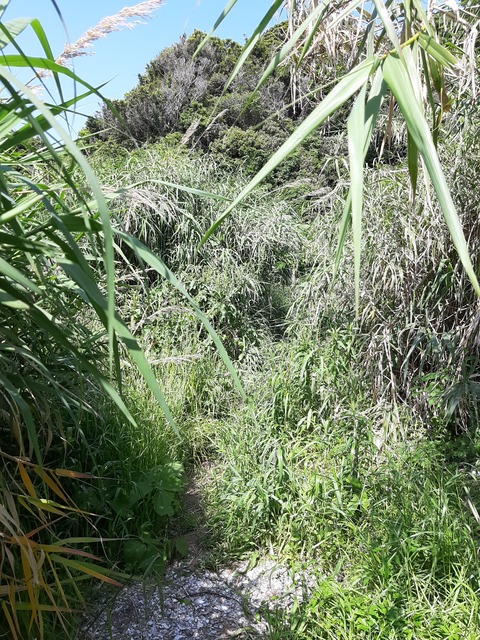
I saw something written on a signboard and decided to check it out, but I have no idea what's ahead, so let's retreat!
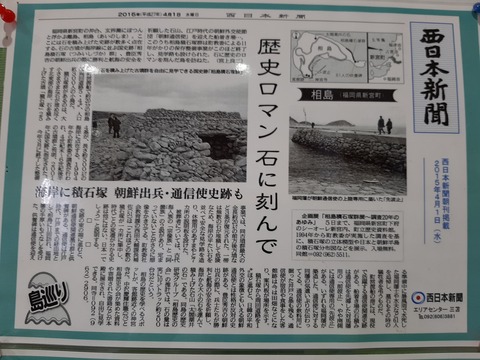
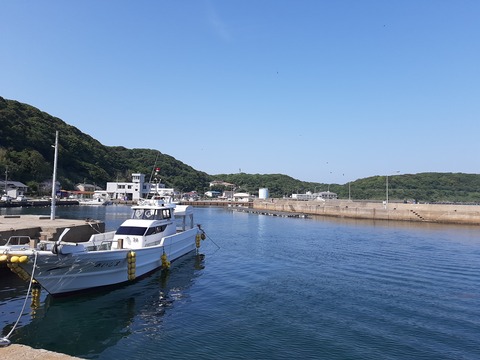
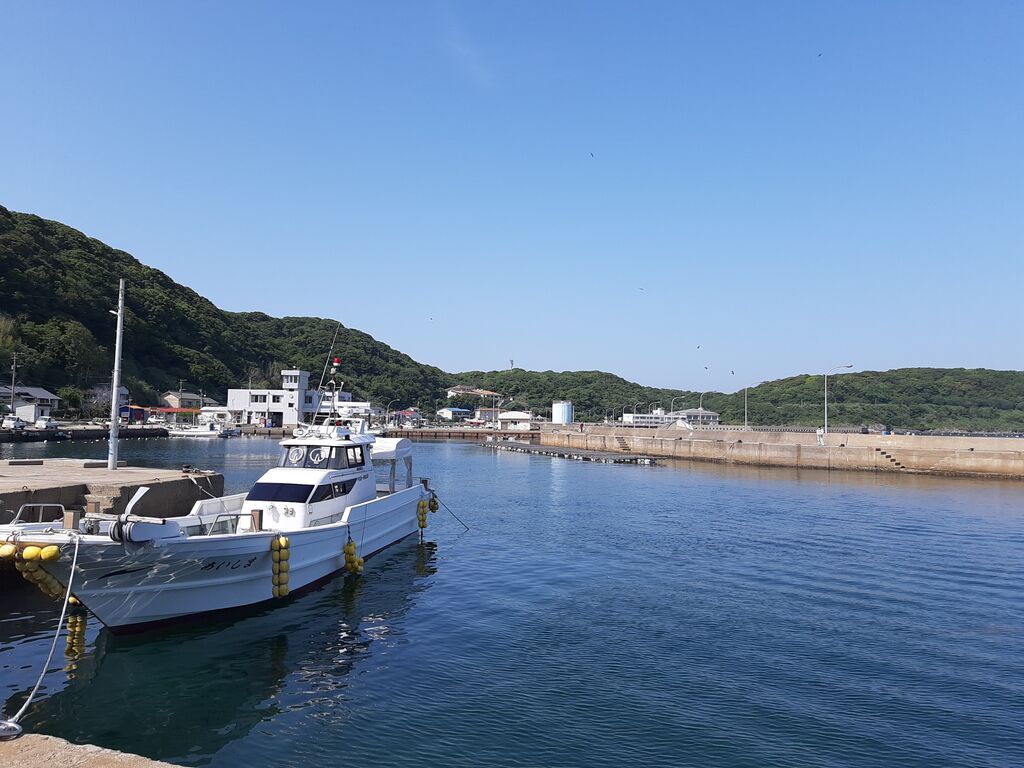
"Pota-kichi" and I came back to the port, bought our return tickets, and while waiting, I was happy to see that someone else had a similar idea as mine, according to a newspaper article posted on the information centre's wall.
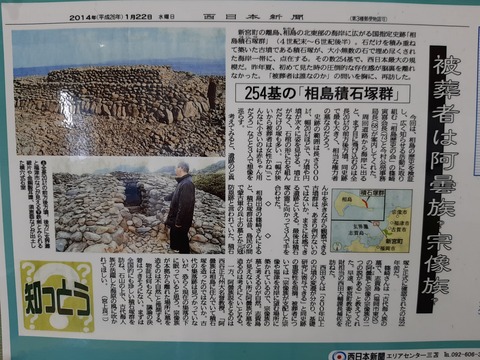
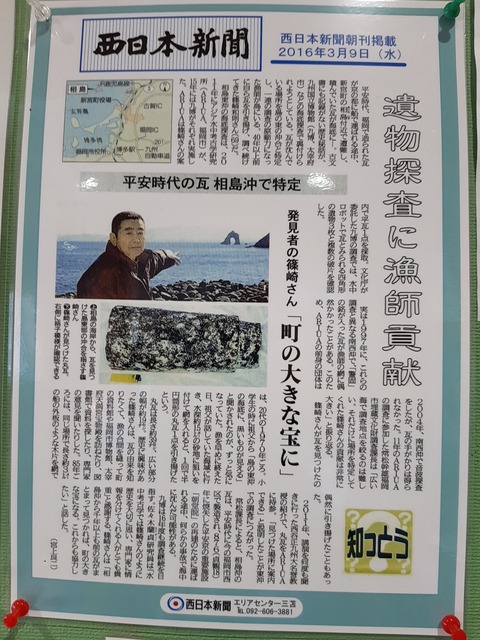
We still had some time to kill, so we continued cycling.
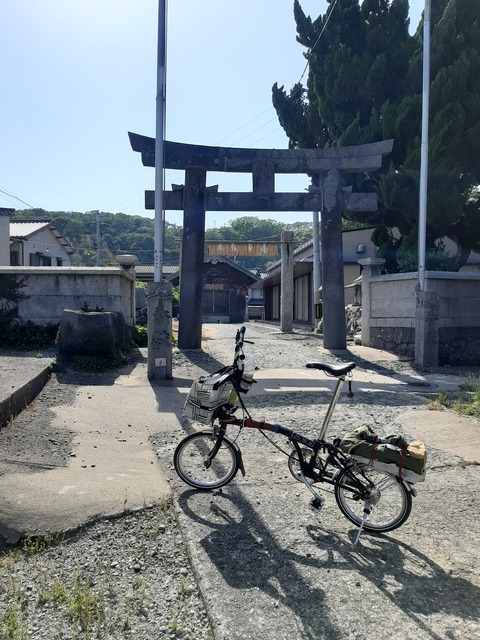
I decided to take an earlier ferry than planned to avoid the crowds of fishermen on the last trip.
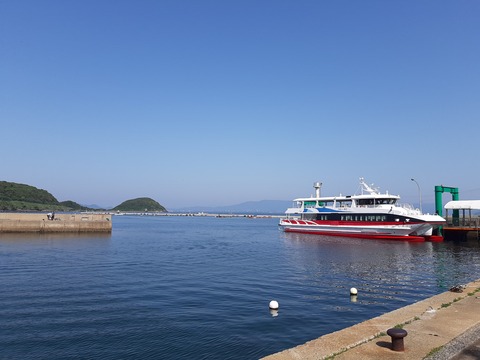
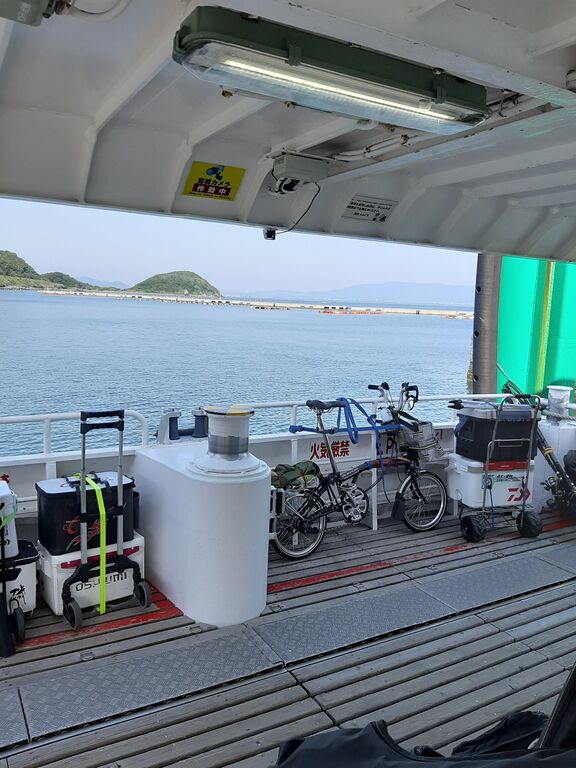
"Pota-kichi", my bike, was securely tied with a rope just like when we arrived.
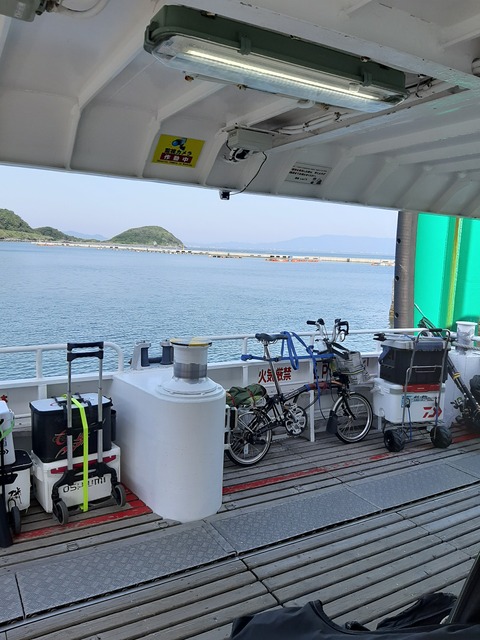
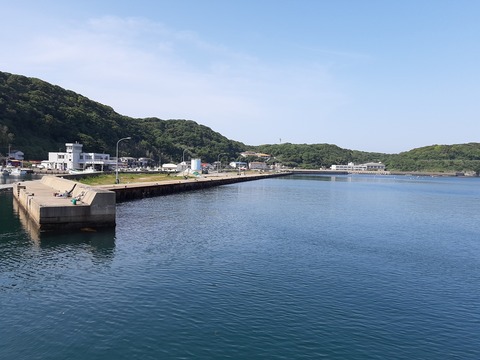
I don't even care which is the front or rear port anymore.
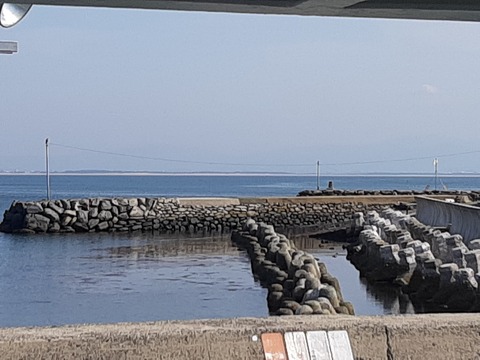
I only got to see the Megane rock from a distance.
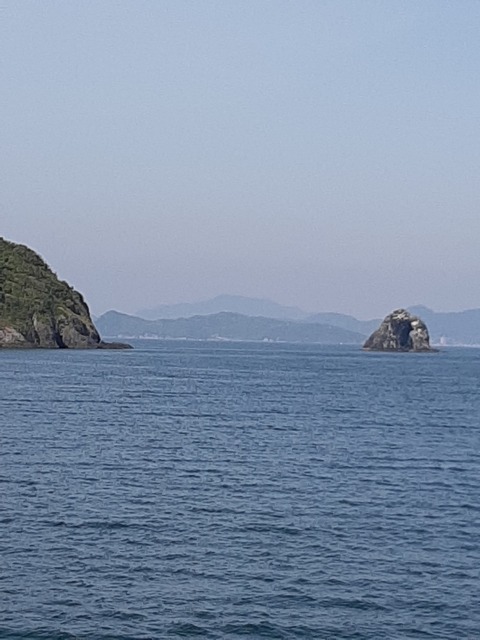
Here we are!
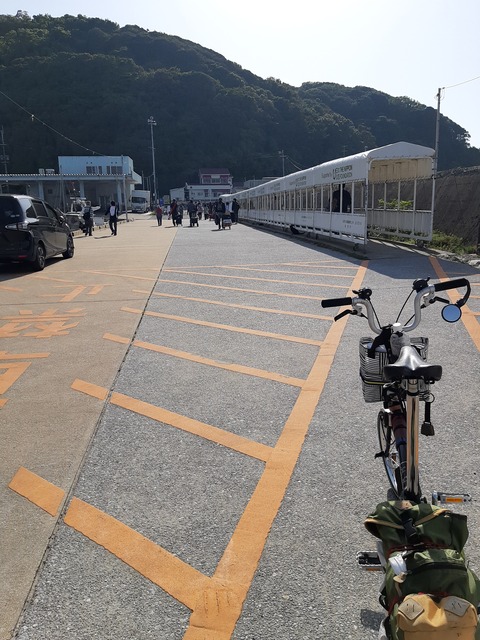
We're back in Shingu Town, and the small, lightweight portable chairs and tables we brought didn't even get used.
They just sat on Pota-kichi's rear carrier looking grumpy, while the driver's legs were aching like crazy."
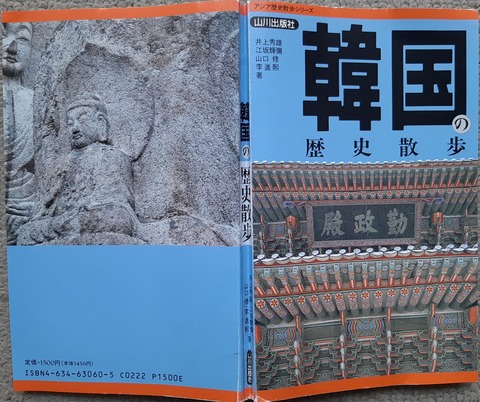
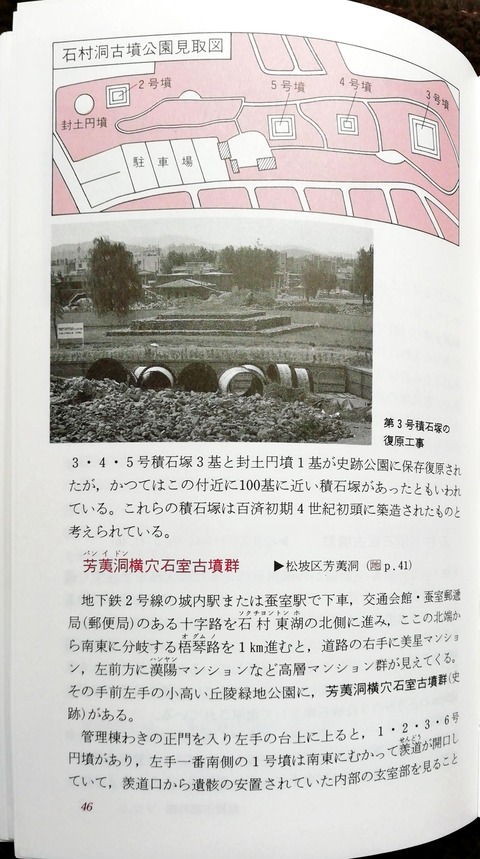
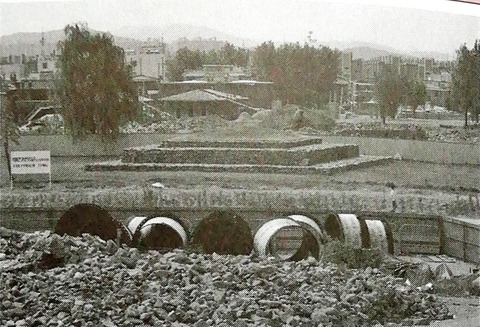
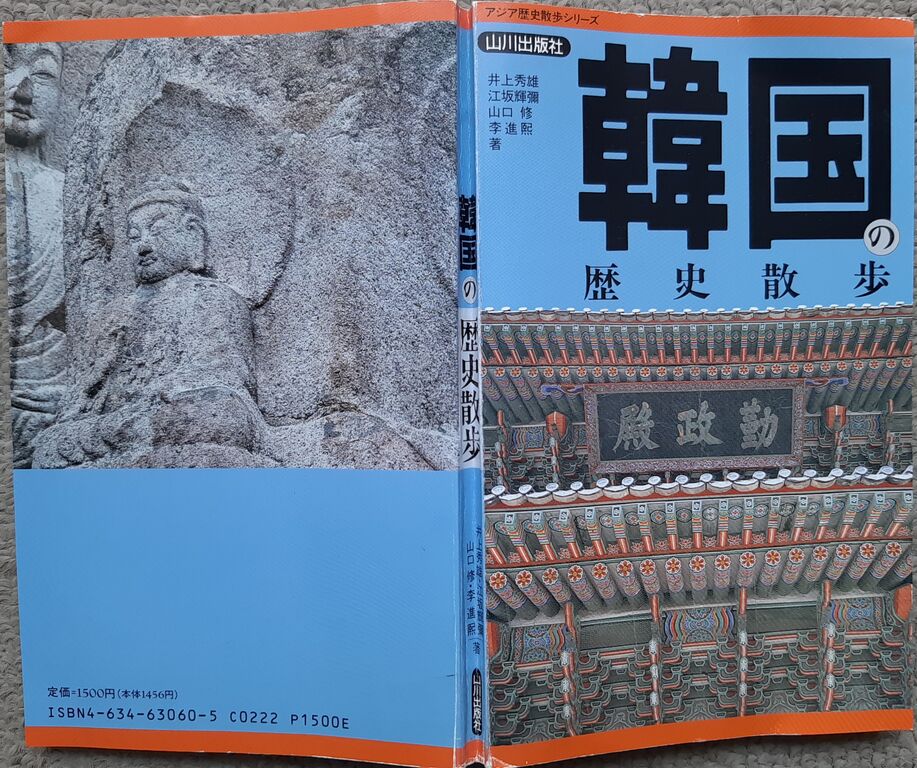
*[Reference] Quoted from "Historical Walks in Korea" published by Yamakawa Publishing Co.
I was looking forward to doing some chair lifts and even brought along some bulky equipment on my bike but ended up not doing it.
The uphill bike ride and stumbling on the rocky path made my stomach exceeds the hunger limit.
I had to stop and set up the portable chairs and consume the food and drinks brought.
Took the front bag off the bike and went back to the stone-stacked ancient tomb group to find a random spot but couldn't find a place to relax as the rocky area was full of gaps and narrow metal poles that made it impossible to sit comfortably.
However, I found a rock that served as a backrest and another flat rock where I could stretch my legs.
The stone chair lift was not bad!
My lunch of convenience store rice balls, curry-flavoured fish cake, tai-chikuwa, mini doughnuts, and roasted tea was meagre but felt happy listening to the pleasant sea breeze and waves hitting the shore while gazing at Miyaji Beach, Miyajitake, and Tsuyazaki across the sea.
Now that we've had our fill of the stone-stacked ancient tomb group, let's end our cycling tour.
Found a signpost.
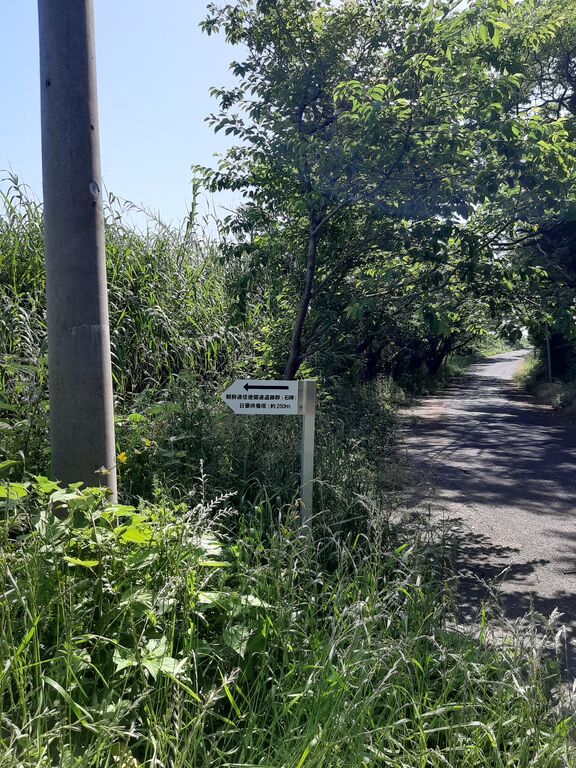
I saw something written on a signboard and decided to check it out, but I have no idea what's ahead, so let's retreat!

"Pota-kichi" and I came back to the port, bought our return tickets, and while waiting, I was happy to see that someone else had a similar idea as mine, according to a newspaper article posted on the information centre's wall.

We still had some time to kill, so we continued cycling.
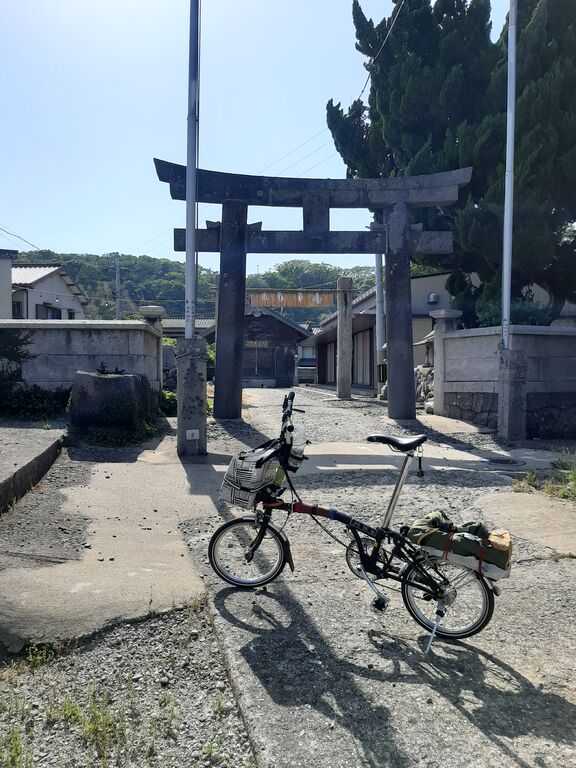
I decided to take an earlier ferry than planned to avoid the crowds of fishermen on the last trip.
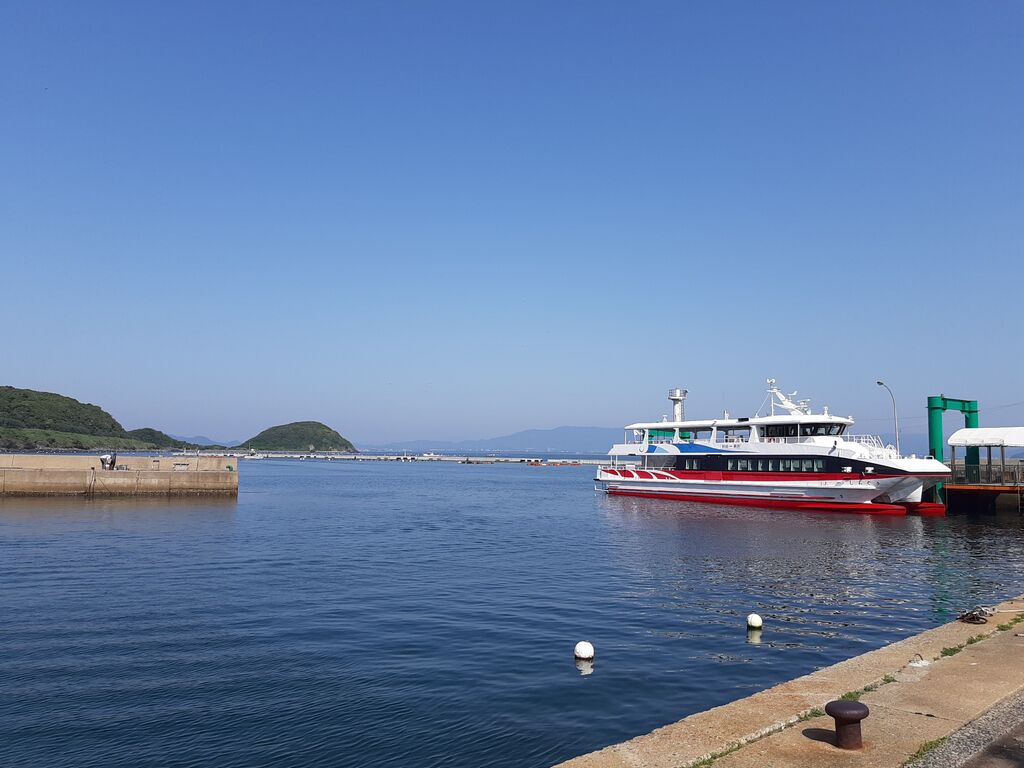
"Pota-kichi", my bike, was securely tied with a rope just like when we arrived.
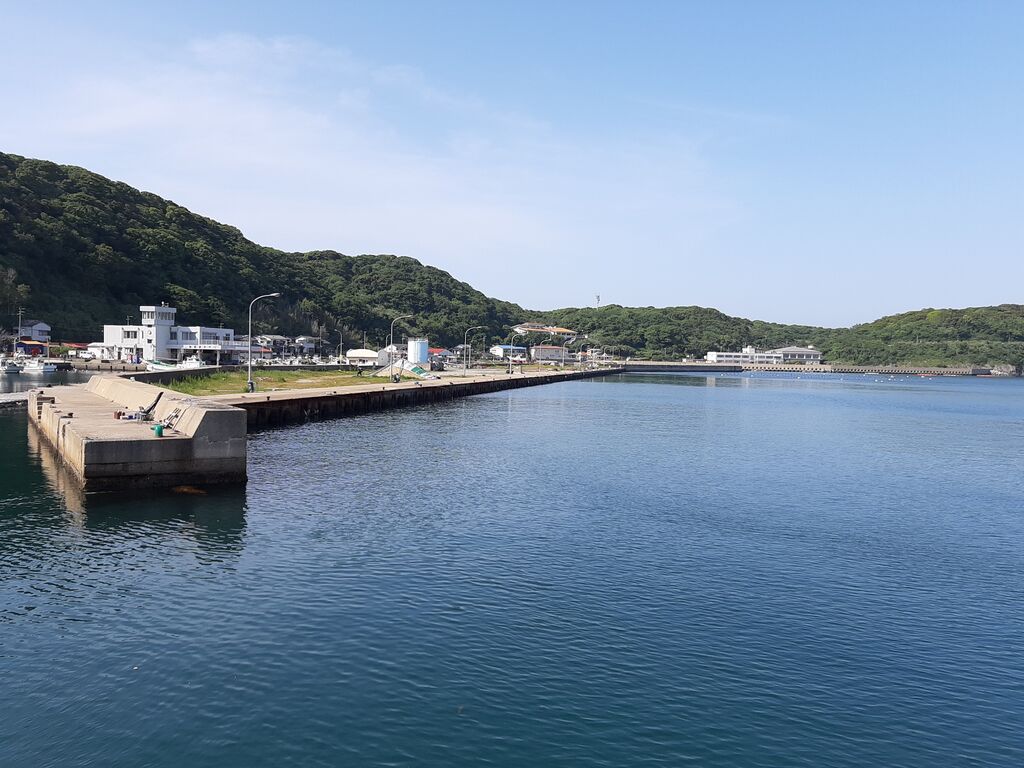
I don't even care which is the front or rear port anymore.
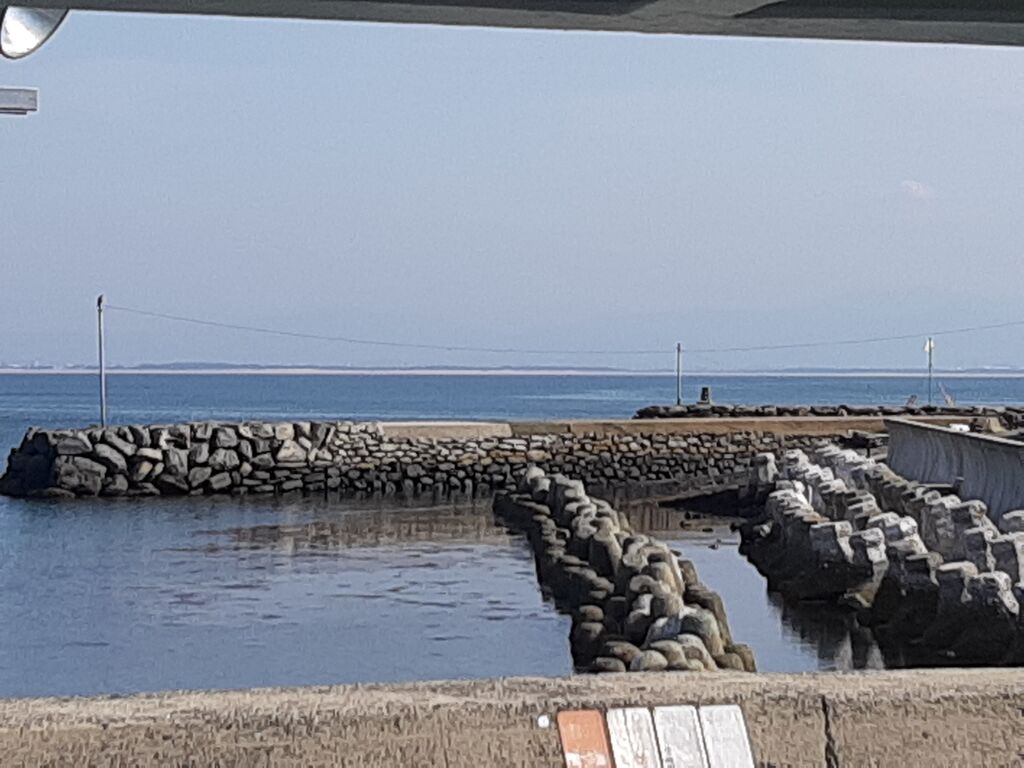
I only got to see the Megane rock from a distance.
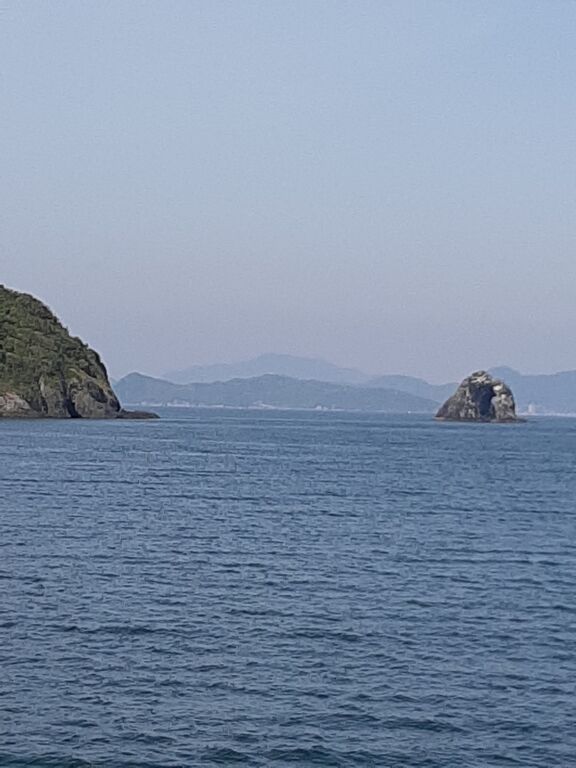
Here we are!
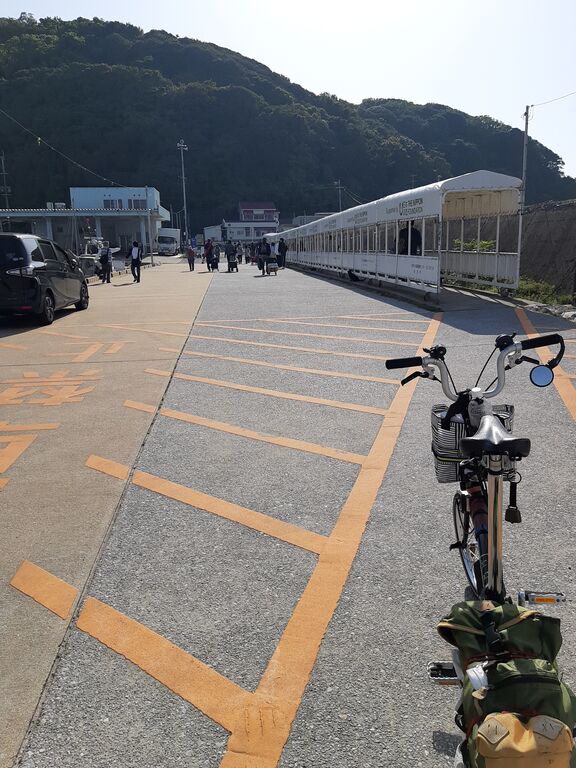
We're back in Shingu Town, and the small, lightweight portable chairs and tables we brought didn't even get used.
They just sat on Pota-kichi's rear carrier looking grumpy, while the driver's legs were aching like crazy."
*[Reference] Quoted from "Historical Walks in Korea" published by Yamakawa Publishing Co.


Comments
Post a Comment